
Economy March 23, 2026

Turkey, Egypt and Pakistan Relayed Messages Between Washington and Tehran as Trump Postpones Strikes

Mediation by regional actors reportedly paved the way for a U.S. decision to delay attacks on Iranian energy infrastructure, though Tehran denies direct contact

By Leila Farooq
Turkey, Egypt and Pakistan Relayed Messages Between Washington and Tehran as Trump Postpones Strikes

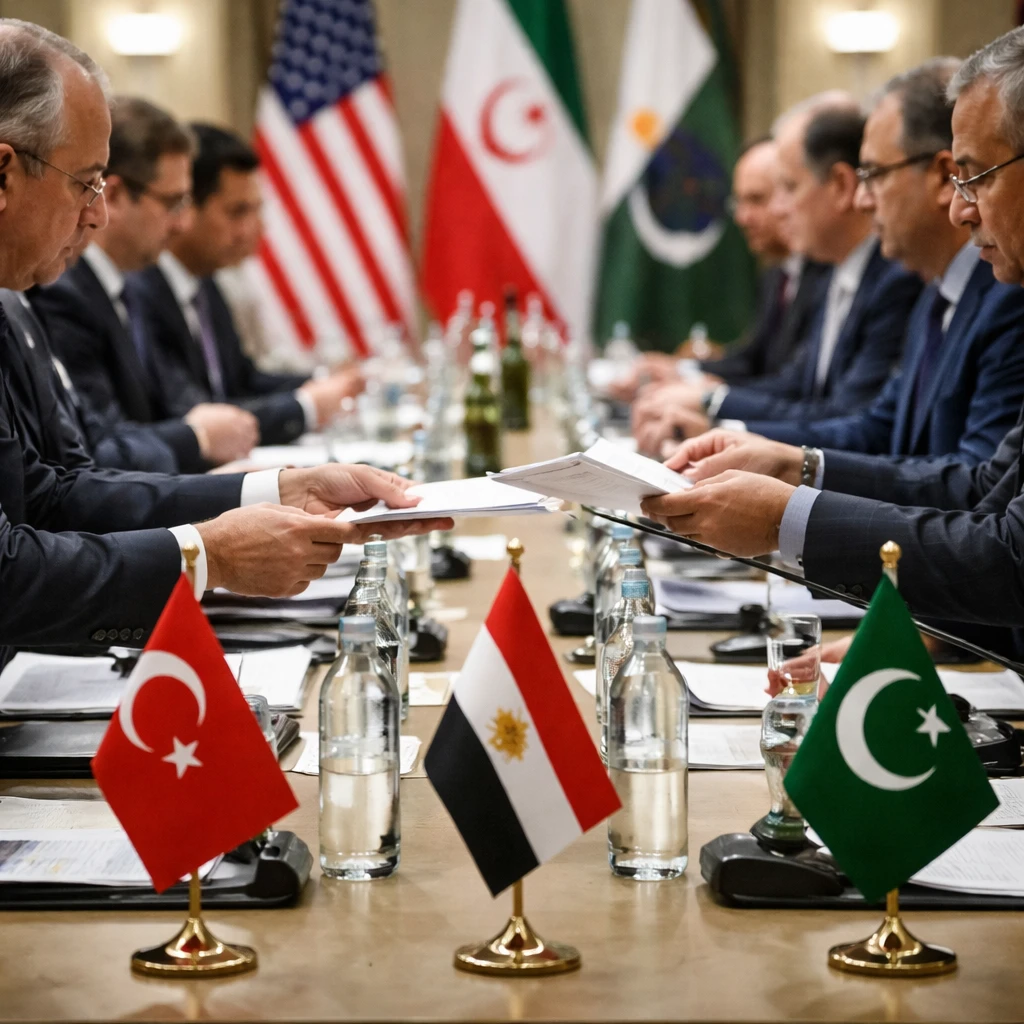
Senior officials from Turkey, Egypt and Pakistan conveyed messages between the United States and Iran over a two-day period, sources cited by Axios reporter Barak Ravid on X said. Separate meetings involved White House envoy Steve Witkoff and Iranian Foreign Minister Abbas Araghchi. President Donald Trump announced he had ordered a delay in planned strikes on Iranian power plants and energy infrastructure after what he characterized as productive talks. Iran's Fars News Agency disputed that any direct communications took place.

Key Points

  • Turkey, Egypt and Pakistan reportedly relayed messages between the United States and Iran, engaging in separate talks over two days.
  • White House envoy Steve Witkoff and Iranian Foreign Minister Abbas Araghchi were identified as participants in those discrete discussions.
  • President Trump announced a postponement of planned strikes on Iranian power plants and energy infrastructure; U.S. equity indexes were indicated to be poised to open higher after the announcement. Sectors impacted include energy, defense, and financial markets.

Senior officials from Turkey, Egypt and Pakistan acted as intermediaries in communication between Washington and Tehran over the past two days, according to sources cited by Axios reporter Barak Ravid on X. The exchanges involved separate discussions between each country's senior officials, a White House envoy and Iranian leadership.

Sources said the delegations met individually with White House envoy Steve Witkoff and Iranian Foreign Minister Abbas Araghchi. Those conversations are said to be ongoing and to have made progress, with the stated aim of ending the war and resolving outstanding issues.

President Donald Trump said on Monday that he had instructed the military to postpone planned strikes targeting Iranian power plants and energy infrastructure. The president attributed the decision to what he described as productive communications with Tehran. Following the announcement, main U.S. indexes were on track to open higher.

Not all accounts aligned. Iran's Fars News Agency published a report citing a source who said there had been no direct contact with the United States, nor contact via intermediaries. That statement stands in contrast to the account that multiple countries were relaying messages between the two capitals.

The sources cited in the reports described mediation efforts as continuing and progressing, focusing on ending the conflict and resolving all remaining open issues. Details about the content of the discrete talks, the specific officials involved from Turkey, Egypt and Pakistan beyond their collective role, or any formal agreements were not provided in the accounts cited.

What is clear from the available reporting is a sequence of events in which third-party diplomatic channels were reported to have been active, followed by a U.S. decision to delay kinetic action against Iranian energy targets and a public denial from an Iranian news agency about direct communication. The contrasting statements underscore an uncertain and fluid diplomatic environment.


Summary

  • Three regional governments reportedly conveyed messages between the United States and Iran over two days.
  • White House envoy Steve Witkoff and Iranian Foreign Minister Abbas Araghchi were identified as participants in the separate talks.
  • President Trump said he postponed strikes on Iranian energy infrastructure after productive conversations, while Iran's Fars News Agency denied any direct communications.

Risks

  • Conflicting public accounts - U.S. statements about productive talks contrast with an Iranian state-linked agency's denial of direct communication, creating uncertainty for diplomatic outcomes; this uncertainty can affect market sentiment in energy and equities.
  • Ongoing and fluid mediation efforts - with negotiations described as continuing, there is uncertainty about whether the pause in military action will lead to a stable resolution or further escalation; defense and energy sectors remain sensitive to changes.

More from Economy

Fed Governor Miran Says Too Early to Gauge Oil Shock, Reaffirms Case for Rate Cuts Mar 23, 2026 Fed Governor Miran Keeps 2026 Cut Outlook Despite Middle East Shock Mar 23, 2026 Goolsbee Says Fed Could Pivot Either Way as Middle East Conflict Weighs on Outlook Mar 23, 2026 Goolsbee Signals Inflation as Dominant Near-Term Threat, Flags Gas Prices and Expectations Mar 23, 2026 European Gas Futures Slide After U.S. Delays Strikes on Iranian Energy Sites Mar 23, 2026