
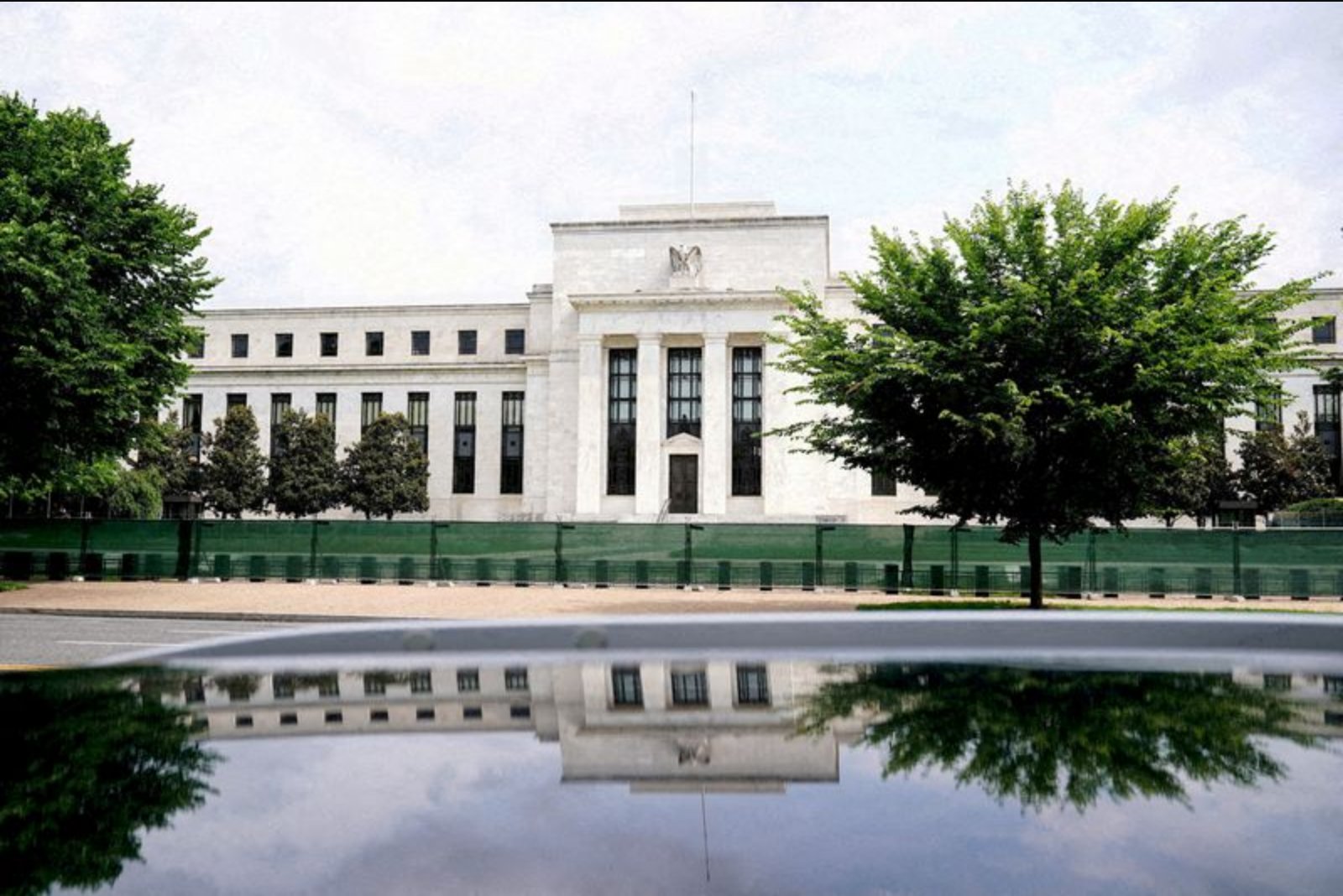
President Donald Trump’s announcement that he will formally name a successor to Federal Reserve Chair Jerome Powell has been interpreted by market participants as a removal of an overhanging uncertainty that has affected asset prices for months. With Trump saying the nomination will be unveiled on Friday, speculation has concentrated on former Fed Governor Kevin Warsh as the likely choice after reports that he met the president at the White House.
Investors have spent weeks modelling different outcomes from the succession contest. Kevin Warsh is widely viewed within those scenarios as one of the more hawkish possibilities among the names under consideration. Market strategists say that perception has already started to influence prices and expectations about how the Fed’s stance could shift once Powell’s term concludes in May.
"If the nominee is indeed Warsh, we could actually end up with a Fed that tilts hawkish at the margin," said Sonu Varghese, global macro strategist at Carson Group in Chicago, reflecting the market’s response to the emerging frontrunner.
Other candidates who had been prominent in public discussions include Fed Governor Christopher Waller and Rick Rieder, BlackRock’s chief bond investment manager. Kevin Hassett, the White House economic adviser, was seen early on as a potential contender but is now regarded as unlikely after the president indicated a preference for keeping him in his current role.
Decisions made by the Federal Reserve influence more than the overnight rate between banks. They affect long-term interest rates - as signalled by yields on long-dated U.S. Treasuries - and through those yields they shape borrowing costs for consumers and companies across the economy.
Trump has publicly pressed for deep cuts to interest rates and has criticized Powell for not complying with his preferences, even giving him the nickname "Too Late" for what the president characterizes as hesitancy to ease policy. The next Fed chair will therefore be judged not only on technical policy preferences but also on perceived resistance to political pressure - a trait economists argue is essential for a central bank’s credibility in fighting inflation and maintaining financial stability.
Warsh has previously advocated for regime change at the central bank, including proposals for a smaller Fed balance sheet - a stance that may sit uneasily with President Trump’s desire for looser monetary conditions. Market participants noted that while Warsh has been associated with lower-rate preferences in some comments, he pairs that with a push for a reduced balance sheet, creating a distinct policy combination.
Warsh "is on record as saying he prefers lower rates," said Damien Boey, portfolio strategist at Wilson Asset Management in Sydney. "But the trade-off that he makes with lower rates is that he wants the Fed to have a smaller balance sheet. The markets are reacting as if thinking: 'What would the world look like with a smaller Fed balance sheet?'"
Following the news that a nomination would be announced soon and growth in speculation around Warsh, the dollar strengthened on Friday, regaining some of the decline it had seen earlier in the week. Market participants linked the move to the perception that Warsh might be somewhat less dovish than other potential picks such as Kevin Hassett.
"The dollar does seem to be up on that news, and I think that’s because... it’s generally considered that Kevin Warsh is a little bit less dovish than perhaps Kevin Hassett," said Kristina Clifton, senior economist and senior currency strategist at Commonwealth Bank of Australia in Sydney.
As the nomination process proceeds, investors and policymakers alike will be watching how the chosen candidate balances preferences on short-term interest rates with decisions about the Fed’s balance sheet, and how that balance will be perceived in terms of political independence. Those assessments will continue to influence bond markets, currency moves and borrowing costs for consumers and businesses.
Sector impacts - Bond markets, currency markets, and sectors sensitive to borrowing costs, including housing and corporate finance, are already reacting to the likely nomination and its perceived policy leanings.