
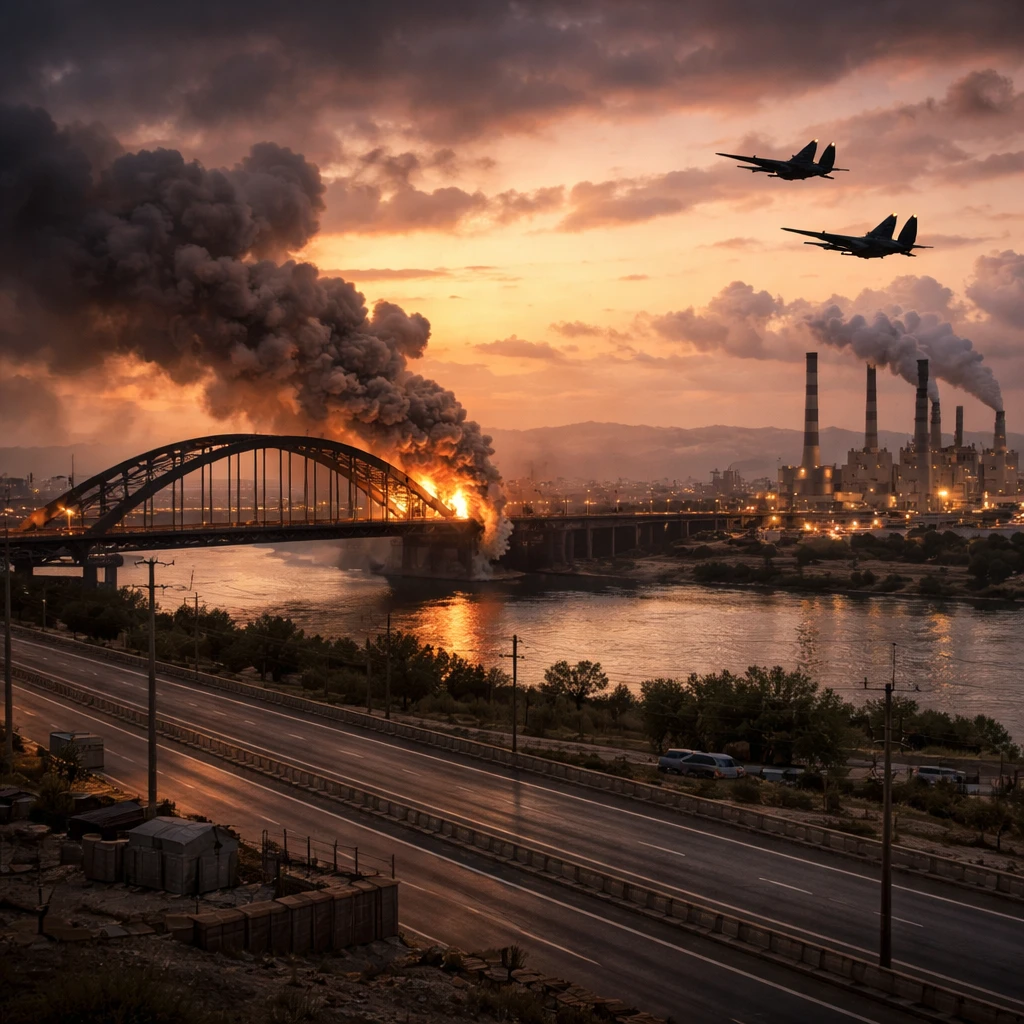
U.S. President Donald Trump issued a public warning late Thursday on Truth Social that United States military operations against Iran may escalate to target critical infrastructure, specifically naming bridges and electric power plants.
In his post, Trump said: "Our Military... hasn't even started destroying what's left in Iran. Bridges next, then Electric Power Plants," and added that new leadership in Tehran "knows what has to be done... FAST."
The message follows recent U.S. strikes on Iranian infrastructure, including an attack on a major bridge, and represents a marked increase in the rhetoric surrounding potential targets. Trump also told audiences in a speech on Thursday that he intended to hit Iran "extremely hard" in the coming weeks and suggested that certain military objectives were "nearing completion."
These statements occur against a backdrop of prior U.S. warnings that Iran's energy grid could be targeted if Tehran did not meet geopolitical demands, including the reopening of the Strait of Hormuz. The latest public remarks indicate a possible shift toward intensifying pressure designed to produce rapid political change in Iran.
Analysts and market participants have noted that expanding attacks to civilian infrastructure - such as power plants - could broaden the scope of the conflict and pose risks to regional energy supply chains. Disruption to electricity systems and transport links like bridges could compound logistical challenges and add to uncertainty over energy flows in the area, with attendant concerns about global economic effects.
At present, the public record consists of the president's statements, recent U.S. strikes on infrastructure including the bridge, and previous threats toward Iran's energy grid tied to specific geopolitical demands. The implications of further action on critical civilian facilities remain subject to the course of events and any subsequent operational decisions.
Summary of developments
- President Trump warned on Truth Social that U.S. forces may next target bridges and electric power plants in Iran.
- The remarks follow recent U.S. strikes on Iranian infrastructure, including a major bridge, and echo earlier threats to target Iran's energy grid tied to geopolitical demands such as reopening the Strait of Hormuz.
- Officials said Trump had vowed to hit Iran "extremely hard" and indicated military objectives were nearing completion.
Market and sector implications
The potential targeting of civilian infrastructure raises immediate concerns for the energy sector and transport networks in the region, and introduces additional uncertainty for markets sensitive to geopolitical risk.