
President Donald Trump said on Sunday evening that direct negotiations with Iran were ongoing and that an agreement with Tehran might be close.
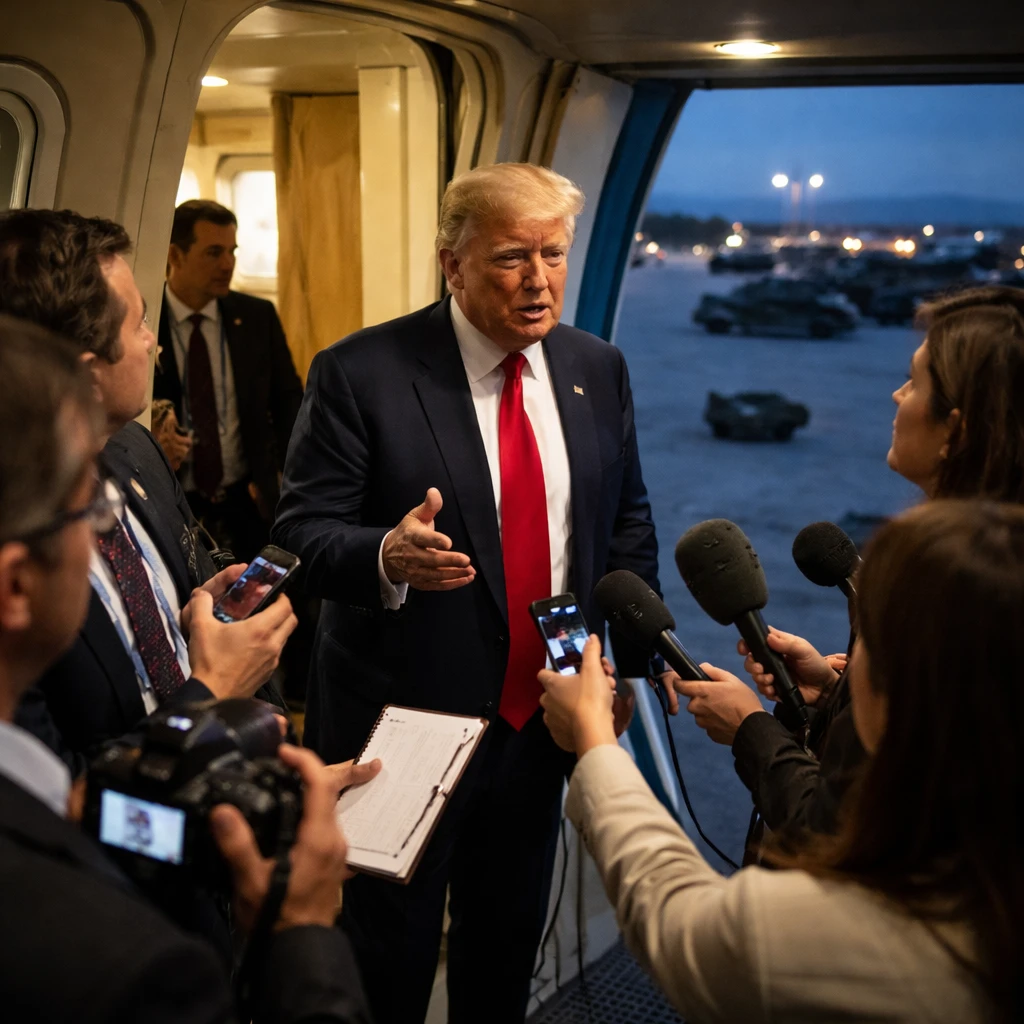
Speaking to reporters aboard Air Force One, the president described talks as going "extremely well" and suggested a deal was possible while acknowledging it was not guaranteed. "I think we'll make a deal with them, but it's possible we won't," he said. When pressed further, he added, "I do see a deal with Iran, could be soon," without offering a specific timeline.
Trump framed the talks against a backdrop of recent U.S. military action, referencing what he characterized as "regime change" in Tehran after strikes that, he said, killed several top Iranian officials in the past month. He also reiterated broad claims about the effects of U.S. operations on Iran's military, saying Washington was "weeks ahead of schedule" and had "wiped out Tehran's air force, navy, and missile launch capabilities."
On questions of a possible ground invasion, the president declined to commit either way on whether U.S. forces would put boots on the ground in Iran.
Trump also said Iran had permitted roughly 20 oil tankers to pass through the Strait of Hormuz, which he presented as a concession to the United States. He told reporters that "We are negotiating with (Iran) directly and indirectly... they gave us 20 boats of oil, big big boats of oil going through the Hormuz Strait," and added that the movement would begin "tomorrow morning." Separate reports over the weekend said Iran had allowed 20 Pakistani-flagged vessels to transit the waterway.
Tehran has largely denied that direct talks with Washington have taken place since the late-February onset of the war and has insisted that hostilities must stop before any negotiations can proceed.
Despite the signaling of talks, hostilities in the Middle East persisted over the weekend. An attack by Yemen's Houthi movement against Israel opened what U.S. and regional officials described as a potential new front in the conflict. Iran and Israel continued to exchange strikes, and U.S. movements into the region were reported as involving thousands of troops.
Contextual note: The statements above reflect the president's comments to reporters and public reporting on recent movements and incidents; Iran has publicly disputed that direct negotiations have occurred and has articulated a prerequisite of a cessation of hostilities for talks to proceed.