
Economy January 29, 2026

Trump Renewed Criticism of Powell, Urges U.S. Rates Be Cut to Global Lows

President says recent Fed pause is unjustified and ties tariff inflows to lower interest-rate demands

By Hana Yamamoto
Trump Renewed Criticism of Powell, Urges U.S. Rates Be Cut to Global Lows

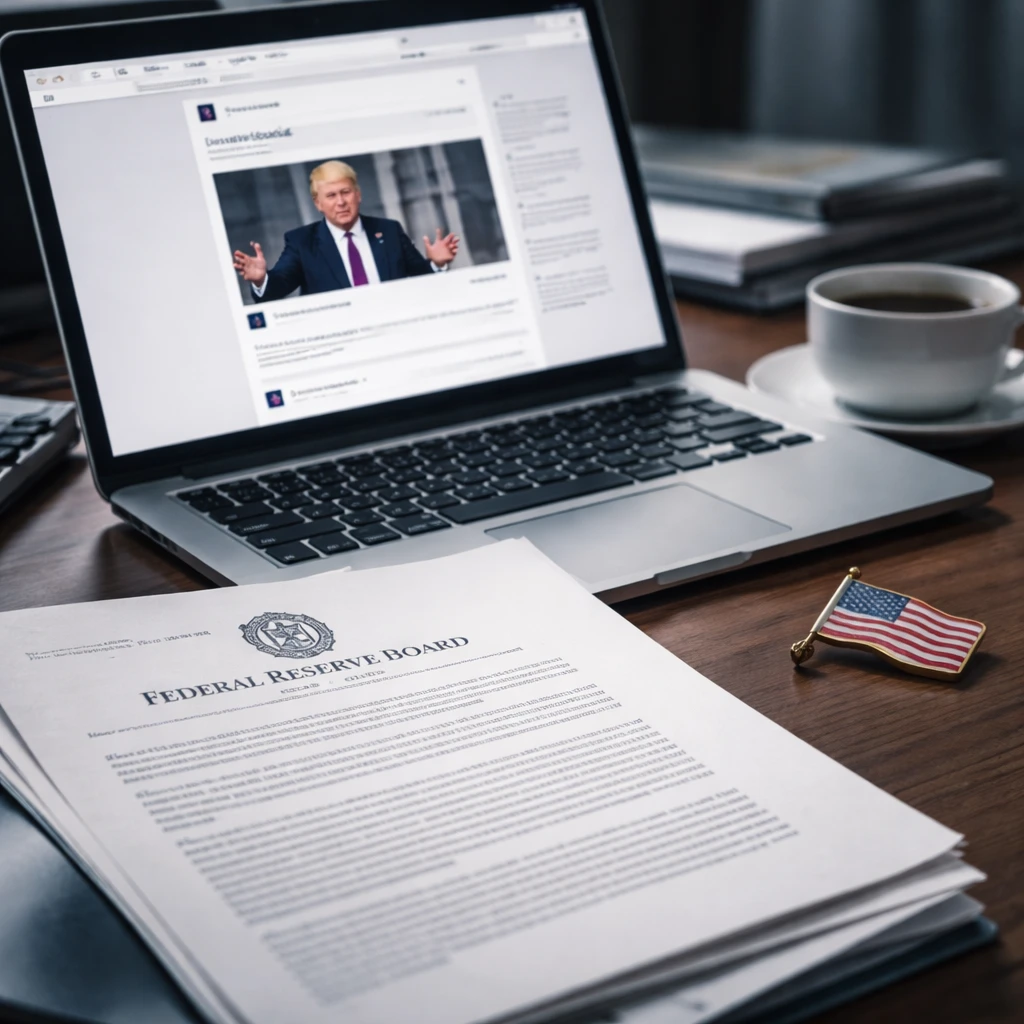
President Donald Trump used a Truth Social post to sharply criticize Federal Reserve Chair Jerome Powell for holding interest rates steady, arguing the United States should have substantially lower rates and the lowest rates in the world. His remarks followed the Fed's decision to leave benchmark rates unchanged and reiterated claims that tariffs boost domestic inflows and strengthen U.S. finances.

Key Points

  • President Trump publicly criticized Fed Chair Jerome Powell after the Fed left benchmark interest rates unchanged, calling Powell "Too Late" and accusing him of harming national security.
  • Trump argued high interest rates are costing the U.S. "Hundreds of Billions of Dollars a year in totally unnecessary and uncalled for INTEREST EXPENSE," and said there is "absolutely no reason" to keep rates at their current level given Powell's admission that inflation is no longer a threat.
  • The president tied his tariff policy to calls for lower rates, saying tariff-related inflows mean the U.S. should have the lowest interest rates worldwide and describing other countries as "low interest rate paying cash machines."

President Donald Trump again assailed Federal Reserve Chair Jerome Powell on Thursday after the Fed elected to keep benchmark interest rates unchanged. In a post on Truth Social, Trump accused Powell of being "Too Late" and said the Fed chair is "hurting our Country, and its National Security" by maintaining current interest-rate levels.

The president's comments arrived one day after the Federal Reserve's decision to hold rates steady. Trump said there is "absolutely no reason" for the central bank to keep rates at their present level, repeating that Powell has "admits inflation is no longer a problem or threat."

Trump argued that elevated interest rates impose heavy costs on the U.S. He wrote that high rates are responsible for "Hundreds of Billions of Dollars a year in totally unnecessary and uncalled for INTEREST EXPENSE," framing the Fed's policy as a direct fiscal burden.

Linking his trade approach to his monetary policy demands, the president stressed that "because of the vast amounts of money flowing into our Country because of Tariffs," the United States should maintain the lowest interest rates in the world. He characterized other nations as "low interest rate paying cash machines" that appear "elegant, solid, and prime, only because the U.S.A. allows them to be."

Trump also addressed his diplomatic posture on trade, saying he has been "very nice, kind, and gentle to countries all over the World" while warning that stronger actions could quickly increase capital inflows. He wrote that "with a mere flip of the pen, $BILLIONS more would come into the U.S.A."

Concluding the post, the president asserted that "Tariffs have made America strong and powerful again" and reiterated his demand that the Fed "substantially lower interest rates, NOW!"


Context and scope

The exchange highlights a direct public rebuke from the president to the Fed chair following a decision to keep policy unchanged. Trump's statements emphasize two themes he has advanced publicly: that inflation is no longer a threat according to the Fed's own admissions, and that tariff-driven inflows justify lower U.S. rates.

Limitations - The president's post reflects his interpretation of recent events and policy choices; the Fed's stated decision to hold rates steady is the only central bank action referenced.

Risks

  • Public criticism of the Fed by the president may increase political pressure on monetary policy decisions - this could affect financial markets, particularly banking and bond sectors.
  • If policymakers or markets interpret tariff-driven capital inflows differently than the president suggests, there may be uncertainty for exporters, importers, and sectors sensitive to trade and interest-rate expectations.
  • Disagreement between the executive branch and the central bank over the stance of monetary policy could heighten uncertainty for rate-sensitive industries such as housing, consumer credit, and financial services.

More from Economy

House Prepares Vote to End Brief Partial Shutdown, Final Ballot Expected Tuesday Feb 2, 2026 France’s 2026 Budget Clears Parliament After Concessions, Targets 5% Deficit Feb 2, 2026 Cboe Holds Early Talks to Bring Binary Options Back to Retail Traders Feb 2, 2026 Administration to Build $12 Billion Critical Minerals Reserve to Shield U.S. Manufacturing Feb 2, 2026 Investors Pile Into Gold and Miner ETFs in January as Safety Demand Rises Feb 2, 2026