
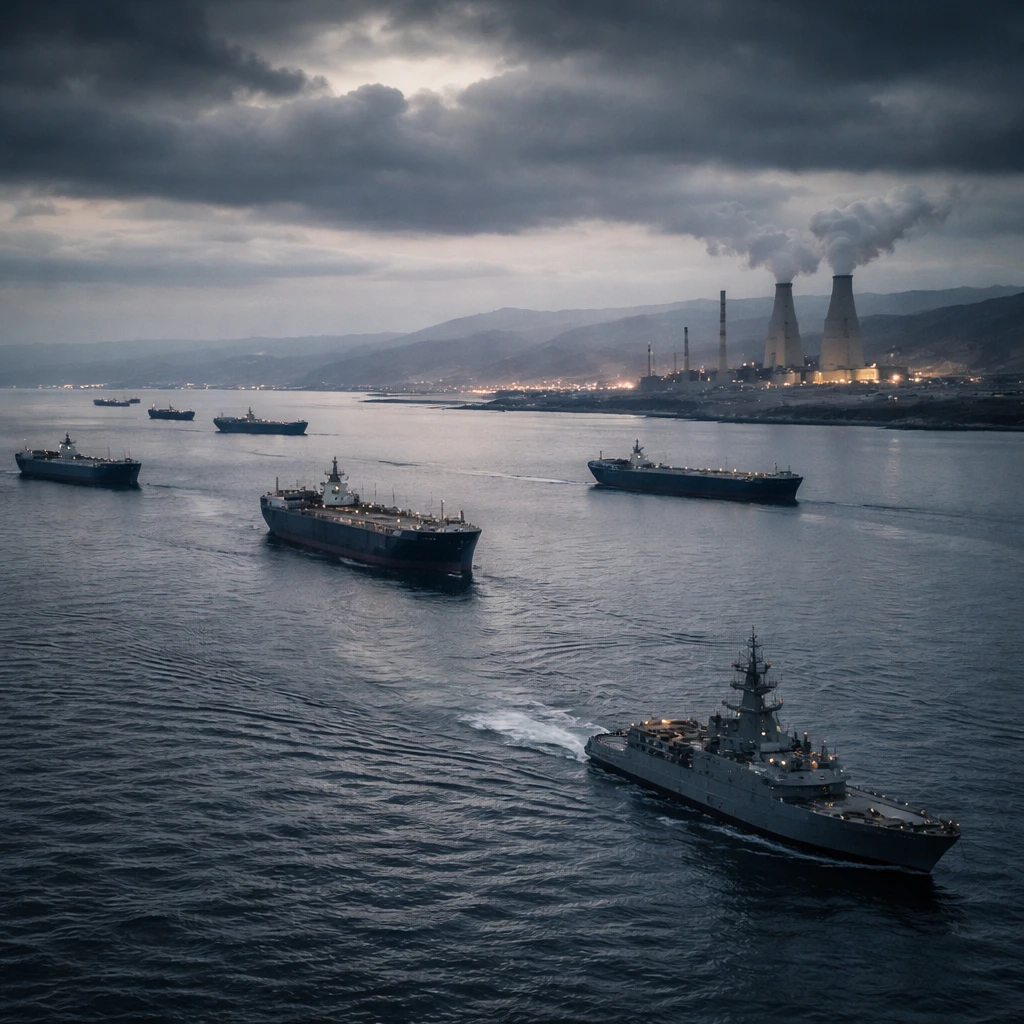
WASHINGTON - U.S. President Donald Trump intensified his administration's military posture on Saturday by demanding that Iran "fully open" the Strait of Hormuz within 48 hours. In a social media post, the President warned that if threats to the strategic shipping lane were not removed, the United States would carry out strikes amounting to the "obliteration" of Iran's power infrastructure, explicitly naming the nation's largest power plants as potential targets.
The ultimatum comes after several weeks of maritime instability that have effectively stopped shipping through the Strait of Hormuz - a passage normally used for roughly 20% of the world's crude oil and liquefied natural gas (LNG) flows.
Shifting targets and stated campaign progress
The President's message signals a shift in targeting approach, moving beyond direct military goals to focus on civilian power infrastructure as a means to increase pressure on Iran's leadership. Mr. Trump rejected the idea that U.S. forces had not achieved significant results, asserting that the military campaign is "weeks ahead of schedule" and has already substantially degraded Iran's naval and aerial capabilities.
While the White House has suggested that Iran "wants to make a deal," the President said he would not pursue negotiations at this time. His stated priority is an unconditional reopening of the Strait of Hormuz.
Potential effects of strikes on power plants
A strike on Iran's largest power plants would produce immediate domestic energy shortages. Beyond that, the move would indicate a strategy aimed at broader disruption of regional industrial capacity, which the administration acknowledges could complicate any diplomatic pathway out of the crisis.
Officials have framed the targeting of civilian energy infrastructure as a way to maximize pressure on Iranian leaders rather than to effect limited military objectives.
Market impact and the Hormuz chokepoint
The de facto closure of the Strait of Hormuz has already created a sizeable global energy supply shock. Tanker traffic has fallen to near zero, prompting major Persian Gulf producers to cut output. That disruption has intensified volatility across commodity markets and raised the regional risk premium for energy supplies.
The imposition of a 48-hour deadline adds a tight timeline for traders and market participants to reassess risk. Should the deadline expire without a change in Iran's maritime posture, the administration's stated shift toward strikes on civilian energy infrastructure could materially alter the perceived risk environment for the remainder of 2026.
What follows
The immediate weeks ahead will determine whether the Strait reopens and if the risk environment for oil, LNG and regional industry eases or further escalates. The administration's public statements emphasize rapid timelines and a willingness to target critical civilian power assets should Iran not comply.
At present, the situation remains in flux and hinges on the outcome of the 48-hour ultimatum and any subsequent operational decisions.