
Economy February 4, 2026

Toronto-area home transactions and prices decline sharply in January amid economic uncertainty

Seasonally adjusted sales fall nearly 10% from December as price index records eighth straight monthly drop

By Ajmal Hussain
Toronto-area home transactions and prices decline sharply in January amid economic uncertainty

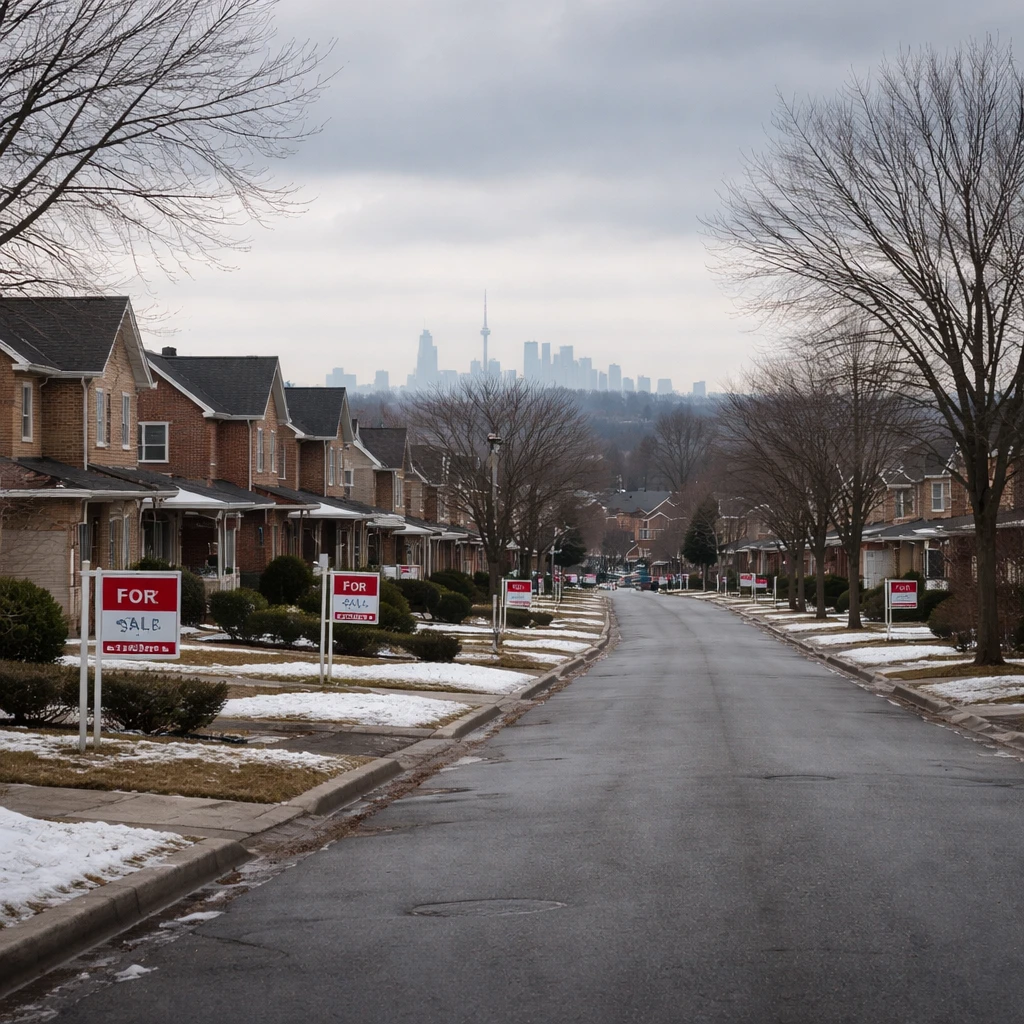
Home sales in the Greater Toronto Area weakened noticeably in January, with seasonally adjusted transactions down 9.9% from December to 4,795 units and the TRREB home price index sliding 1.7% month-over-month to C$941,200. The region recorded its lowest sales level since May and the price index posted its eighth consecutive monthly decline, while year-over-year measures show broader contractions in sales, prices and new listings.

Key Points

  • Seasonally adjusted Greater Toronto Area sales declined 9.9% from December to 4,795 units, marking the fourth consecutive month of falling transactions and the weakest monthly level since May - impacts the housing and real estate sector.
  • The TRREB home price index dropped 1.7% month-over-month to C$941,200 ($689,574), the eighth straight monthly decline - relevant to homeowners, mortgage markets and residential property investors.
  • On a year-over-year basis, prices fell 8%, sales plunged 19.3% and new listings were down 13.3% - broader implications for sectors tied to housing activity and for trade-sensitive portions of the economy given the noted economic uncertainty.

Greater Toronto Area housing activity contracted in January as buyers stepped back amid heightened economic uncertainty, according to data released by the Toronto Regional Real Estate Board on Wednesday.

On a seasonally adjusted basis, sales fell 9.9% from December to 4,795 units, extending a four-month run of declines. The board said January represented the largest single-month drop in transactions since February last year and pushed monthly activity to its weakest point since May.

The board's home price index also moved lower. On a seasonally adjusted basis the index fell 1.7% month-over-month to C$941,200 ($689,574), marking the eighth consecutive monthly decrease in the series.

Looking at year-over-year comparisons, the index was down 8% in January. Sales weakened by 19.3% compared with the same month a year earlier, and new listings declined 13.3% year-over-year.

The Greater Toronto Area, which includes the city of Toronto and four surrounding regional municipalities, thus recorded declines across several headline metrics in January: lower transactions, fewer new listings and continuing downward pressure on the home price index.

The board's release linked part of the backdrop for the softer housing market to broader economic uncertainty. The national economy has felt effects from the U.S.-led trade war, the release noted, and the United States-Mexico-Canada Agreement - credited with shielding much of Canada's exports from U.S. tariffs - is set for review by a July 1 deadline.

Those external trade-related pressures, coupled with the recent streak of falling sales and prices, framed a subdued start to the year for the region's housing market.


Data snapshot:

  • Seasonally adjusted January sales: 4,795 units (-9.9% from December)
  • Home price index (seasonally adjusted): C$941,200 (-1.7% month-over-month)
  • Year-over-year: price index -8.0%; sales -19.3%; new listings -13.3%

Risks

  • Economic uncertainty is keeping potential buyers on the sidelines, which could further damp housing demand and affect realtor activity and related services.
  • The United States-Mexico-Canada Agreement is scheduled for review by a July 1 deadline, introducing trade-related uncertainty that the board identified as weighing on Canada's economy and potentially on housing sentiment.
  • Continued declines in sales, listings and the price index risk deepening softness in the Greater Toronto Area housing market if the current trends persist.

More from Economy

Telekom and Nvidia Launch €1 Billion Munich AI Data Center, German Finance Minister Says It Bolsters Digital Sovereignty Feb 4, 2026 Poland’s Central Bank Holds Policy Rate at 4% as Growth Outpaces Forecasts Feb 4, 2026 Treasury Sets $125 Billion Quarterly Refunding, Keeps Coupon and FRN Sizes Steady Feb 4, 2026 Russia Faces Sharper-Than-Expected Budget Gap as Oil Revenue Slips Feb 4, 2026 Fitch: Poland to Carry a Roughly 7% Fiscal Shortfall in 2026, Debt to Rise to 70% by 2027 Feb 4, 2026