
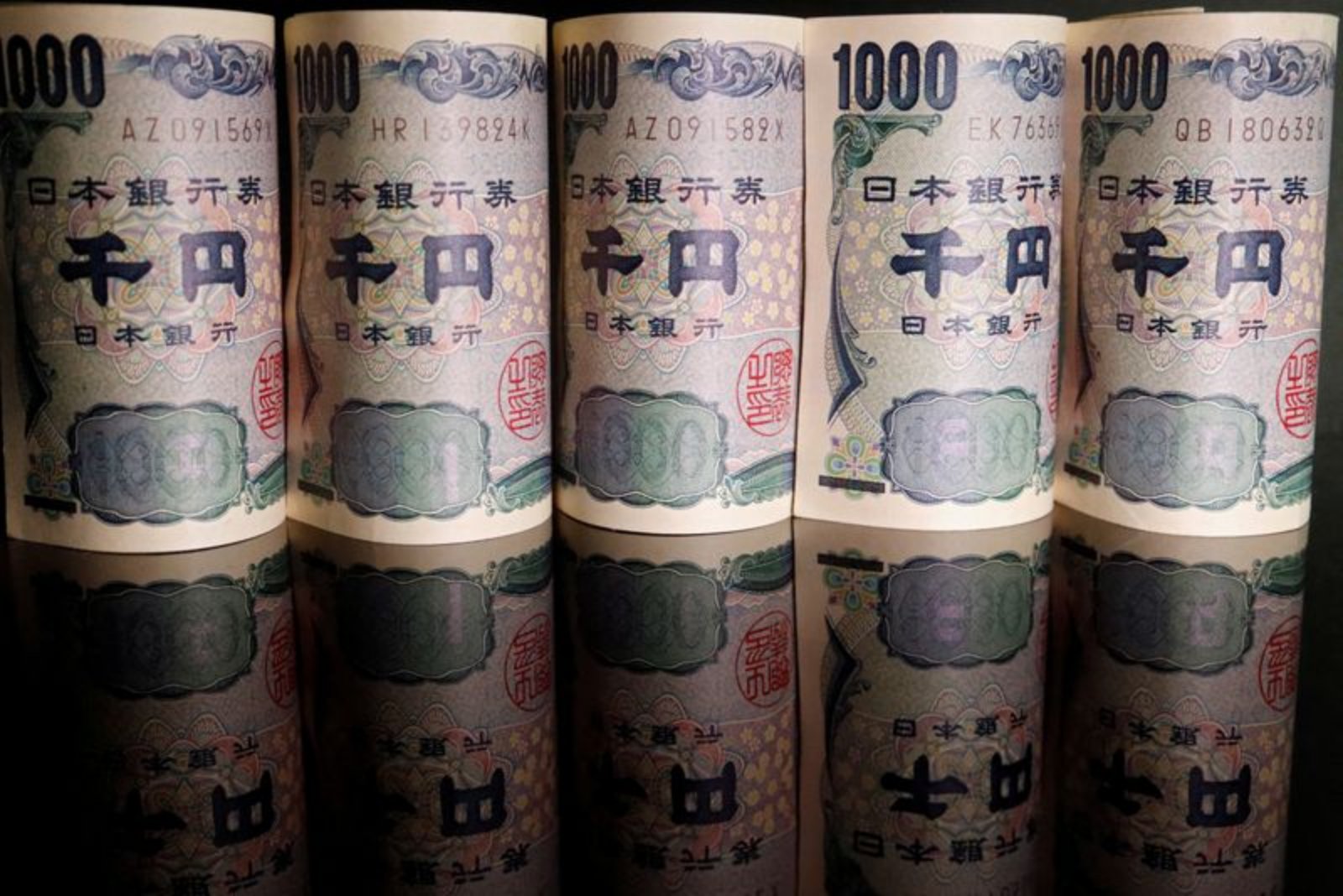
Japan's senior monetary policymakers are relying on a mix of limited public comment and targeted diplomatic engagement with Washington to counter the yen's slide, achieving notable currency gains without reverting to the heavy interventions seen in previous years.
Central to this approach is Atsushi Mimura, the official responsible for Japan's international finance and currency policy, whose deliberate and infrequent public remarks have become an implicit policy tool. Rather than offering continuous commentary on market developments, Mimura has moderated the timing and tone of his statements, a communications strategy that has, according to people familiar with his thinking, left market participants uncertain about whether and when Tokyo might act.
"They've pushed dollar/yen down by roughly seven yen while preserving their firepower," said Shota Ryu, an FX strategist at Mitsubishi UFJ Morgan Stanley Securities, describing the recent apparent gains as "a remarkably efficient approach."
Since late last week, the yen experienced sharp moves on three separate occasions. The most pronounced volatility followed reports that the New York Federal Reserve conducted an unusual rate check, a development that alerted investors to the possibility of the first joint U.S.-Japan intervention in 15 years. While U.S. Treasury Secretary Scott Bessent publicly denied that the United States was intervening in currency markets to prop up the yen, former Japanese monetary officials said that even U.S. participation at the level of rate checks represents a major shift in Washington's stance, which has historically been wary of currency intervention.
Those former officials said that U.S. involvement, even if limited to monitoring, has reinforced the market perception that Tokyo and Washington are aligned in efforts to curtail the yen's declines. At the same time, Tokyo has maintained a disciplined public posture, limiting day-to-day commentary and reiterating only that it remains in close coordination with U.S. authorities.
Market participants say the restraint itself has been a tactical lever. "By keeping silent, they make the market think they must be doing something behind the scenes. Their silence is fuelling speculation and heightening uncertainty," said Yuji Saito, executive advisor to SBI FX Trade.
Mimura, who took the post of vice finance minister for international affairs in 2024 after a 37-year government career that included nearly a third of his time at Japan's banking regulator, has framed this communications stance as intentional. "Being always vocal is one style of communication, but not speaking may also be another way," he told Reuters when he began the current role, which encompasses oversight of Japan's currency policy and coordination of economic policy with other countries.
The Japanese strategy gains potency because it does not always require drawing down foreign exchange reserves for costly, large-scale market operations. Bank of Japan money market data do not show clear evidence that Japan carried out interventions at the scale of the operations seen in 2022 and 2024 following the most recent rally in the yen, at least since the surge late last week. In those past episodes, Japan's authorities spent a combined 24.5 trillion yen.
Using foreign reserves to buy yen would mean tapping into Japan's $1.37 trillion stockpile of foreign currency assets, the majority of which are held in U.S. Treasuries. That option carries the risk of exerting unwanted pressure on U.S. bond markets at times when yields are already volatile.
Yet the officials' communications-driven approach has its limits. Sustained appreciation of the yen will ultimately hinge on underlying economic fundamentals, the future path of Bank of Japan policy and the fiscal direction that Japan's government takes under the new administration following the February elections.
When the BOJ raised its policy rate in December to 0.75 percent, a 30-year high, the move failed to arrest the currency's retreat. The central bank's upgrade to its inflation forecasts and the governor's hawkish remarks in January pushed up bond yields, but the yen's decline subsequently accelerated as those signals did not change market perceptions that the BOJ was lagging in its response to inflationary pressure.
U.S. Treasury Secretary Scott Bessent, who is reported to be in close contact with BOJ Governor Kazuo Ueda, has repeatedly highlighted that faster rate increases in Japan would be central to reversing the yen's downward trend. Minutes from the BOJ's December meeting suggest a board leaning toward hawkishness, but Governor Ueda has offered little clarity on the timing and scale of further tightening.
Political developments also complicate the outlook. A decisive win by Prime Minister Sanae Takaichi in the February 8 general election could strengthen the hand of advisers pushing reflationary policies and amplify opposition to more rapid rate hikes, some analysts say. On the political sensitivity and its impact on policy, former BOJ official Atsushi Takeuchi warned: "Given the need to pay heed to political developments, it’s unlikely the BOJ will raise interest rates at a rapid pace. Even if it does hike rates at a pace of twice a year as markets predict, the impact on the yen would be limited."
The evolving mix of diplomatic coordination, selective communication and the potential but limited use of foreign-exchange reserves has so far allowed Japan to influence dollar/yen moves significantly without deploying the full scale of interventions used in prior episodes. Whether that approach can produce lasting currency stability will depend on the interaction of central bank policy, fiscal choices and the political calendar in the weeks ahead.
($1 = 152.9400 yen)