
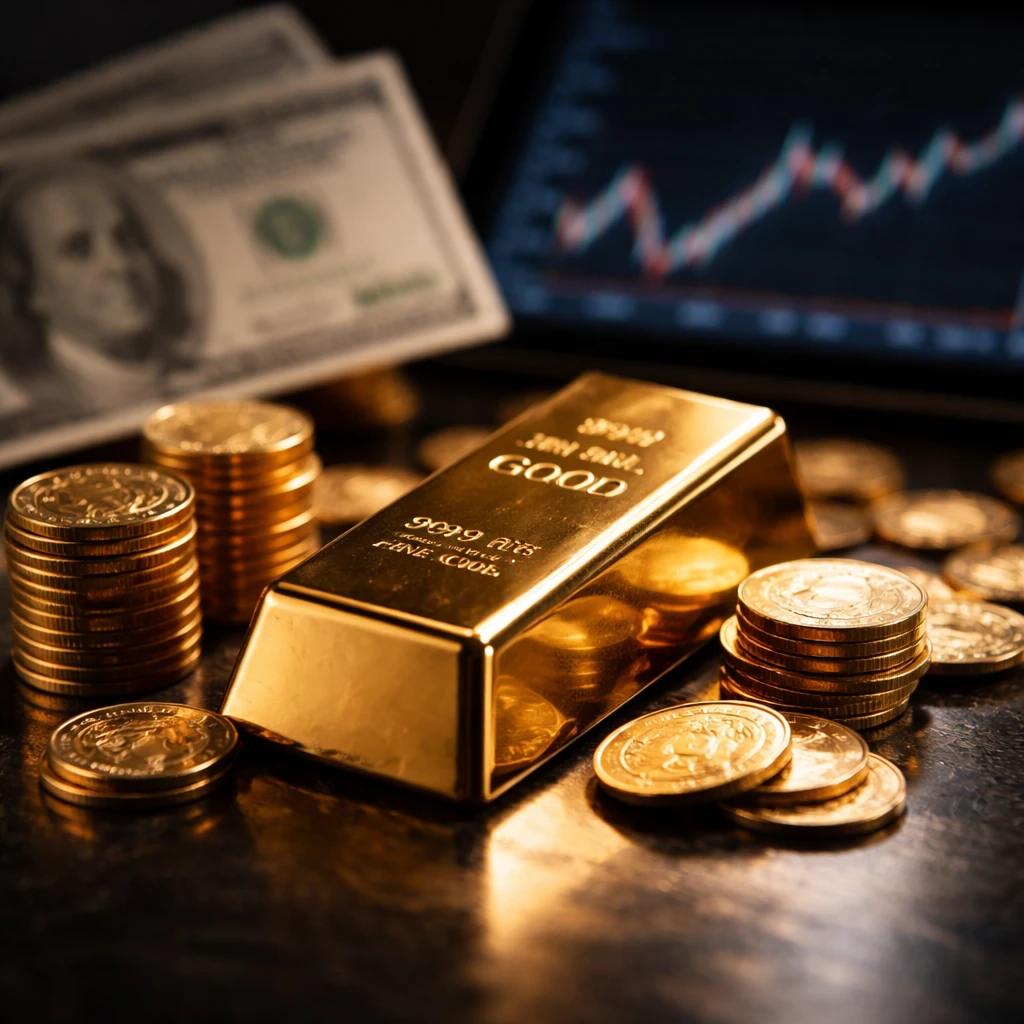
Gold prices have fallen roughly 13% since the onset of the conflict, a decline that has surprised some market observers given elevated geopolitical risks. According to a strategist's note, the retreat in bullion is being driven by three principal forces that have converged to sap recent gains.
Macroeconomic headwind - dollar strength and rising yields
First, a stronger U.S. dollar and the prospect of higher interest rates have worked against gold. A firmer greenback raises the price of gold for holders of other currencies, reducing international demand. At the same time, expectations for higher yields increase the opportunity cost of owning non-yielding assets such as bullion. The strategist highlighted that this macro backdrop is a traditional impediment for precious metals and has been a dominant influence on recent price moves.
Positioning and technical dynamics
Second, positioning and technical conditions left the market vulnerable to a pullback. Gold and, to a larger extent, silver entered the recent period in overbought territory, according to the note, which made them susceptible to corrective moves. In episodes where risk sentiment turns cautious, crowded trades can unwind rapidly as investors seek liquidity. The strategist referenced previous episodes, including the 2008 financial crisis, to illustrate that gold has experienced sharp short-term drops even amid broader market stress.
Softening official sector demand
Third, demand from central banks appears to be easing. The note reports that some governments are tempering gold purchases in order to prioritize other expenditures. Specific examples cited include Poland, which is said to be considering selling gold to fund defense spending, and Turkey, which has sold reserves recently to support its currency. The strategist also noted indications that certain Gulf states may be slowing their buying activity as export revenues weaken.
Outlook
Despite these headwinds, the strategist expressed an expectation that the pressures should fade over time. As dollar strength abates, rate expectations stabilize, and official sector demand returns to more typical patterns, gold could recover lost ground. The note retains a constructive long-term outlook on the metal, describing the present weakness as cyclical rather than a disruption of the broader bullish case.
Key points
- Gold is down about 13% since the start of the conflict, driven by dollar strength, higher rate expectations, technical positioning, and weakening central bank demand.
- Macroeconomic forces - currency moves and rate expectations - have been the primary driver of recent price action in precious metals.
- Sectors affected include the precious metals market, currency markets, central banking operations, and economies reliant on export revenues.
Risks and uncertainties
- Dollar and rate dynamics could remain unfavorable for longer than expected, prolonging pressure on gold; this impacts currency and fixed-income markets.
- Crowded technical positions leave the metals market vulnerable to sharp liquidations during risk-off episodes, affecting spot and futures liquidity.
- Official sector behavior is uncertain - further sales or reduced purchases by central banks or governments could continue to weigh on prices, with implications for reserves management and sovereign balance sheets.