
Economy March 23, 2026

Thousands of Marines Head to CENTCOM as Deadline Nears for Strait of Hormuz

USS Tripoli and USS New Orleans enter Central Command with roughly 2,200 Marines; second Marine unit ordered to deploy in coming weeks

By Caleb Monroe
Thousands of Marines Head to CENTCOM as Deadline Nears for Strait of Hormuz

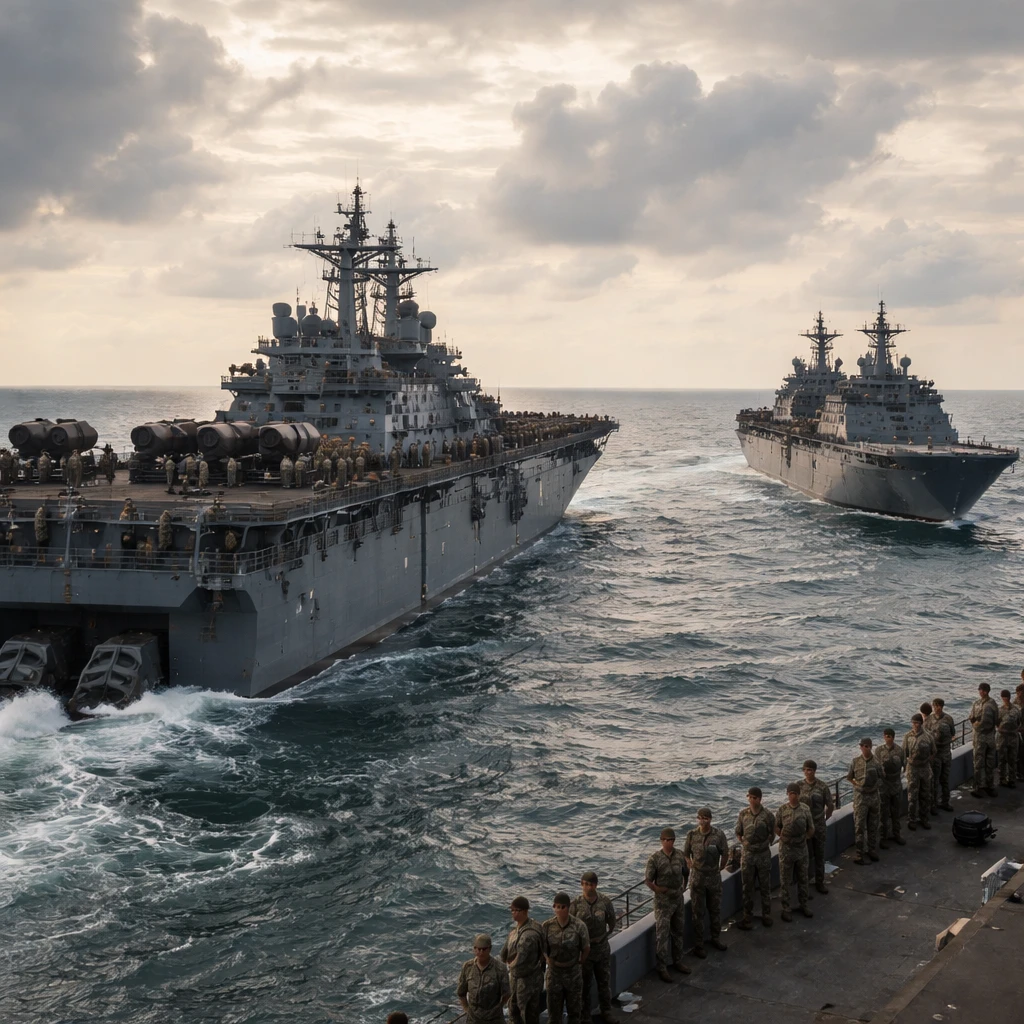
Approximately 2,200 Marines from the 31st Marine Expeditionary Unit are set to arrive in the U.S. Central Command area on Friday when the Japan-based USS Tripoli and the amphibious landing dock USS New Orleans transit into the region, U.S. officials said. Officials indicated it will take several days for the unit to reach the Strait of Hormuz. The Pentagon has also directed a second Marine unit, the California-based 11th Marine Expeditionary Unit aboard the USS Boxer amphibious ready group, to prepare for deployment and depart in a few weeks.

Key Points

  • Roughly 2,200 Marines from the 31st Marine Expeditionary Unit will arrive in the U.S. Central Command area when the USS Tripoli and USS New Orleans cross into CENTCOM on Friday.
  • Officials said it will take several additional days for the 31st MEU to reach the Strait of Hormuz after entering the Central Command area.
  • The Pentagon has ordered a second Marine unit - the California-based 11th Marine Expeditionary Unit aboard the USS Boxer amphibious ready group - to deploy and depart in a few weeks.
  • Sectors relevant to these movements include defense, maritime shipping, and energy given the geographic focus on the Strait of Hormuz.

U.S. Marine forces are scheduled to enter the Middle East this week as two amphibious ships transition into the U.S. Central Command area, U.S. officials said. The Japan-based amphibious assault ship USS Tripoli and the amphibious landing dock USS New Orleans are due to cross into CENTCOM on Friday, carrying roughly 2,200 Marines assigned to the 31st Marine Expeditionary Unit.

Officials noted the movement coincides with a presidential deadline tied to the Strait of Hormuz. While the ships will arrive in the Central Command zone on Friday, the unit is not expected to reach the Strait immediately - it will take several additional days for the force to arrive at that location, according to the officials.

In addition to the Tripoli and New Orleans transit, the Pentagon has directed a second Marine unit to prepare for deployment to the region. The California-based 11th Marine Expeditionary Unit will embark aboard the USS Boxer amphibious ready group and is slated to depart in a few weeks, officials said.

The movements involve amphibious platforms and Marine expeditionary units that are staging into CENTCOM waters and will take time to position. The initial contingent numbers roughly 2,200 Marines from the 31st MEU, with an additional unit queued to follow in the coming weeks aboard the Boxer ready group.

Officials characterized the arrival schedule as phased: the ships will enter the Central Command area on Friday, but the operational timeline for reaching the Strait of Hormuz spans several more days, and the follow-on deployment from the West Coast will occur after a short delay measured in weeks.


Contextual summary: U.S. officials report that two amphibious ships carrying the 31st Marine Expeditionary Unit will cross into the Central Command area on Friday, transporting about 2,200 Marines. It will take additional days for that unit to reach the Strait of Hormuz, and a second Marine unit - the 11th MEU aboard USS Boxer - has been ordered to depart in a few weeks.

Risks

  • Timing uncertainty: the 31st Marine Expeditionary Unit will enter CENTCOM on Friday but will require several additional days to reach the Strait of Hormuz, creating an unclear operational timeline - this affects defense and maritime planning.
  • Follow-on deployment window: the 11th Marine Expeditionary Unit is slated to depart in a few weeks, leaving uncertainties around the exact timing and sequencing of additional forces - this impacts military logistics and readiness.
  • Geographic concentration: movements centered on the Strait of Hormuz introduce regional operational concentration that may present logistical and maritime navigation challenges - relevant to shipping and energy transport sectors.

More from Economy

Markets Rally as U.S. Defers Strikes on Iran’s Power Grid; Oil Plummets Mar 23, 2026 Russia Pauses Shift to Bigger Fiscal Reserves as Iran Conflict Sends Oil Prices Higher Mar 23, 2026 RBNZ says short-lived energy shock can be overlooked but warns of rate rises if inflation becomes entrenched Mar 23, 2026 Daly Urges Scenario-Based Approach as Uncertainty Remains Elevated Mar 23, 2026 Sam Altman Leaves Helion Energy Board as OpenAI Pursues Deeper Ties Mar 23, 2026