
Senior representatives from Taiwan and the United States met this week for the sixth round of the U.S.-Taiwan Economic Prosperity Partnership Dialogue, focusing on cooperation in artificial intelligence, technology and drone systems, the U.S. State Department said on Tuesday.
The forum, which was launched during the first Trump administration and first convened in November 2020, brought together officials led by Under Secretary for Economic Affairs Jacob Helberg on the U.S. side and Taiwan Economy Minister Kung Ming-hsin, who was visiting the United States for the talks.
In a statement, the State Department described Taipei as a "vital partner" and said the session resulted in the signing of statements related to the Pax Silica Declaration - a U.S.-led initiative to secure AI and semiconductor supply chains - and a separate agreement on cooperation in economic security between the two sides.
"Taiwan is a vital partner on these and other important economic initiatives and its advanced manufacturing sector plays a key role in fuelling the AI revolution," the State Department said in its release.
Participants discussed a range of supply chain issues tied to AI and semiconductors, as well as technical and regulatory aspects of drone systems. The talks included exchanges on certification for drone components and cooperation on critical minerals, the statement said.
Officials also reviewed efforts to counter economic coercion, to expand cooperation by Taiwanese and U.S. entities in third countries and to address tax-related barriers that the two sides say are impeding investment flows. The State Department said those conversations highlighted "progress in responding to economic coercion, pursuing mutual cooperation in third countries and addressing tax-related barriers to increase investment between the United States and Taiwan."
Taiwan, a major producer of advanced semiconductors that underpin AI computing, has repeatedly sought an agreement to avoid double taxation, arguing such a pact would help raise bilateral investment.
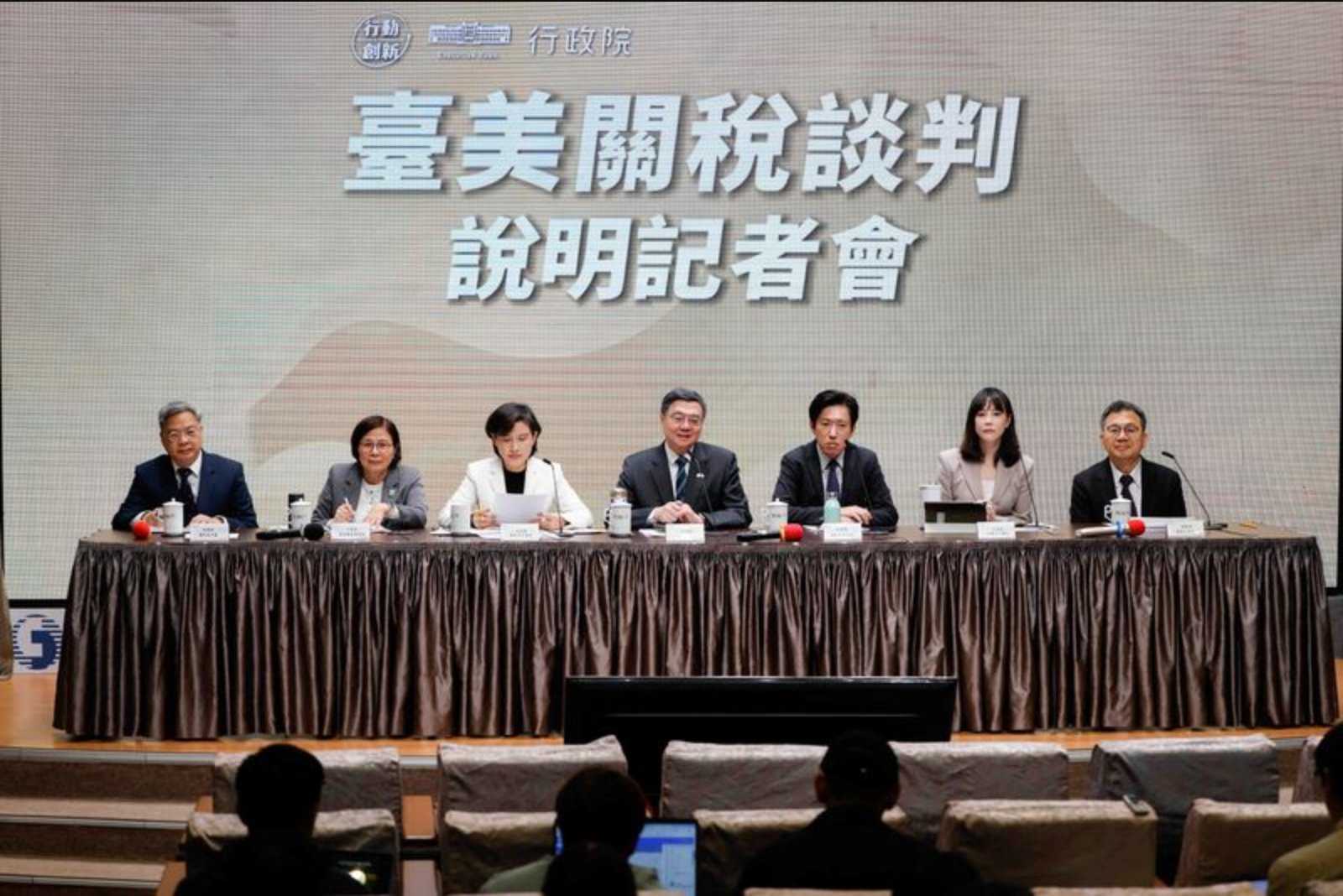
Earlier this month, Taiwan and the United States reached a separate arrangement to reduce tariffs on Taiwanese exports to the U.S. and to encourage greater Taiwanese investment in U.S. semiconductor manufacturing and other sectors.
China routinely objects to official contacts between Taiwanese and U.S. officials, asserting that Taiwan is an internal matter and describing such interactions as a red line. Taiwan's government rejects Beijing's sovereignty claims and maintains that decisions about the island's future belong solely to its people.
Summary
The two governments used the sixth Economic Prosperity Partnership Dialogue to deepen cooperation on AI-related supply chains, semiconductor security, drone component certification and critical minerals. The meeting produced statements including the Pax Silica Declaration and an economic security cooperation agreement, while also addressing tariff reductions, tax barriers and actions to counter economic coercion.