
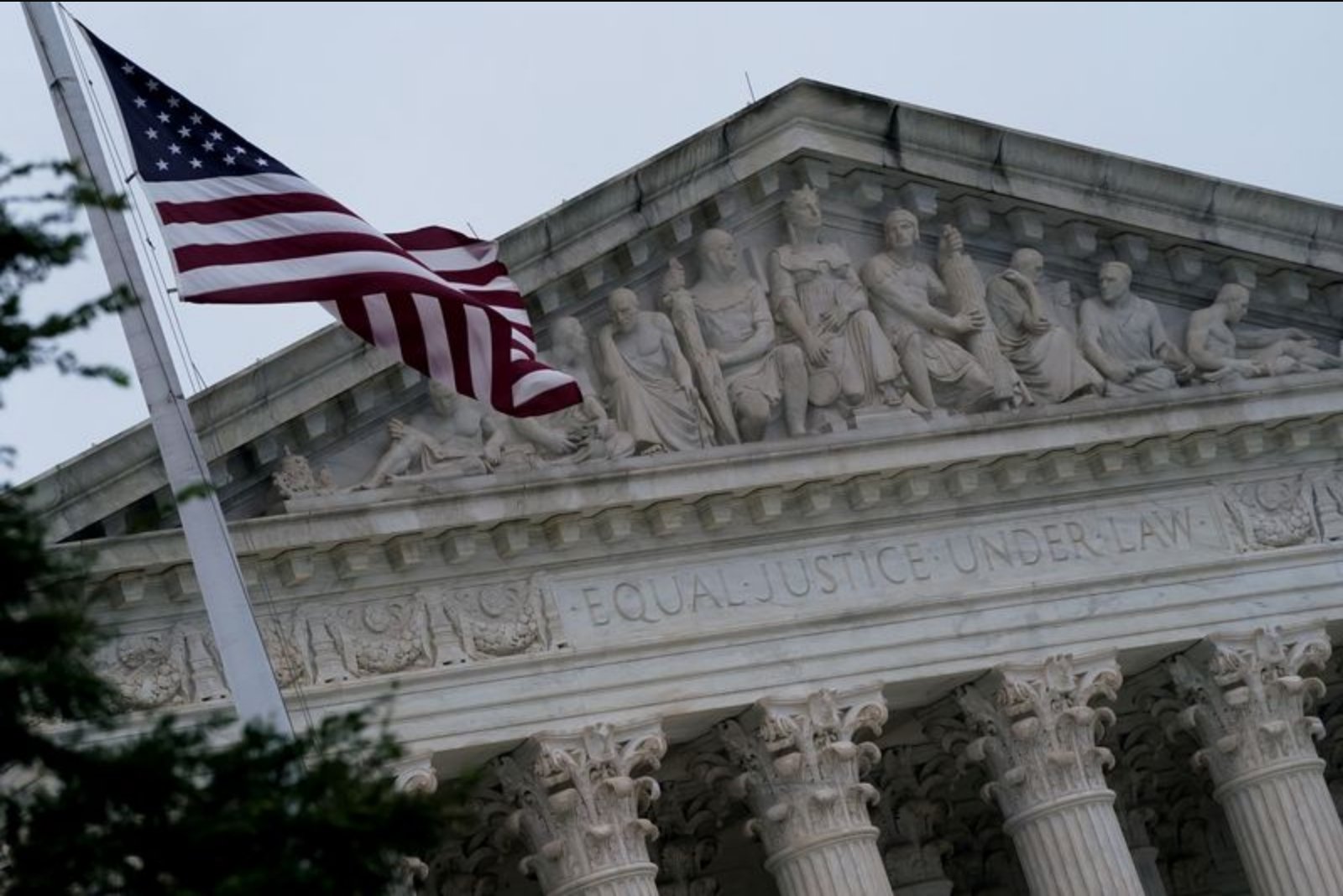
The Supreme Court’s current session is tackling a set of cases that span the machinery of government, the limits of presidential authority, civil rights and business liability. The questions before the justices cut across the Federal Reserve’s independence, emergency tariff powers, birthright citizenship under the 14th Amendment, congressional voting protections, the tenure protections for independent agency officials, transgender participation in sports, the regulation of health-care practices concerning minors, firearm restrictions tied to drug use, campaign-finance limits, mail-in ballot rules, asylum-processing discretion at the border, the reach of an 18th century statute for alleged human rights abuses abroad, the standing of faith-based pregnancy centers under state investigations, rights of incarcerated people to bring civil claims, the application of capital punishment law to defendants found intellectually disabled, product-liability suits over an herbicide and large regulatory fines connected to carrier practices. The court also has taken emergency actions in multiple challenges to policies of President Donald Trump.
Below is a case-by-case account of the principal matters being contested this term, with factual detail on the legal issues and the procedural posture reflected in arguments or filings. Where argument dates were publicly recorded, they are shown. Where lower-court rulings were described in filings or opinions, those outcomes are noted.
Trump’s effort to remove a Federal Reserve governor
The high court heard arguments on January 21 in litigation stemming from President Donald Trump’s attempt to remove a Federal Reserve governor, Lisa Cook. The case presents a direct challenge to safeguards Congress included when creating the central bank. The Federal Reserve Act provides that governors may be removed by the president only "for cause," though that statutory term is not defined and no removal procedures are set out in the law. The dispute reached the justices after a lower-court decision temporarily barred the president from immediately firing Cook while her legal challenge proceeds.
At argument the justices signaled skepticism toward the president’s request to lift the injunction. The administration defended the removal action on the basis of allegations of mortgage fraud that Cook has denied. Cook remains in her position pending the legal proceedings and has characterized the allegations as a pretext tied to disagreements over monetary policy as the president presses the Fed to cut interest rates. A decision in the matter is expected by the end of June.
Tariffs imposed under national emergency authority
On November 5 the justices questioned whether a 1977 statute intended for use during national emergencies - the International Emergency Economic Powers Act - provided the legal basis for expansive tariffs imposed by the Trump administration. The case probes the outer limits of a president’s authority to act on the international stage and whether reliance on that statute amounts to an intrusion on congressional power.
Both conservative and liberal justices pressed the administration’s lawyer about whether the statute was meant to authorize the broad tariff measures at issue. At the same time, several conservative justices emphasized inherent presidential authority in foreign affairs, suggesting the court could divide sharply when it rules. Lower courts concluded the president overreached in invoking the 1977 law to impose the tariffs; the litigation was brought by various businesses and a coalition of 12 states. A ruling is expected by the end of June.
Birthright citizenship and the 14th Amendment
The court agreed to decide whether an executive directive that would limit automatic citizenship to children born on U.S. soil is lawful. A lower court blocked an executive order instructing agencies not to recognize citizenship for children born in the United States when neither parent is a citizen or a lawful permanent resident. That court concluded the policy violated the Constitution’s 14th Amendment and a federal statute that codifies birthright citizenship protections, based on a class-action suit brought by parents and children whose citizenship status the directive threatened. No argument date has been set.
Voting Rights Act - Louisiana congressional map
On October 15 the court heard arguments over the application of Section 2 of the Voting Rights Act, the provision that prohibits voting maps that dilute minority voting strength even in the absence of explicit discriminatory intent. The litigation concerns a Louisiana congressional map that a lower court found violated equal-protection guarantees by failing to provide adequate minority representation. The contested map set out six U.S. House districts, with two Black-majority districts - an increase from one under the previous map. During argument, the court’s conservative justices signaled a willingness to diminish the reach of the statute in question. A ruling is expected by the end of June.
President’s authority to remove an FTC commissioner
The court considered arguments on December 8 in a case about whether the president lawfully removed a Federal Trade Commission member, a dispute that could expand presidential control over independent agencies while unsettling a long-standing legal precedent. The Justice Department appealed a lower court ruling that found the president exceeded his authority when he sought to remove Democratic FTC member Rebecca Slaughter before the end of her statutory term.
During argument the court’s conservative members appeared receptive to the administration’s position that statutory tenure protections for independent-agency officials improperly constrained the president’s constitutional authority. The court permitted the president to remove Slaughter while the case proceeded. Observers expect a final decision by the end of June.
Transgender participation in school sports
Argued on January 13, appeals brought by Idaho and West Virginia ask the justices to uphold state laws that bar transgender athletes from competing on female sports teams. Lower courts had sided with transgender students who challenged the bans as inconsistent with constitutional protections and a federal anti-discrimination statute. The litigation reflects a growing national trend: 25 other states have enacted similar measures. Conservative justices expressed concern about imposing a single federal rule across the country given significant disagreement and scientific uncertainty over whether treatments such as puberty blockers or gender-affirming hormones eliminate physiological advantages that males may have in athletic competition. The court is expected to rule by the end of June.
Challenge to Colorado’s ban on 'conversion therapy' for minors
During October 7 arguments, the court confronted a First Amendment challenge to a Colorado law that prohibits licensed psychotherapists from engaging in so-called "conversion therapy" aimed at changing a minor’s sexual orientation or gender identity. A Christian counselor sued, contending that the law infringes on free-speech protections. Colorado defended the statute as a regulation of professional conduct rather than speech, arguing that the state can prohibit a therapy it considers unsafe and ineffective. A lower court had upheld the Colorado law. The justices’ conservative wing appeared inclined to accept the speech-based challenge. A decision is expected by the end of June.
Hawaii restriction on carrying handguns on private property
On January 20 the court considered an appeal challenging a Hawaii statute that requires people to have a property owner’s "express authorization" before bringing a handgun onto private property open to the public, which encompasses most businesses. The challengers, supported by the Trump administration, argued that the law unduly restricts Second Amendment protections. Lower courts found the measure likely complies with the Constitution. The court’s conservative justices appeared skeptical of the law and seemed poised to broaden gun-rights protections. Four other states have comparable statutes. A ruling is expected by the end of June.
Gun bans for illegal drug users
The court scheduled arguments for March 2 in a case that asks whether a federal prohibition on gun ownership by users of illegal drugs is consistent with the Second Amendment. The Justice Department asked the justices to reverse a lower court ruling that largely found the restriction unconstitutional. That federal ban formed the basis for one of the 2023 charges against Hunter Biden. The prohibition on firearm possession by illegal drug users is a component of the Gun Control Act of 1968.
Campaign finance limits on coordinated party spending
On December 9 the court reviewed a challenge from Republican plaintiffs seeking to invalidate federal restrictions on spending by political parties when that spending is coordinated with candidates. The dispute involves Vice President JD Vance and other challengers who appealed a lower court decision that upheld limits on coordinated party expenditures. The contested question is whether those statutory ceilings violate the First Amendment’s protection of political speech. Some conservative justices showed sympathy for the challengers, while the court’s three liberal justices appeared inclined to maintain the restrictions. The justices are expected to issue a ruling by the end of June.
Mississippi mail-in ballot rule
The court agreed to hear Mississippi’s defense of a law that allows certain mail-in ballots to be counted if they are postmarked by Election Day and received up to five business days thereafter. Republicans challenged the law and a lower court ruled it unlawful. If the high court upholds the Mississippi rule, the decision could affect state-level rules governing the handling of mail-in ballots across the country. No argument date has been set.
Asylum processing and so-called metering at ports of entry
The justices took up an appeal in which the Trump administration seeks to defend a policy known as "metering," under which immigration officials limit the processing of asylum claims at ports of entry along the U.S.-Mexico border by stopping asylum seekers at the border and declining to process their claims. A lower court found that the metering practice violated federal law. Although the policy was rescinded by the Biden administration, the Trump administration has signaled it would consider resuming it. No argument date has been set.
Corporate liability for alleged human rights abuses abroad
Tech company Cisco Systems and the federal government have asked the court to narrow the application of an old federal statute that has been revived in recent decades for international human rights claims. The appeal challenges a 2023 decision that revived a 2011 lawsuit accusing the company of knowingly developing technology that enabled surveillance and persecution of adherents of the Falun Gong spiritual movement in China. The suit was brought under the Alien Tort Statute, a 1789 law that lay largely dormant for nearly 200 years before being repurposed in the 1980s to bring human-rights litigation in U.S. courts. No argument date has been set.
Investigation of faith-based crisis pregnancy centers
On December 2 the court heard arguments in a case brought by First Choice Women’s Resource Centers, a network of Christian anti-abortion crisis pregnancy centers in New Jersey. The centers challenged a 2023 subpoena from the New Jersey attorney general seeking donor and physician information as part of an investigation into whether the facilities engage in deceptive practices. During argument, a majority of the justices appeared likely to revive the federal lawsuit challenging the state investigation. The centers aim to direct women away from abortion. A ruling is expected by the end of June.
Rastafarian inmate’s religious rights claim
The court heard argument on November 10 in a case brought by a Rastafarian man in Louisiana who alleges his religious freedom was violated after prison guards shaved him bald in contravention of his faith’s requirement that adherents let their hair grow. The suit was brought under a federal law that protects incarcerated people from religious discrimination. A lower court dismissed the claim on the ground that the statute does not permit suits for monetary damages against individual officials. The conservative justices appeared inclined to reject the inmate’s bid to sue state prison officials. A ruling is expected by the end of June.
Alabama appeal to pursue execution of an inmate found intellectually disabled
On December 10 the court heard arguments concerning Alabama’s bid to proceed with the execution of an inmate convicted of a 1997 murder after a lower court determined the prisoner is intellectually disabled and therefore ineligible for the death penalty. The state appealed the lower court’s finding, which relied on intelligence quotient test scores and expert testimony. A 2002 Supreme Court precedent holds that executing an intellectually disabled person violates the Eighth Amendment’s prohibition on cruel and unusual punishment. The justices' ruling in this matter is expected by the end of June.
Roundup weedkiller litigation and Bayer’s appeal
Bayer has asked the Supreme Court to sharply curtail lawsuits alleging that its Roundup weedkiller causes cancer, a move that could limit potential damages exposure in a suite of claims. The company appealed a lower court ruling in a suit brought by an individual who said he developed non-Hodgkin’s lymphoma after years of exposure to the herbicide. The lower court rejected Bayer’s contention that federal pesticide law bars state-law suits over pesticide-related claims. No argument date has been set.
FCC fines over wireless carriers’ location-data practices
The justices will hear a dispute about fines the Federal Communications Commission imposed on major U.S. wireless carriers for sharing customer location data without consent. The litigation centers on whether the FCC exceeded its constitutional authority by pursuing tens of millions of dollars in penalties against carriers such as Verizon Communications and AT&T before the accused companies had an opportunity for adjudication. No argument date was recorded.
Cox Communications and a major music-copyright retrial
On December 1 the court reviewed Cox Communications’ effort to avoid substantial liability in a music-copyright case brought by major record labels that alleged the internet service provider enabled widespread piracy by its subscribers. During argument the justices expressed skepticism toward Cox’s position that mere knowledge of user piracy cannot justify holding the company liable for contributory copyright infringement. A lower court ordered a new trial to determine damages owed to Sony Music, Warner Music Group, Universal Music Group and other labels. Cox warned that the retrial could result in a verdict as large as $1.5 billion. The court is expected to issue a ruling by the end of June.
Where things stand and what to watch
The Court’s docket this term is notable both for its breadth and for the stakes involved. Several cases implicate the balance of power among the branches of government - removing officials at independent agencies, the president’s authority to act in foreign affairs under emergency statutes, and limits on the enforcement reach of federal regulators - as well as constitutional protections governing voting, free speech, religious exercise, equal protection and the right to bear arms. Others squarely affect private parties and markets, from potential damage caps in product-liability suits to the financial exposure of internet service providers and the ability of individuals to bring human-rights claims against corporations in U.S. courts.
Many of the matters argued this term have a relatively near-term timeline for resolution: a cluster of cases argued in the fall and winter is expected to be decided by the end of June. Other disputes remain pending without argument dates, including major matters involving birthright citizenship, asylum metering, the Roundup litigation and the FCC fines challenge.
Summary of cases with recorded argument dates and expected timing
- Trump’s attempt to remove a Fed governor - argued Jan 21; decision expected by end of June.
- Tariffs under the International Emergency Economic Powers Act - argued Nov 5; decision expected by end of June.
- Louisiana Voting Rights Act challenge - argued Oct 15; decision expected by end of June.
- FTC commissioner removal - argued Dec 8; decision expected by end of June.
- Conversion therapy ban challenge in Colorado - argued Oct 7; decision expected by end of June.
- Cox copyright retrial issue - argued Dec 1; decision expected by end of June.
- Alabama death-penalty IQ dispute - argued Dec 10; decision expected by end of June.
- Crisis pregnancy center subpoena challenge - argued Dec 2; decision expected by end of June.
- Transgender sports participation bans - argued Jan 13; decision expected by end of June.
- Hawaii handgun authorization law - argued Jan 20; decision expected by end of June.
- Drug-user firearm ban - scheduled for argument on March 2.
Several other matters remain pending without scheduled argument dates, including the birthright citizenship dispute, the Mississippi mail-in ballot case, the asylum metering appeal, the Alien Tort Statute matter involving Cisco, the Roundup weedkiller appeal, and the FCC fines litigation.
Key takeaways
- The term places presidential authority under sustained scrutiny, with multiple cases examining removal power at independent agencies and the use of emergency statutes to justify tariff actions.
- The court is poised to resolve a range of constitutional disputes affecting civil rights and liberties, including voting protections under Section 2 of the Voting Rights Act, birthright citizenship under the 14th Amendment, religious and free-speech claims tied to healthcare and faith-based organizations, and rules governing transgender participation in athletics.
- Business and regulatory risks are prominent: product-liability exposure for a major agrochemical maker, copyright liability for an internet service provider, corporate exposure for alleged overseas human-rights abuses under an ancient statute, and the FCC’s authority to impose large fines on carriers are all before the court.
Risks and uncertainties explicitly reflected in the cases
- Legal uncertainty around executive removal and independence of agencies - sectors affected include financial services and regulatory oversight, since outcomes could alter the stability of leadership at independent agencies such as the Federal Reserve and the Federal Trade Commission.
- Potential contraction of statutory protections - decisions that limit Section 2 of the Voting Rights Act or narrow the Alien Tort Statute could affect political representation and corporate liability risk, with implications for public-sector governance and multinational corporations facing human-rights litigation.
- Market and litigation exposure for corporations - rulings in the Roundup litigation, the Cox retrial, and the FCC fines challenge could materially change the financial stakes for companies in agriculture, tech and telecommunications, influencing potential damages and regulatory enforcement outcomes.
What the schedule suggests
Many high-profile arguments were concentrated in the fall and winter months, and the court is expected to issue rulings on several of those contested matters by the end of June. The clustering of major decisions in that timeframe means the legal landscape for executive power, voting law, business liability and regulatory authority could shift significantly within a short period. Other matters without argument dates will follow later in the term or in future terms, leaving those outcomes unresolved for the time being.
Note: This article lays out the cases and procedural posture as presented in filings and recorded arguments. Some matters are argued and awaiting decisions; others have not yet been scheduled for argument. The article reflects the content and statuses of the disputes as publicly recorded during the Court’s term.