
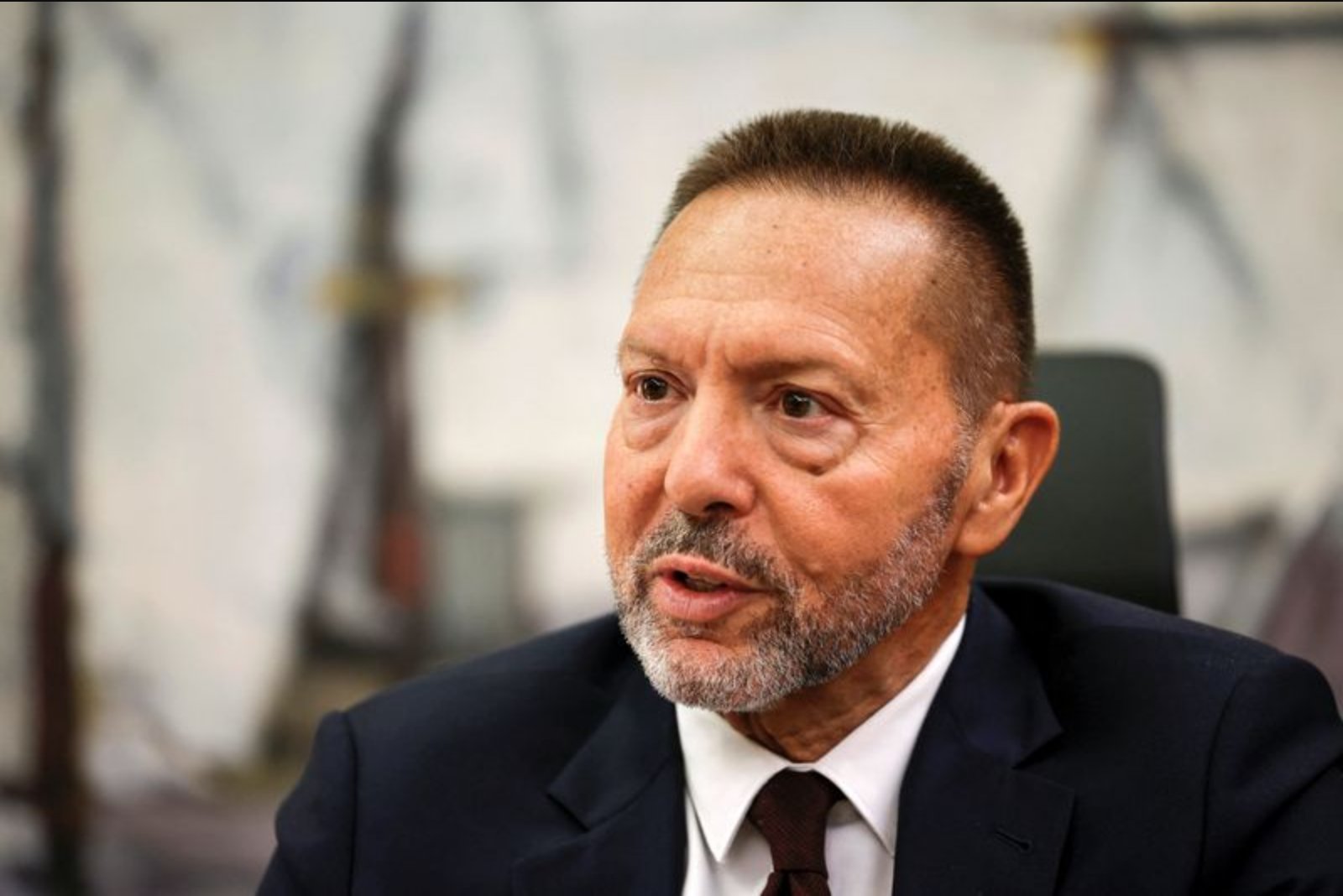
Greece's central bank governor Yannis Stournaras warned on Monday that the European Central Bank's March baseline projections for prices and growth face downside risk if the war in the Middle East persists. Addressing delegates at a financial conference in Bucharest, Stournaras said policymakers must be ready to respond quickly if there are signs that inflation expectations are starting to drift higher.
Stournaras, who also serves on the ECB's policy council, framed the current policy challenge as a balancing act: containing inflation that is driven largely by supply-side shocks while avoiding actions that would further slow economic activity. He emphasized that a prolonged conflict could leave the euro area with a more difficult macroeconomic backdrop than the one assumed in the ECB's March projections - specifically, weaker growth alongside higher and more persistent inflation.
"If signs were to emerge that second-round effects are gaining traction or that inflation expectations are beginning to drift, the ECB will have to respond quickly to help ensure that inflationary pressures do not become entrenched in expectations," Stournaras said at the conference hosted by the Economist.
Stournaras also pointed to the ECB's position prior to recent events, noting that euro area inflation had been holding around the 2% target for almost a year. He said that track record provides some room - or "slack" - for any future rate tightening should it prove necessary. He added that the central bank has improved its understanding of how monetary policy transmits to indirect and second-round effects on inflation.
Earlier this month, ECB President Christine Lagarde signaled that the central bank could raise interest rates if the war in the Middle East pushed euro area inflation higher for a sustained period. Stournaras' comments reinforce the view that policymakers are monitoring not only headline inflation but also the evolution of expectations and the potential for second-round dynamics to take hold.
Summary
Yannis Stournaras warned that a prolonged conflict in the Middle East could put the ECB's March price and growth projections at risk. He called for rapid policy responses if inflation expectations begin to shift, noted the trade-off between tackling supply-driven inflation and supporting growth, and highlighted that inflation had been near the 2% target for almost a year, giving some room for potential rate action. He also said the ECB has a better grasp of transmission channels to indirect and second-round inflation effects.