
Economy May 11, 2026 06:23 AM

Starmer Calls for Immediate 'Big Leap' in Relations With EU Ahead of Summit

Prime Minister seeks early, tangible advances across trade, economic and security cooperation while avoiding firm commitments on single market or customs union

By Sofia Navarro

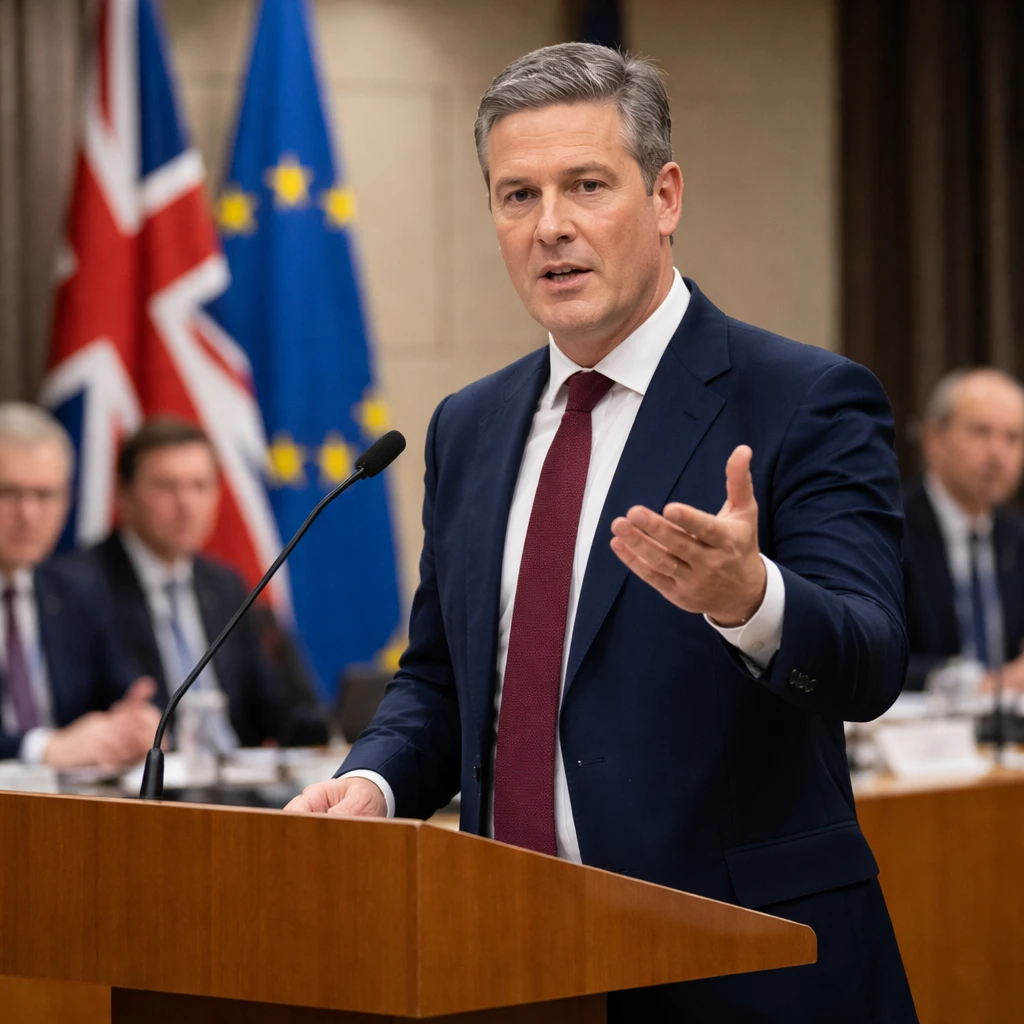
British Prime Minister Keir Starmer said he wants an immediate, significant advance in the United Kingdom's relationship with the European Union, aiming for concrete progress at this year's EU-UK summit on trade, the economy, defence and security. He urged setting aside past disputes but did not give a direct answer when asked whether he would rule out promising single market or customs union membership before the next general election in 2029.

Starmer Calls for Immediate 'Big Leap' in Relations With EU Ahead of Summit

Key Points

  • Prime Minister Keir Starmer called for an immediate and significant advancement in UK-EU relations, aiming for measurable progress at this year's EU-UK summit - sectors impacted include trade and the broader economy.
  • Starmer emphasized strengthening ties in trade, the economy, defence and security as priorities for the summit - markets related to defence and security contractors, trade-dependent industries and cross-border commerce could be affected.
  • He urged moving beyond past disputes, stressing a forward-looking approach rather than reopening historical grievances; however, no specific commitments on institutional arrangements were announced.

British Prime Minister Keir Starmer on Monday outlined an ambition for a swift and substantial step forward in the United Kingdom's relationship with the European Union, describing such progress as the basis for further cooperation between the two sides.

Starmer said he wants to secure meaningful movement at the EU-UK summit planned for this year, with a focus on strengthening ties in trade, the broader economy, defence and security. He framed the effort as an attempt to move beyond the disputes that have marked recent relations.

On the subject of past tensions, he told listeners: "I strongly believe we’ve got to turn our back on the arguments of the past, not open old grievances," urging a forward-looking approach rather than revisiting previous conflicts.

When pressed about the political horizon and whether he would rule out offering membership of the EU single market or the customs union before the next election in 2029, Starmer avoided a direct commitment. Instead of answering yes or no, he reiterated that the upcoming summit would provide a venue to take UK-EU relations further.

The Prime Minister positioned the summit as a platform for achieving the early, substantive changes he described, without setting out specific policy guarantees or timelines for particular institutional arrangements such as single market or customs union membership.

The details Starmer provided were focused on the intent to deepen cooperation across trade, economic ties, defence collaboration and security arrangements. He emphasized the importance of leaving behind historical arguments as part of that process, while declining to draw a definitive line on potential future commitments ahead of the 2029 election.

The coming months, and the discussions at the summit, were framed by the prime minister as the first opportunity to translate this ambition into concrete steps, though his remarks stopped short of outlining any binding pledges on institutional alignment with the EU.

Risks

  • Uncertainty over formal commitments - Starmer did not directly rule out promising single market or customs union membership before the 2029 election, leaving ambiguity for businesses and markets that need clarity on future integration - this affects trade-sensitive sectors and firms engaged in cross-border commerce.
  • Outcome of the summit is not guaranteed - while the prime minister framed it as a platform for progress, the extent of tangible advances remains unclear, creating potential volatility for sectors tied to EU-UK cooperation, including defence and security contractors.
  • Possibility of lingering political friction - although Starmer called for turning away from past arguments, the risk that historical grievances could resurface remains, which could impede the deepening of economic and security ties.

More from Economy

USDA Bans Ten Lenders from Rural Development Program Over Compliance Issues May 12, 2026 Trump Says He Will Discuss Iran with Xi in China Visit, But Says He Doesn’t Need Beijing’s Help May 12, 2026 U.S. Posts Reduced $215 Billion April Surplus as Refunds and Outlays Rise May 12, 2026 Bundesbank's Nagel Says Iran Conflict Could Force ECB to Raise Rates May 12, 2026 EIA Sees U.S. Electricity Use Climbing to New Highs Through 2027 May 12, 2026