
The federal government is facing the prospect of a partial shutdown this week as lawmakers remain deeply divided over funding for the Department of Homeland Security (DHS). Tension escalated after the fatal shooting of a second U.S. citizen by federal immigration officers in Minnesota, prompting Senate Democrats to withhold the votes necessary to pass a standalone $64.4 billion DHS bill.
Democrats in the Senate have urged Republicans to remove the DHS measure from a broader funding package that would also finance programs in defense, health, transportation, education and housing through Sept. 30. Current appropriations for those programs are due to expire after midnight on Friday, raising the likelihood of federal agency disruptions if a deal is not reached.
Senate Republicans, holding a 53-47 majority, moved to place the entire appropriations bill on the legislative calendar for consideration later in the week, signaling no immediate readiness to separate DHS funding as Democrats demand. The White House has publicly pressed lawmakers to approve the full package to prevent another shutdown following the months-long lapse that ended in November.
Senate Democratic leader Chuck Schumer issued a statement saying Democrats were prepared to advance the five other appropriations bills independently of the DHS funding bill. "Senate Democrats have made clear we are ready to quickly advance the five appropriations bills separately from the DHS funding bill," he said, adding that Republicans would be responsible for another shutdown if they declined to do so.
On Monday, as leaders continued to negotiate behind closed doors, the White House reiterated support for the bipartisan appropriations work that produced the package. White House press secretary Karoline Leavitt told reporters that the administration backed passage of the full measure and did not want appropriations to lapse.
Aide commentary from Senate Democratic leadership indicated that while Republicans and the White House had reached out to Democrats, those conversations had not produced any "realistic solutions." The broader package had previously cleared the Republican-controlled House last week and was positioned for Senate approval until events in Minneapolis altered the political landscape.
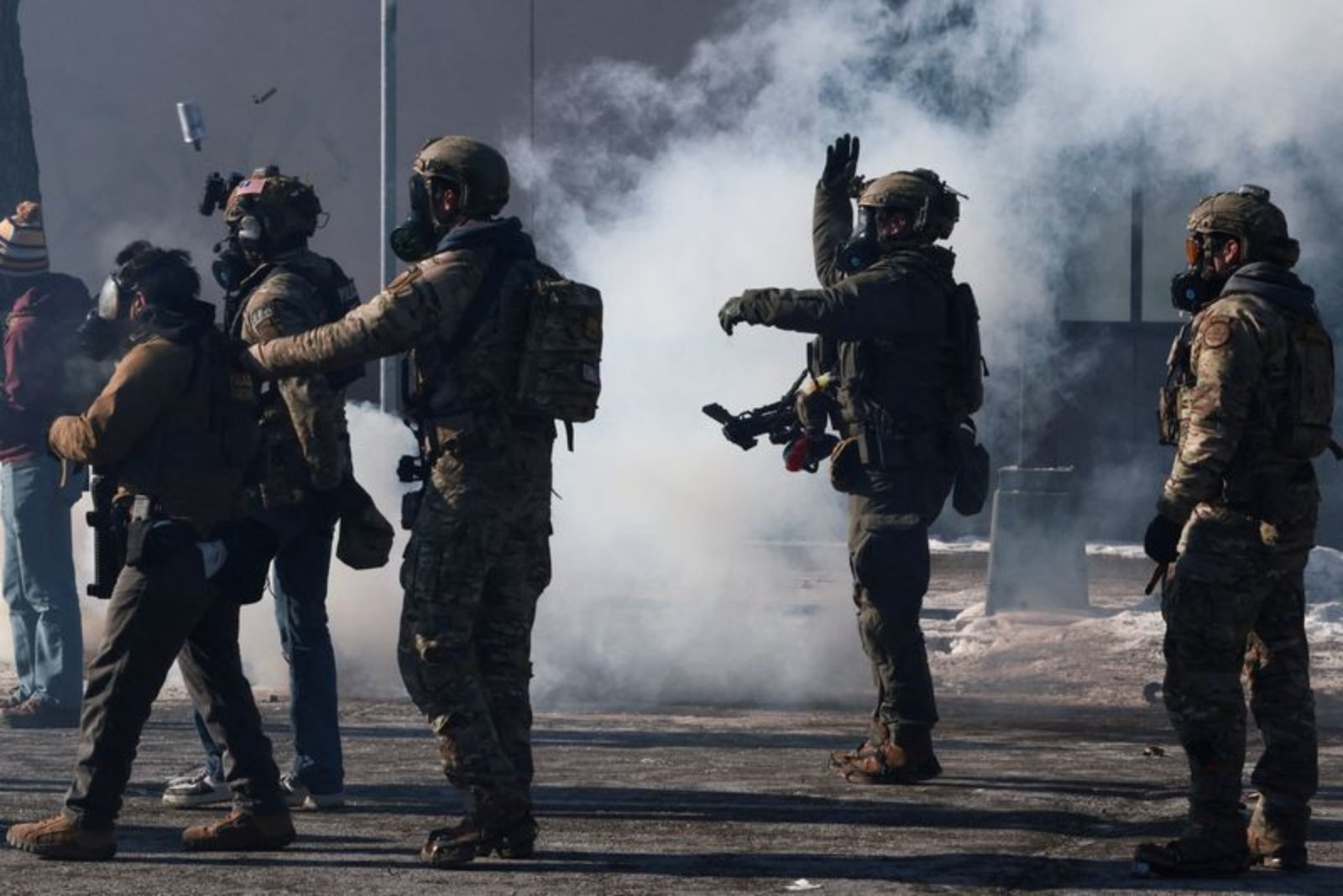
The immediate catalyst for the impasse was the Saturday shooting in Minneapolis in which federal immigration agents killed 37-year-old Alex Pretti. Pretti is reported to be the second U.S. citizen this month to be fatally shot by federal immigration officers in Minneapolis, where a large deployment of personnel has been conducting a deportation operation.
Following the incident, Senate Democrats - including moderates who joined Republicans last year to end the previous shutdown - said they could not endorse additional DHS funding without reforms intended to better protect Americans. Senator Jeanne Shaheen stated she would vote against DHS appropriations until reforms and an independent investigation were in place, calling for a bipartisan discussion on measures to prevent similar incidents nationwide.
Pennsylvania Democratic Senator John Fetterman, who at times crosses party lines, also urged that the DHS portion be removed from the larger funding bill. He warned that removal was unlikely and that the country could suffer another shutdown as a result.
Republican Senator Susan Collins, who chairs the Senate Appropriations Committee, emphasized that most of the DHS bill's resources are allocated to non-immigration functions. She noted that more than 80% of the bill's funding targets programs such as emergency disaster relief, air traffic safety, cybersecurity, and the U.S. Coast Guard.
Beyond appropriations for DHS and other departments, the judiciary is facing a separate but related funding crunch. In a memo to federal judges, Judge Robert Conrad, head of the judiciary's Administrative Office of the U.S. Courts, warned that the courts have sufficient cash from fees and other balances to fully sustain paid operations only through Feb. 4 if funding legislation for the judicial branch does not pass the Senate before then.
Senator Collins, speaking on the Senate floor, urged colleagues to find common ground to avoid slipping into what she described as a "dangerous and detrimental" shutdown. "I hope we can come together in a constructive way to get this done and to ensure that we do not lurch into a dangerous and detrimental government shutdown," she said.
As both parties remain entrenched, the Senate faces a compressed timetable to resolve the dispute before funding lapses at the end of the week. Lawmakers must weigh the political fallout of either continuing to press DHS reforms in response to the Minneapolis shooting or approving the full package to maintain funding for a wide range of federal programs.
Summary
Senate Democrats are blocking votes on a $64.4 billion DHS funding bill after a deadly shooting by federal immigration agents in Minneapolis, and they want the DHS funding removed from a larger appropriations package that would otherwise fund multiple programs through Sept. 30. With current funding set to expire after midnight Friday, a partial government shutdown is possible unless lawmakers reach an agreement. The judiciary also warned it could fully fund paid operations only through Feb. 4 unless separate legislation passes.
Key points
- Senate Democrats will not support passage of the $64.4 billion DHS bill while it remains part of a larger appropriations package; they want it stripped out for separate consideration.
- The broader spending package covers defense, health, transportation, education and housing through Sept. 30; current funding expires after midnight Friday, raising shutdown risk.
- Funding for the judicial branch is limited by existing cash balances and could sustain paid operations only through Feb. 4 absent Senate action.
Risks and uncertainties
- Political deadlock over DHS funding could trigger a partial government shutdown, disrupting programs across defense, health, transportation, education and housing.
- Failure to pass judicial appropriations separately may lead to payment disruptions within the federal court system after Feb. 4.
- Continued refusal by either party to compromise on the structure of the appropriations package prolongs uncertainty for agencies and beneficiaries reliant on fiscal continuity, including disaster relief operations and air traffic safety functions.