
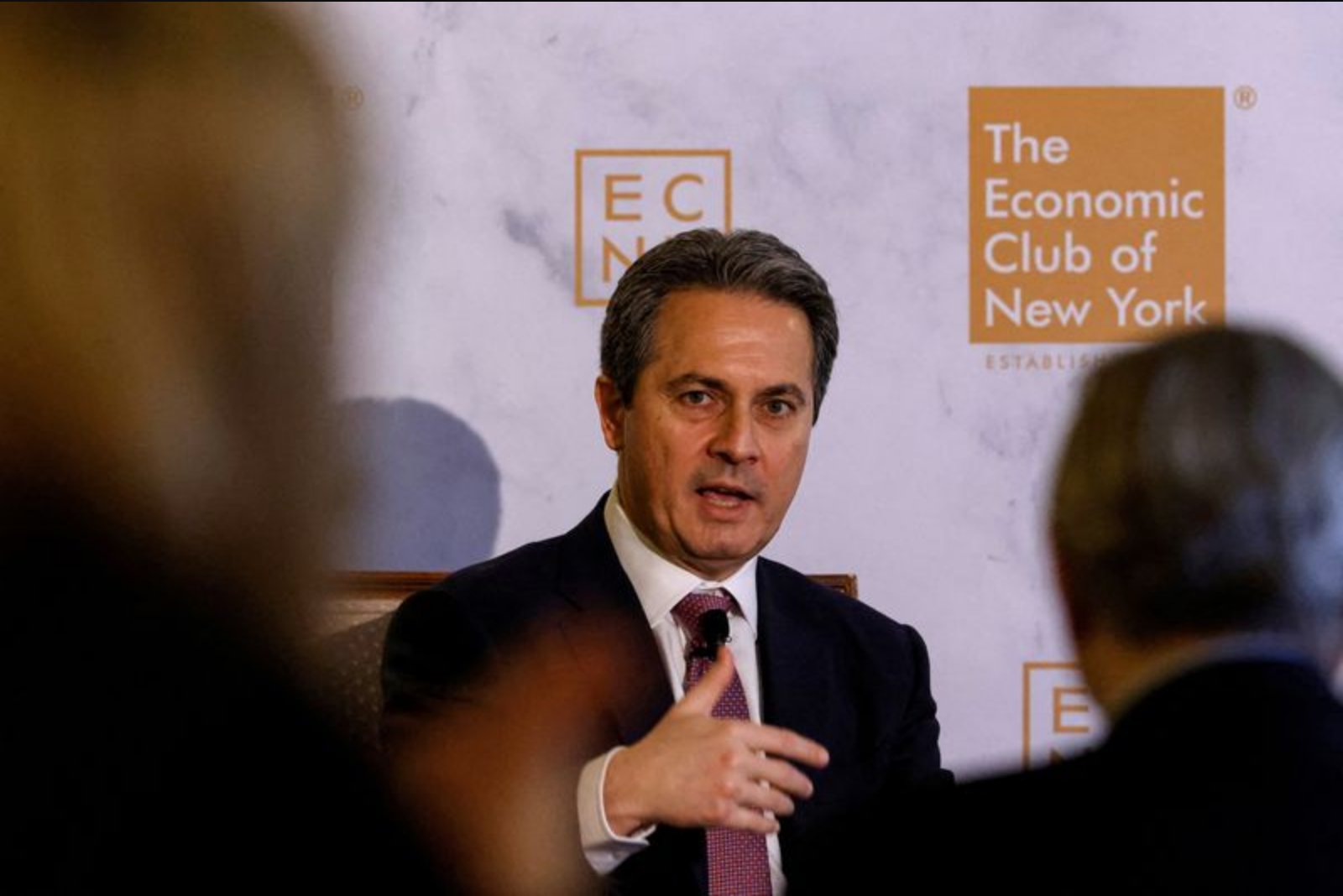
WASHINGTON, Jan 30 - St. Louis Federal Reserve President Alberto Musalem said on Friday that the U.S. central bank need not pursue additional interest-rate cuts at this time, provided the labor market does not deteriorate and inflation does not fall precipitously. In prepared remarks for an appearance at the University of Arkansas, Musalem identified the current federal funds policy range of 3.50%-3.75% as neutral.
Musalem framed his view around the broader economic backdrop. He said the economy is poised to continue expanding above its trend pace and that, in that environment, further monetary easing is unnecessary when both credit conditions and fiscal policy are acting as "tailwinds."
"I see tailwinds supporting economic growth," Musalem said. "With inflation above target and the risks to the outlook evenly balanced, I believe it would be unadvisable to lower the rate into accommodative territory at this time."
On inflation, Musalem reiterated an expectation that it will come down toward the Fed's 2% objective from its current level, which he described as roughly a percentage point higher than that goal. Nonetheless, he cautioned that risks remain that inflation could persist.
He also noted an improved outlook for labor market stability, saying there is now less risk of a "substantial deterioration" in employment conditions. Taken together, these assessments underpin his conclusion that additional rate cuts are not warranted under prevailing circumstances.
The comments underscore a cautious posture: recognition of persistent inflation above target and a favorable growth picture that, in Musalem's view, make moving policy into an accommodative stance unwise unless material changes occur in inflation or labor-market dynamics.
Contextual takeaways
- Policy range: Musalem identifies the current 3.50%-3.75% federal funds rate range as neutral.
- Growth and support: He points to above-trend growth, supportive credit conditions and fiscal policy as reasons to avoid further easing.
- Inflation and labor: He expects inflation to decline toward 2% from about a percentage point higher today but recognizes the risk it could persist; he also sees diminished risk of a major labor-market downturn.