
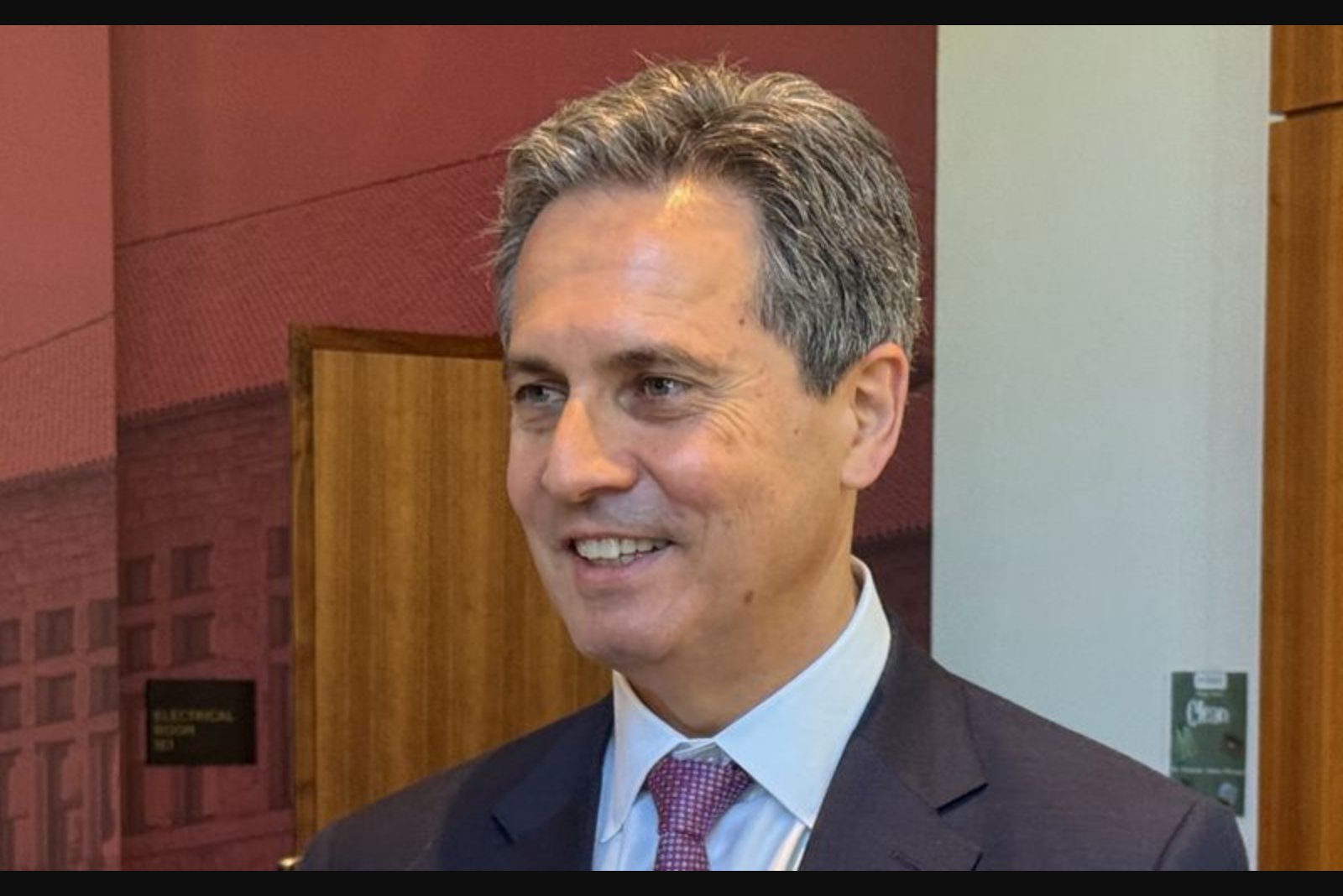
Alberto Musalem, president of the Federal Reserve Bank of St. Louis, said Wednesday he expects the central bank's current interest rate setting to remain appropriate for some time, while flagging rising inflationary pressures tied to developments in the Middle East and persistent uncertainty for the U.S. economic outlook.
Speaking in text prepared for delivery at a gathering at the American Enterprise Institute in Washington, Musalem said policy is "well positioned to address risks to both dual mandate objectives, and I expect the current setting of the policy rate will remain appropriate for some time." He emphasized that the outlook for the economy is "highly uncertain."
Within his baseline projection, Musalem said he sees continued modest growth, stability in the unemployment rate and further moderation in inflation. Yet he warned several external factors could alter that trajectory in the near term, noting that the U.S.-Israeli war with Iran has driven energy prices higher and begun to disrupt key global supply chains.
Musalem pointed to specific cost pressures that could weigh on activity: "higher fuel, aluminum and fertilizer prices" could exert a drag on the economy, and he said uncertainty stemming from the Middle East conflict and unsettled tariff policy could depress consumer and business spending in the first half of the year.
On the labor market and inflation outlook, Musalem described the balance of risks as tilting unfavorably in both directions. He said the risks were toward a weaker labor market and toward a greater persistence of inflation above the Federal Reserve's 2% target.
In assessing supply shocks, Musalem acknowledged the Fed's historical tendency to treat such shocks as temporary drivers of higher inflation, but warned the current circumstances might be different. He said historical experience suggests caution is warranted when underlying inflation remains persistently above target. Supply shocks, he argued, may have a more lasting impact on inflation and inflation expectations, particularly given the challenge of separating how much underlying inflation stems from temporary supply disruptions versus more persistent demand pressures.
The Fed maintained its benchmark overnight interest rate last month in a target range of 3.50% to 3.75% as policymakers awaited data on the economic effects of the U.S.-Israeli war with Iran. At that meeting and in subsequent commentary, Fed officials have not signaled an imminent change to interest rate policy, and the committee's projections at that meeting included one rate cut penciled in for the year.
Musalem said both easing and tightening of policy could become appropriate depending on incoming data. He described conditions under which he might favor a policy easing - namely, if a clearer risk of a weakening labor market emerged and inflation risks were low. Conversely, he said a rate increase could be warranted to avoid an inadvertent real easing if core inflation or medium- to long-term inflation expectations moved persistently higher and away from the 2% objective.
On financial conditions, Musalem characterized them as still "broadly accommodative," and he said stress in private credit markets has been largely limited to that sector rather than reflecting broader systemic problems.
His remarks underscore the Fed's present posture: maintaining policy as officials monitor how geopolitical conflict, commodity price movements and tariff uncertainty feed through to inflation, spending and labor markets. Musalem's emphasis on the difficulty of disentangling temporary supply-driven inflation from more durable pressures highlights a central challenge facing policy decisions in the months ahead.