
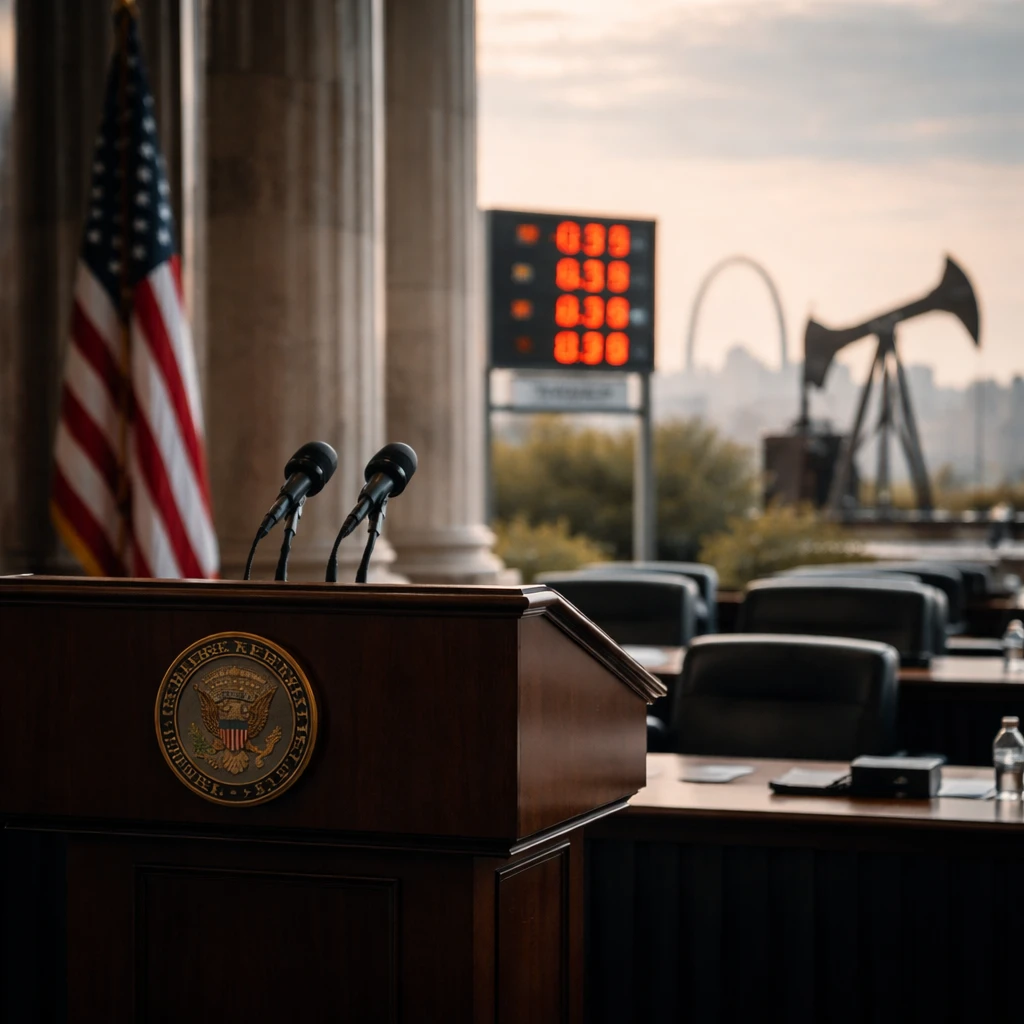
Federal Reserve Bank of St. Louis President Alberto Musalem told an event in Washington on Wednesday that policymakers face rising risks to both inflation and employment, and that the central bank should be prepared to change the federal funds rate in either direction depending on how economic conditions unfold.
"Policy is well positioned to address risks to both dual mandate objectives, and I expect the current setting of the policy rate will remain appropriate for some time," Musalem said in prepared remarks. "However, I will support adjustments in the stance of policy if the evidence indicates the economy requires them."
Musalem said he supported the Federal Reserve's decisions to keep interest rates unchanged so far this year. He described his base case as one in which the unemployment rate stays near current levels, economic growth runs close to potential, and underlying inflation gradually moves toward 2% later this year.
At the same time, Musalem set out the circumstances under which he would tilt policy in either direction. He said he could favor lowering rates if the labor market weakened and inflation failed to pick up, or if inflation itself declined. Conversely, he said he would back raising rates "if core inflation or medium- to long-term inflation expectations moved persistently higher and away from 2%."
"Allowing inflation expectations to become unanchored would risk not only higher inflation but also slower growth and a weaker labor market," he added.
The Fed official's remarks come as rising oil prices have lifted the average U.S. price of gasoline above $4 a gallon this week for the first time since August 2022. That increase has placed a burden on households and dented consumer sentiment, factors that Fed officials are assessing as they evaluate how a surge in energy costs linked to US-Israeli strikes on Iran will influence inflation and broader economic activity.
Fed Chair Jerome Powell said on Monday that policy was in a good place for officials to wait and see how those energy-driven effects play out.
Policymakers held their benchmark interest rate steady at their meeting last month for the second consecutive session. Market pricing in federal funds futures now indicates investors expect rates to remain unchanged for the remainder of the year.
Context and implications
Musalem framed the current stance as appropriately balanced but conditional on incoming data. His comments underscore a flexible approach: maintaining the status quo while reserving the right to tighten if inflation expectations drift upward or to ease if the labor market softens and inflation cools. Energy price developments and their effect on households and sentiment remain a notable source of uncertainty that Fed officials are actively monitoring.