
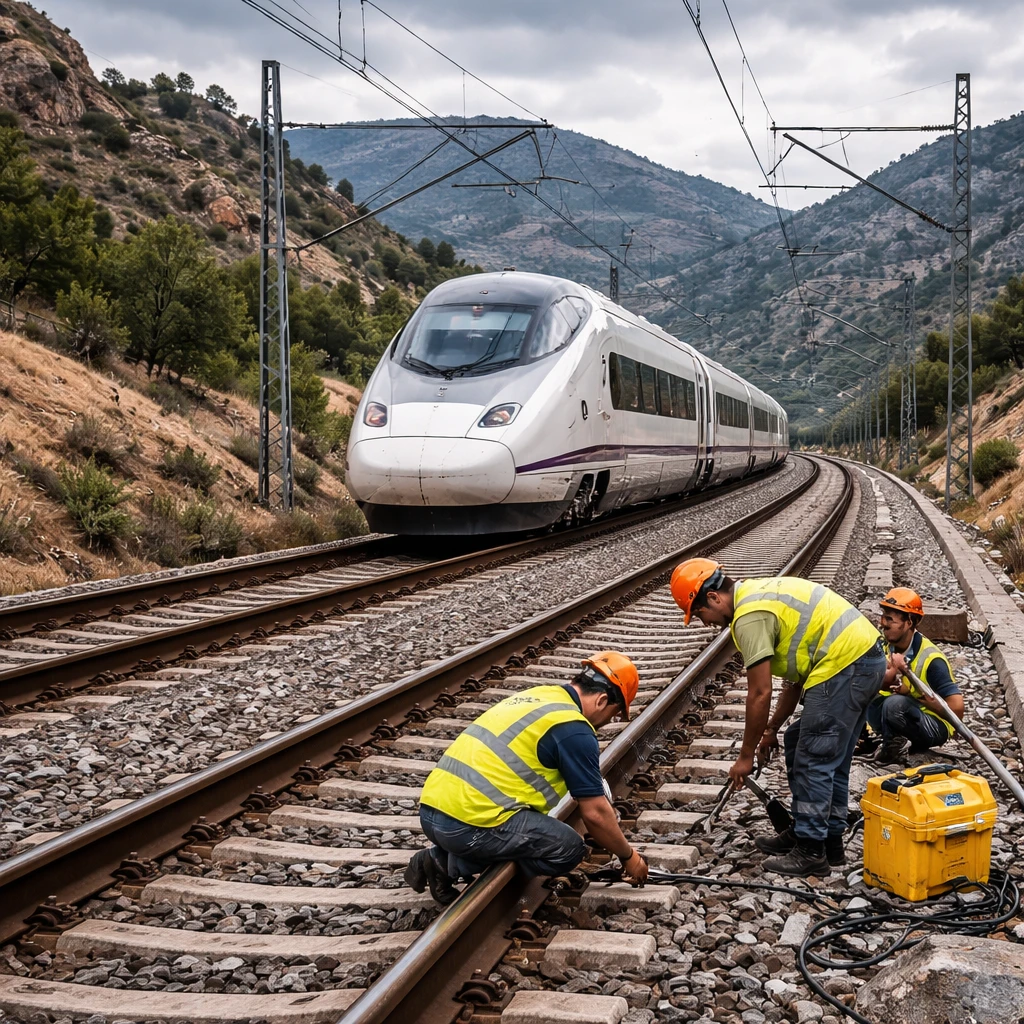
Spain’s railways have been thrust into intense scrutiny following a rapid succession of accidents within the span of a week, including a high-speed collision in Andalusia that resulted in 45 fatalities, marking it as one of Europe's most lethal rail disasters. This string of incidents has elevated concerns about whether maintenance funding has kept pace with the substantial rise in passenger traffic.
Data from Spain's competition authority reveals nearly 40 million passengers utilized the high-speed train system in 2024—almost double the figures reported in 2019—propelling overall rail usage across the country to a historic high of 549 million trips. While this surge reflects the success of Spain's rail network, it simultaneously leads to increased wear and tear on the infrastructure.
Experts and reports indicate that while the rail system has experienced rapid expansion, proportionate investment in maintenance has lagged. Salvador Garcia-Ayllon, professor at Universidad Politecnica de Cartagena, remarked that the high-speed rail "is under greater strain and it's starting to break down," emphasizing the burden the system faces due to its popularity.
The deadly Andalusia crash occurred on a track segment renovated just months prior and inspected days before the accident, preliminary investigations by the rail accident agency CIAF suggest a rail fracture predating the derailment. Other incidents in the same week include a fatal accident near Barcelona caused by a fallen containment wall during heavy rains, derailing a commuter train and injuring multiple passengers. Additional derailments occurred nearby due to track obstructions and collisions with maintenance equipment, further highlighting infrastructure vulnerabilities.
In response, Transport Minister Oscar Puente acknowledged the need for discussion regarding the scale of maintenance funding but urged authorities to distinguish this debate from the specifics of the Andalusia accident, given that safety protocols and inspections had been recently conducted on the involved track.
Comparative figures from the European Commission point to Spain’s allocation for maintenance on its approximately 4,000 kilometers of high-speed lines trailing behind other major European nations. Though Spain invests an average of about 1.5 billion euros annually in its high-speed rail network—more than any other country—a substantial majority of this funding targets new infrastructure projects, with only around 16% dedicated to maintenance, renewal, and upgrades. By contrast, France, Germany, and Italy dedicate between 34% to 39% of their rail budgets to such upkeep, despite operating smaller networks.
Industry voices, such as Jose Trigueros, President of the Association of Roads and Civil Engineers, argue that maintenance expenditure in Spain should rise from the current 110,000 euros per kilometer to approximately 150,000 euros. Furthermore, he advocates for increased budgets beyond just high-speed lines to include regular rail segments.
The drivers’ union SEMAF has responded to deteriorating conditions and safety concerns with a three-day nationwide strike, protesting what it describes as "constant deterioration" of the railway system and demanding reinforced safety and maintenance measures. An August letter from SEMAF to the state rail operator Adif warned of significant wear along several routes, including segments where recent crashes occurred. Diego Martin, SEMAF's general secretary, characterizes the issue as a "vicious circle," where defects in tracks and trains mutually exacerbate safety risks.
Official statistics show rail deterioration events growing from 440 in 2015 to 716 in 2024, with accidents such as derailments rising from 42 to 57 over the same period. The government maintains that Spain's railway infrastructure problems and accident rates remain proportionally below EU averages and comparable to peers like Germany and France.
Moreover, government sources highlight that since 2018, under Prime Minister Pedro Sanchez's administration, investment in railway infrastructure has tripled, with maintenance spending per kilometer increasing 58% to 71,000 euros by last year. Nonetheless, a 2024 analytical report by Fundacion BBVA and the Valencian Institute of Economic Research (Ivie) suggests investment levels, when adjusted for inflation, have yet to return to pre-2008 financial crisis peaks.
The report notes that gross railway infrastructure investment in 2024 stood at less than one-third of the roughly 11 billion euros recorded at the 2009 apex. The steep post-2009 decline meant that from 2012 onward, investment fell below levels necessary to cover asset depreciation and maintain existing facilities properly. Encouragingly, the report indicates a return to steady investment growth began in 2021.
Analogies have been drawn to illustrate the situation: Garcia-Ayllon compares Spain’s premier rail system to a Ferrari, where the principal expense lies not merely in acquisition but in consistent maintenance and care to uphold performance and safety.
Currency note: $1 equals approximately 0.8517 euros.