
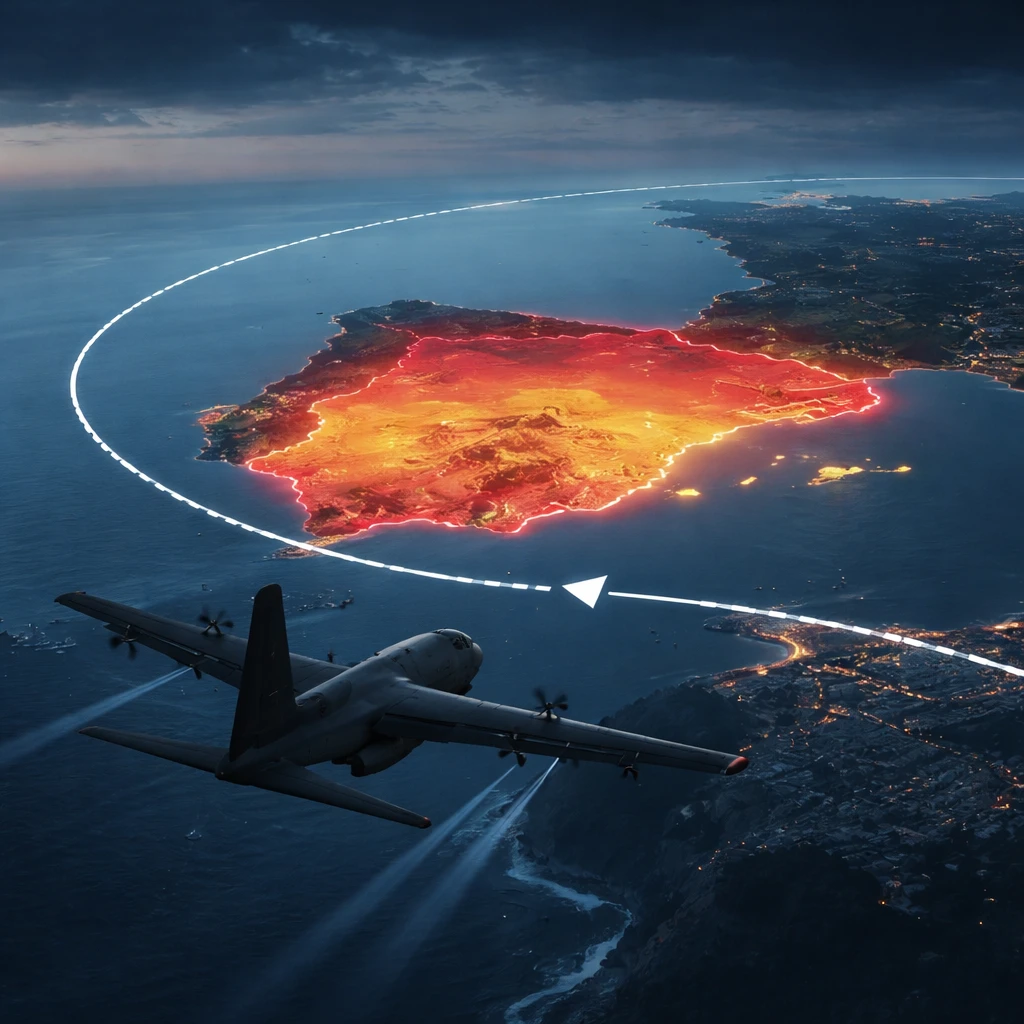
Spanish authorities have barred U.S. military aircraft engaged in attacks on Iran from using the country's airspace, Spanish media reported on Monday citing military sources. The prohibition extends beyond Madrid's earlier decision to deny Washington access to bases the two countries jointly operate.
Under the new restriction, U.S. military planes en route to targets in the Middle East must circumvent Spanish airspace, with a formal exception for emergency situations, the report said.
Economy Minister Carlos Cuerpo discussed the measure in an interview on radio Cadena Ser. Asked whether the closure of Spanish airspace could harm relations with the United States, Cuerpo framed the move as consistent with Spain's prior position of not taking part in or contributing to a war that was initiated unilaterally and against international law.
Prime Minister Pedro Sanchez has been an outspoken critic of the U.S. and Israeli strikes on Iran, describing those actions as reckless and illegal.
The decision to bar overflights follows Madrid's prior step of refusing the U.S. use of jointly administered military bases in connection with the campaign. In response to Spain's denial of base access, President Donald Trump has threatened to reduce trade with Madrid.
The measure alters the logistical routing of U.S. military flights traveling between Europe and strike zones in the Middle East and embeds a political signal aligned with Spain's stated legal objections to the operations against Iran.
Context and implications
Spain's expanded restriction is transactional in effect - it changes flight paths and operational planning for affected missions - and symbolic in tone, reflecting Madrid's public posture on the legality and legitimacy of the campaign against Iran. The exemption for emergencies preserves limited flexibility for critical situations, while the broader ban underscores a diplomatic rift tied to prior denials of base access and ensuing threats to bilateral trade.