
Lead
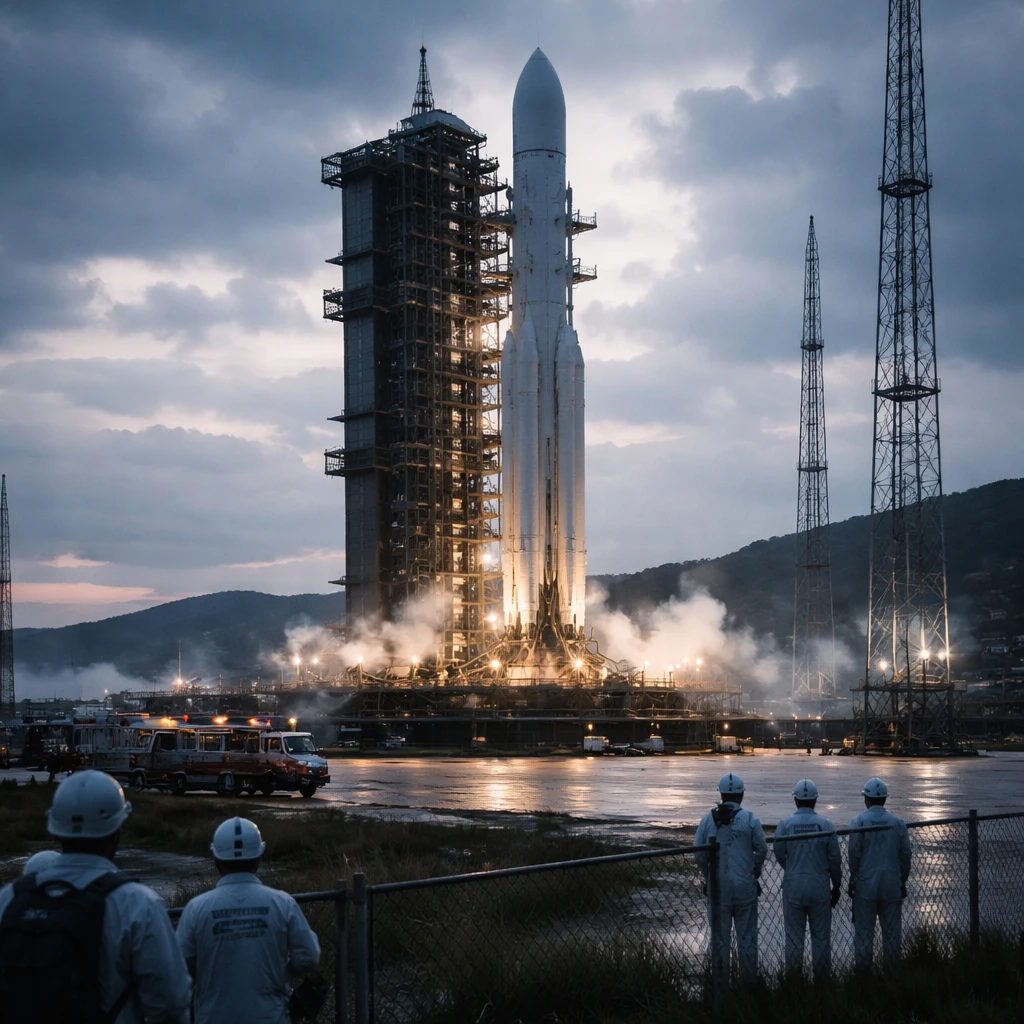
On April 3, Beijing-based rocket developer Space Pioneer said the maiden flight of its reusable Tianlong-3 rocket did not succeed. The company, also registered as Beijing Tianbing Technology Co, offered only a brief notice of the failure on its official WeChat account without elaborating on the cause or sequence of events.
What happened
Space Pioneer disclosed the failed test in a short posting but did not provide specifics about technical malfunctions, the flight profile, or the point at which operations were aborted. The firm framed the announcement succinctly and did not include additional commentary or a timeline for follow-up tests.
Business and technological context
The company is part of a small but rapidly expanding set of private Chinese rocket developers that have grown as Beijing has sought to boost the country's space capabilities. Policy measures in China have also facilitated capital formation and paths to public listings for these firms, supporting their development of advanced launch technologies.
Space Pioneer has positioned Tianlong-3 as broadly comparable to the U.S.-based SpaceX Falcon 9 in terms of concept - a reusable first stage designed to be recovered and flown again - and said the vehicle can place 36 satellites into orbit per launch. The firm has argued that this payload capacity suits plans for large-scale satellite constellations, which China is pursuing to expand its presence in lower Earth orbit.
Funding and prior incident
The company raised nearly 2.5 billion yuan, the firm says, six months prior to the reported failed flight. Earlier, in June 2024, Space Pioneer completed another fundraising round of more than 1.5 billion yuan intended to support development of its reusable rockets. Weeks after that June 2024 round, the first stage of a Tianlong-3 rocket undergoing tests detached from its launch pad due to structural failure and fell into a hilly area of Gongyi city in central China.
Industry implications
Reusable orbital launch vehicles are widely viewed by industry participants as a means to reduce launch costs and increase cadence for deploying satellites used in communications and surveillance. To date, the only rocket family to demonstrate both routine recovery and repeated reuse of a main stage over hundreds of flights is the U.S.-based Falcon 9, and Chinese firms have not yet matched that record for recovery and reuse.
Other Chinese teams are pursuing reusable designs as well. The company LandSpace has reported progress with its reusable program and is planning a second flight of its Zhuque-3 reusable rocket during the first half of this year.
Outlook
The Tianlong-3 failure marks a notable setback for Space Pioneer in its effort to develop a reliably reusable orbital vehicle. The company and its peers face technical and operational hurdles as they attempt to close the gap with established reusable-launch operators. Space Pioneer has not outlined next steps or a revised schedule for further tests following the failure announcement.
Key points
- Space Pioneer reported on April 3 that the maiden flight of its Tianlong-3 reusable rocket failed; the company released only a brief WeChat statement with no further technical details.
- The firm earlier raised nearly 2.5 billion yuan and completed a June 2024 fundraising round of more than 1.5 billion yuan to advance its reusable rocket program; a prior structural failure sent a first-stage vehicle into a hilly area of Gongyi.
- The setback occurs amid a domestic competition to develop recoverable, reusable rocket stages; LandSpace is a competing developer planning a second flight of its reusable Zhuque-3 in the first half of this year.
Risks and uncertainties
- Technical and operational risk - Reusable main-stage recovery and reuse remain unproven for Chinese developers, and failures can delay testing timetables and degrade program momentum; sectors impacted include aerospace manufacturing and satellite launch services.
- Execution and reputation risk - Repeated mishaps may affect investor sentiment and the commercial prospects of private launch firms that rely on capital raised through recent funding rounds and potential public listings; capital markets and venture funding are implicated.
- Capability gap uncertainty - The inability so far to recover and reuse main stages leaves Chinese developers behind the only company that has demonstrated such capability across hundreds of flights, creating uncertainty for entities planning large satellite constellations reliant on lower-cost, high-cadence launches.