
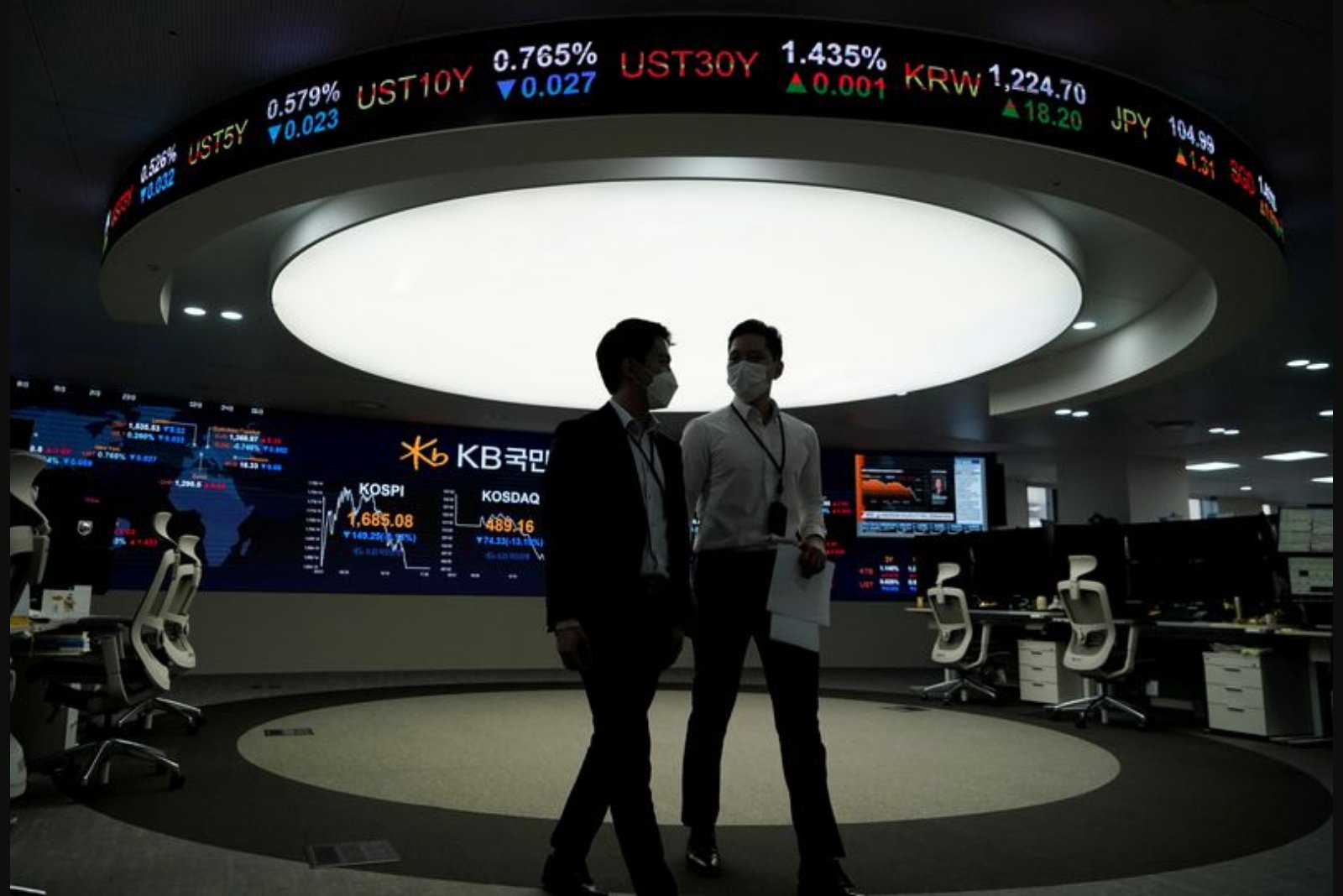
SEOUL, March 27 - The daily routine of 24-year-old Kim Min-sung mixes intensive academic preparation with late-night market work. Kim spends his days attending classes at Seoul’s Korea Foreign Language University and his evenings in the library as he studies for the national diplomatic exam - a well-trodden path toward a secure foreign-service job. To support himself, he takes on side work such as math tutoring and delivery gigs. Yet his attentions are divided: night after night he devotes his final hours to plotting trade strategies and running valuation models for the stocks he follows.
Kim is far from unique. Since January, South Korea’s retail investors - known locally as "ants" for the way they move collectively - have poured into domestic equities in large numbers. That wave of retail participation helped propel the benchmark KOSPI to a doubling over six months, culminating in an all-time high on February 27 - the day before a war erupted in the Middle East. The conflict that followed pushed volatility to extremes.
Beginning March 4, the index recorded its single-largest one-day drop, tumbling 12% - an unprecedented daily loss. Yet, instead of retreating, the nation’s roughly 14 million individual investors intensified their activity. Average daily trading volume climbed beyond 40 trillion won for the first time this month, and retail investors on one recent Monday collectively purchased a record 7 trillion won of equities even as the KOSPI fell 6.5% that day.
There are multiple motives behind the retail surge, analysts and participants say, but several recurring themes emerge. A broad worry about the potential disruption of traditional stable employment by advances in artificial intelligence is prompting some to seek investment returns as a form of income replacement. Others cite long-term affordability issues in housing and a desire to shift savings into assets they believe can appreciate faster than property.
Kim describes his own approach plainly: "I have two trading accounts," he said. "One to make seed money to buy a property one day, and the other is for more aggressive investing to hopefully FIRE (Financial Independence, Retire Early) sooner than later." He says he is not rattled by this month’s swings; the return on his more aggressive account remains above 75%.
Market data underline the scale of the retail footprint. According to the Korea Financial Investment Association (KOFIA), active stock trading accounts in South Korea reached a record 101.8 million at the end of February. Retail investors’ combined deposit balance surged to an unprecedented 132 trillion won on March 4, up almost 70% from the end of last year, KOFIA figures show. Separate data from the Korea Securities Depository indicate that retail traders can account for as much as 60% of daily turnover - roughly double the share attributed to retail in the United States.
Political developments have also played a role in energising retail flows. Since taking office in June, President Lee Jae Myung has promised broad financial reforms. His messaging that capital should be channelled toward equities rather than concentrated in housing - where many younger Koreans have been effectively shut out by long-term price rises - has resonated, particularly with younger investors who view equity ownership as an alternative path to wealth accumulation.
Jessica Chung, a 42-year-old office worker in the Pangyo area of Seongnam, south of Seoul, described how trading talk has permeated workplaces: colleagues are comparing positions and discussing trades throughout the day. "My workplace has the atmosphere of a gambling house this month," she said, noting the constant banter from the pantry to the powder room.
Not all observers urge unbridled enthusiasm. Some analysts warn that continued geopolitical instability could test the broader economy. "If the Iran war drags on, Korea’s real economy will inevitably be undergoing significant disruption," said Seo Sang-Young, a market strategist at Mirae Asset Securities Co. He identified prolonged conflict as the principal risk investors should weigh.
Individual investors continue to act on their own risk calculations. Kwon Soon-kuk, 34, who works full time at a retail company in Seoul, used the recent selloff as an opportunity to add to his holdings at lower prices. "The biggest keyword here, I think, is uncertainty. The world is uncertain," he said. Kwon monitors images of marine traffic in the Strait of Hormuz via Telegram to appraise war-related threats to his portfolio. "I don’t know when I’ll stop getting paychecks, so my plan is to buy more shares for my children," he added.
The collective behaviour of South Korea’s retail base - their sizeable deposit balances, record participation and willingness to buy during routs - has become a defining feature of the market’s recent performance. Whether that dynamic will provide resilience or amplify risks remains a central question for investors and policymakers as geopolitical tensions and economic uncertainty play out.
Exchange rate reference: $1 = 1,499.40 won.