
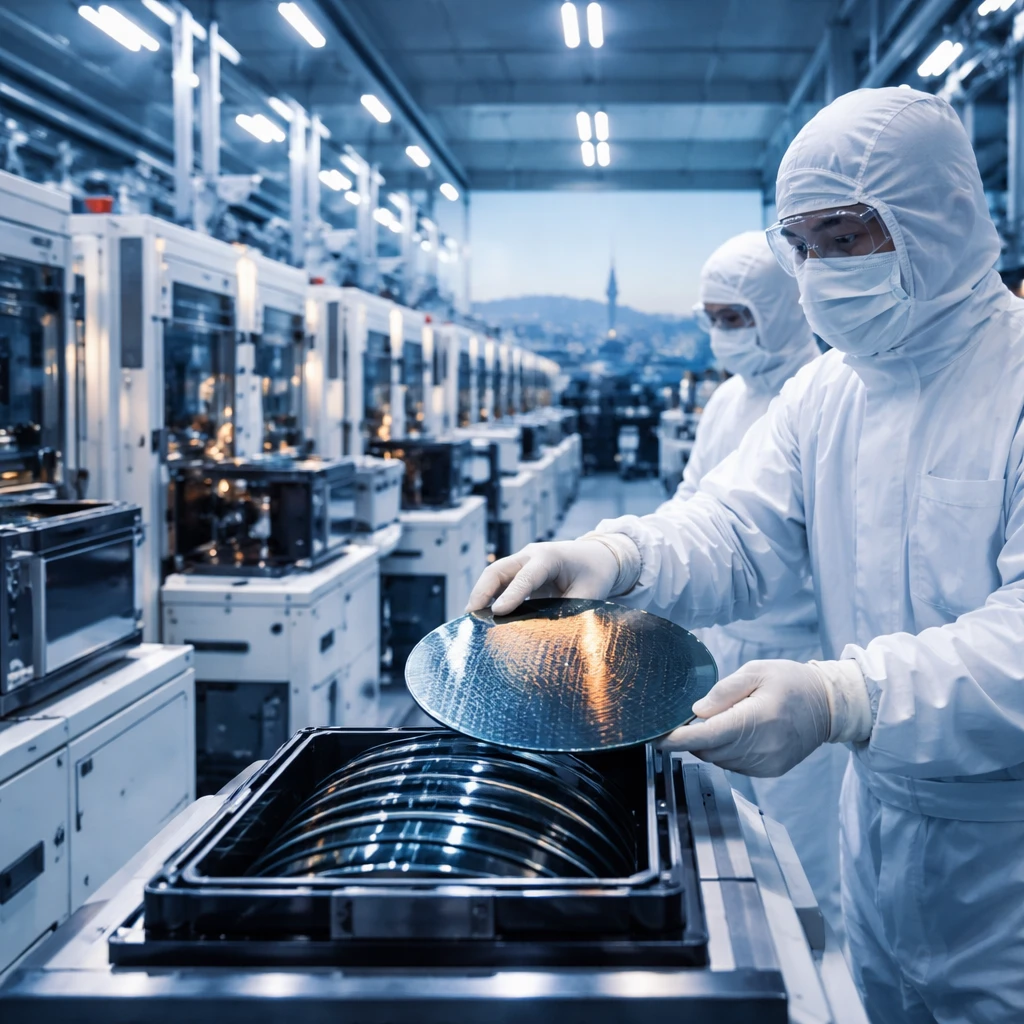
Bank of America Securities forecasts that semiconductors will make up about 30% of South Korea's exports in 2026, driven by a price-led cycle that has now entered its third year. The firm attributes a substantial portion of the nation’s recent trade and fiscal strength to a pronounced rebound in chip markets.
Semiconductor exports climbed 22% in 2025, contributing 4.6 percentage points to South Korea’s headline export growth of 3.8% for the year, the bank's note said. In early January, exports of chips sped up to a 70.2% year-over-year increase on a per-day basis - the most rapid pace since 2017 - a surge propelled in part by DRAM prices that have risen between 20% and 30% year-to-date.
BofA projects that global DRAM sales will expand 60% in 2026 after growing 50% in 2025. The bank also expects average selling prices for DRAM to climb 40% in 2026, following increases of 62% in 2024 and 26% in 2025. According to the note, the current upcycle began in the second half of 2023 and has already outlasted several prior two-year cycles - including those spanning 2019-2021, 2016-2018, and 2012-2014.
Macro and fiscal effects
The chip rally has had visible effects on public finances. Tax revenue rose 12.6% to 331 trillion won ($246 billion) in the January-October 2025 window, with corporate and income tax receipts jumping 22% to 185 trillion won from 152 trillion won a year earlier. BofA said rising exporter profitability is a key driver of those higher collections.
That stronger fiscal position reduces downside risk to the government’s projected 2026 fiscal deficit of 4.0% and, in BofA’s view, could create scope for additional government spending on research and development and social welfare should the rally persist.
Concentration and cyclical exposure
While the boom is boosting the economy and providing support to the won, it has also increased market concentration. Samsung Electronics and SK Hynix now account for nearly 40% of the KOSPI index, up from 25.4% in 2020. Semiconductors’ share of total exports is around 24% - a level the bank described as the highest in recent decades - which amplifies the economy’s sensitivity to swings in the chip cycle as other sectors such as consumer electronics, autos and traditional intermediate goods remain weak.
Demand for advanced chips used in artificial intelligence applications is one of the factors sustaining the upcycle, BofA said. At the same time, capacity for high-bandwidth memory remains extremely constrained, supporting elevated prices. The analysts expect the upcycle to continue into the second half of 2026.
Monetary policy and downside scenarios
The Bank of Korea has signaled it may lift its growth outlook from a prior 1.8% forecast for 2026 at its February meeting. BofA expects the central bank to keep interest rates unchanged through the year, given the mix of growth and price signals.
But the report also flagged significant risks. One geopolitical trade risk noted was an announcement on social media on Jan. 26 by President Donald Trump that he would raise tariffs on Korean goods from 10% to 25%, specifically targeting autos, lumber, pharmaceuticals and other products. The bank emphasized that any sharp reversal in DRAM prices - for example if big technology companies alter capital spending plans - could derail the cycle as well.
Investment behavior within the industry further underscores the price-driven character of the current upswing. Despite rapid export growth, capital expenditure on facilities has increased only modestly relative to past cycles as chipmakers have deliberately kept supply tight to help sustain prices. Semiconductor production rose 15% in 2025, a gain that is smaller than the 29% increase seen in 2021 and the 39% surge recorded in 2010.
Investor tools mentioned
For investors weighing specific equities, the article referenced an AI-driven stock screening tool that evaluates ticker 000660 among thousands of companies each month using over 100 financial metrics. That tool highlights past notable winners including Super Micro Computer (+185%) and AppLovin (+157%), and suggests it can identify opportunities based on fundamentals, momentum and valuation without regard to popularity.
The tool is presented as a way to assess whether 000660 is currently part of any active strategies or if other companies in the same space offer better risk-reward profiles according to its algorithms.