
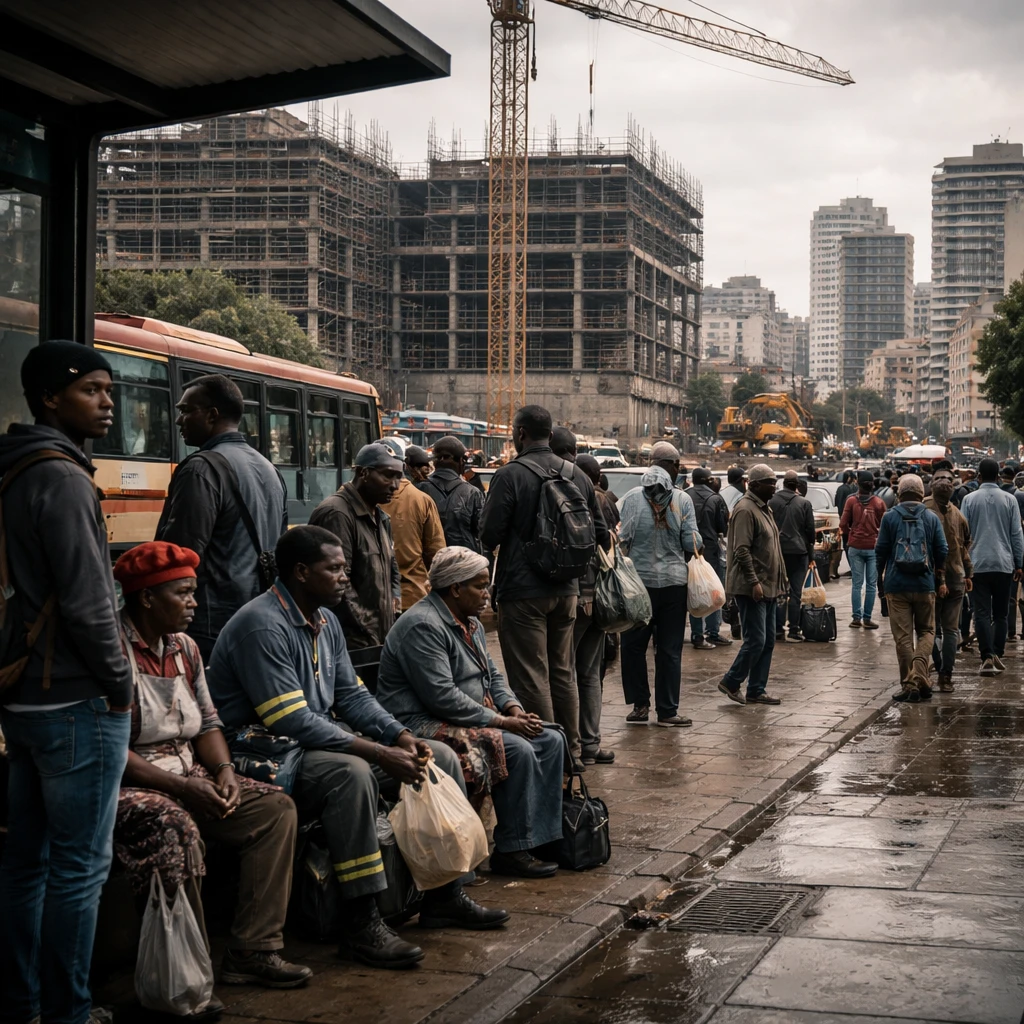
South Africa's labour market weakened in the first quarter as the official unemployment rate rose to 32.7%, according to data published by Statistics South Africa in Pretoria. The figure marks an increase from 31.4% in the previous quarter and exceeds the median forecast of 31.7% from a Bloomberg survey of three economists.
The statistics show that the number of people without work reached 8.1 million during the quarter. That level of joblessness poses a persistent challenge for the broader economy, with policymakers and market participants facing a more difficult backdrop for growth and social outcomes.
Sector-level patterns were uneven. Construction and community and social services recorded the largest declines in employment over the quarter, driving much of the overall rise in unemployment. By contrast, manufacturing and mining added workers in the period, providing limited offset to losses in other parts of the labour market.
External price pressures are also appearing in the data narrative. The article notes that energy, food and fertilizer prices have climbed since the attack on Iran by the US and Israel on Feb. 28. Those cost increases create particular difficulty for countries that import oil and other commodities, with South Africa cited as an example of an economy exposed to such headwinds.
Compounding the domestic labour-market weakness, the International Monetary Fund last month reduced its 2026 economic growth forecast for South Africa to 1.0% from 1.4%. The downgrade reflects an adjustment to the outlook that accompanies elevated unemployment and higher input costs.
Taken together, the data depict a labour market that is struggling to absorb workers in some sectors while other industries continue to expand employment. The headline rise in the unemployment rate and the large count of jobless individuals underline the scale of the challenge facing policymakers and businesses as they navigate inflationary pressures and a softer growth outlook.
Summary
Unemployment rose to 32.7% in Q1, with 8.1 million people out of work. Construction and community and social services shed the most jobs, while manufacturing and mining added staff. Rising energy, food and fertilizer prices after the Feb. 28 attack on Iran by the US and Israel and an IMF downgrade to 2026 growth heighten economic pressures.
Key points
- Headline unemployment increased to 32.7% from 31.4% in the previous quarter.
- Job losses concentrated in construction and community and social services; manufacturing and mining saw employment gains.
- External price shocks and an IMF cut to 2026 growth add strain to an already weak labour market.
Risks and uncertainties
- Rising energy, food and fertilizer prices following the Feb. 28 attack on Iran by the US and Israel - this affects oil-importing countries, including South Africa, and can amplify inflationary pressures in energy-sensitive sectors.
- High and rising unemployment - the 8.1 million people out of work increase economic and social risk and weigh on domestic demand, with implications for sectors reliant on consumer spending.
- Slower macroeconomic momentum - the IMF's downward revision to 2026 growth to 1.0% from 1.4% implies a tighter growth environment for investment and job creation.