
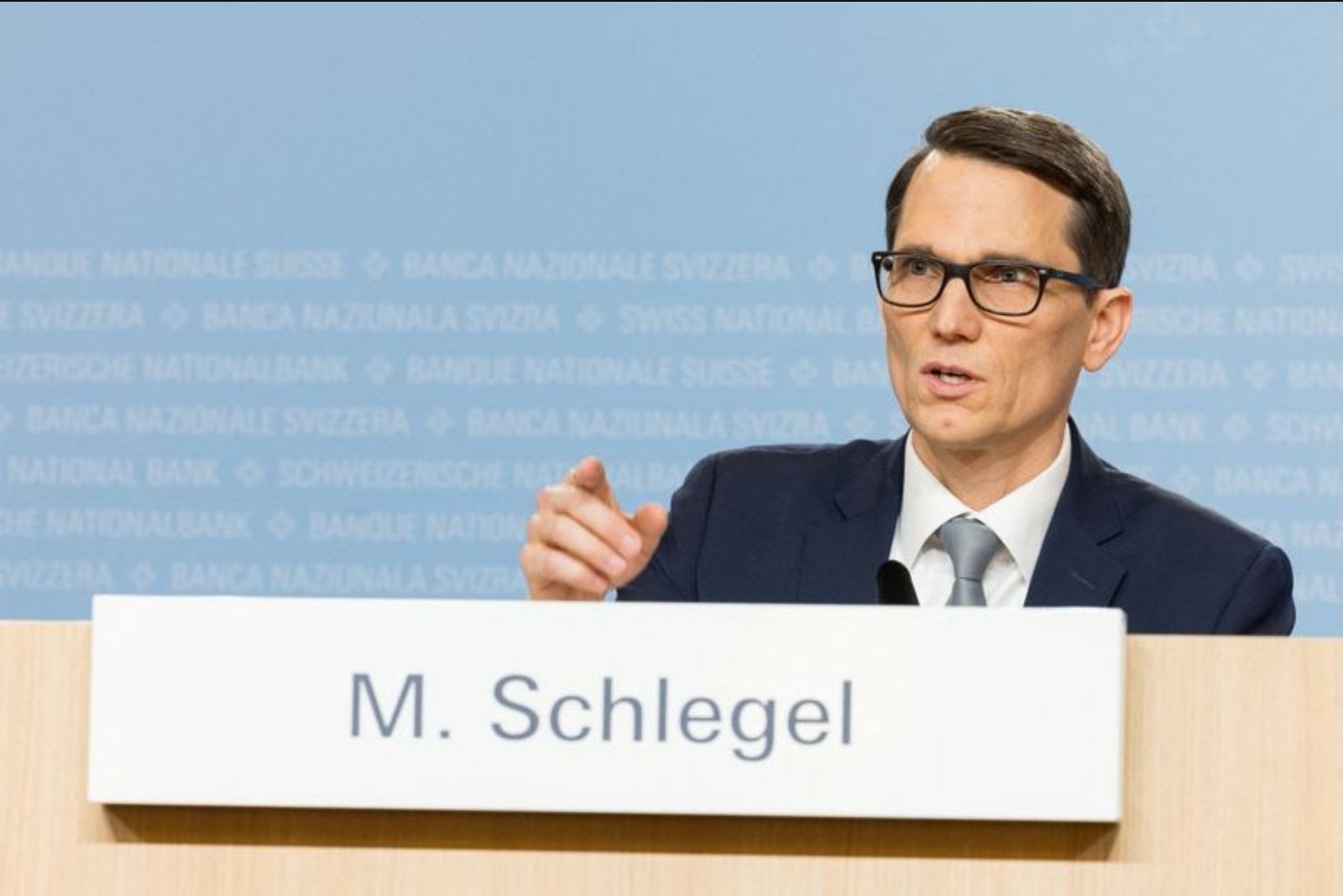
Swiss National Bank Chairman Martin Schlegel said the present combination of extremely low inflation and a zero policy rate poses a difficult setting for monetary policy, while declining to state whether this increases the likelihood of returning to negative interest rates.
Speaking to broadcaster SRF, Schlegel framed price stability as the central bank's primary concern. "As a central bank, my greatest concern is of course inflation and price stability, and we do everything we can to ensure that," he said, pointing to inflation of 0.1% as sitting at the lower bound of the SNB's definition of price stability - a range the bank describes as 0-2%.
With interest rates currently at 0%, Schlegel said that combination of low inflation and neutral rates "is not an easy situation for monetary policy." He reiterated that the SNB has two principal instruments to influence inflation: the policy rate and interventions on the currency markets.
On the topic of negative interest rates, Schlegel confirmed previous SNB statements that the bank is prepared to consider rates below zero. "We have already said several times that we are prepared to go into negative territory," he said. However, he added that the hurdle to lower rates into negative territory is higher, emphasising that the choice is not taken lightly.
Schlegel also said that assessing the probability of reintroducing negative rates is "difficult to say," noting the unpopularity of such a move among lenders and savers when negative rates were applied from late 2014 to 2022.
Rather than move immediately on rates, he said the SNB would continue to monitor developments closely, including the exchange rate of the Swiss franc, and would intervene in forex markets if necessary to help guide inflation back toward the central bank's target range.
Looking ahead, Schlegel said he expected Swiss inflation to pick up in the coming months and described monetary conditions in Switzerland as appropriate at present.
On foreign currency reserves, Schlegel was asked about holdings such as U.S. Treasuries and whether central banks or sovereign wealth funds were shifting allocations. He declined to comment on the actions of other institutions, but stressed that currency reserves must remain liquid. "When you look at U.S. Treasuries, that is still the largest and most liquid market," he said. "There is no alternative."
This account reflects the chairman's public comments in interviews with SRF and in the Eco Talk programme broadcast later on the same day, reiterating the SNB's stance on tools and priorities without providing a timetable or numerical probability for any policy moves.