
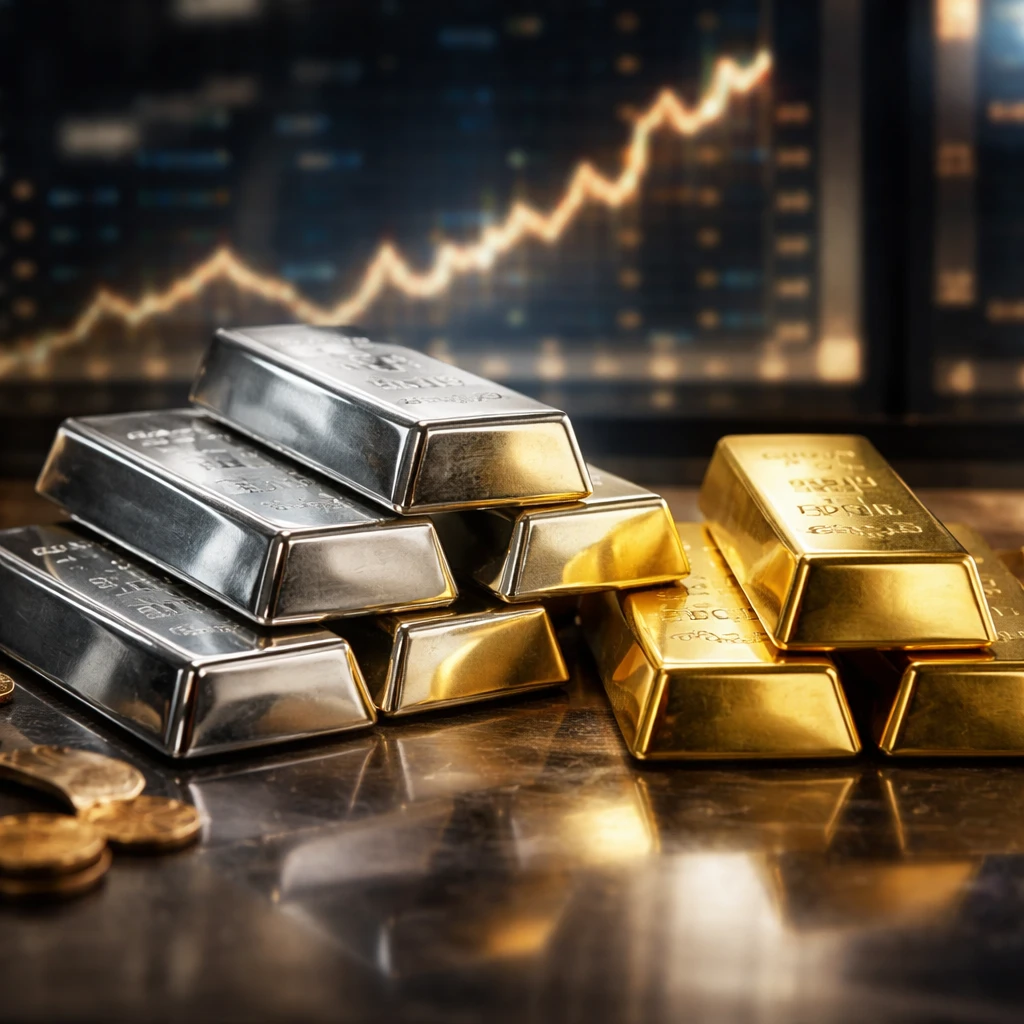
On January 23, silver prices climbed past the $100 per ounce threshold for the first time, with spot silver rising 5% to trade at $100.94 an ounce by 1848 GMT. This milestone reflects a robust surge fueled by a combination of geopolitical anxieties and investor anticipation that the U.S. Federal Reserve may reduce interest rates.
Philip Newman, a director at Metals Focus, highlighted that silver's momentum is closely linked to the same factors driving gold's appeal among investors. He further pointed out that ongoing tariff issues and the relatively low physical availability of silver in the London market offer additional support for the metal's elevated price levels.
The white metal has experienced a remarkable increase of over 200% in the past twelve months, a rise also attributable to persistent challenges in expanding refining capacity and an ongoing supply deficit. This shortage continues to constrain market availability and reinforce upward price pressure.
Meanwhile, spot gold advanced by 0.6% to $4,964.81 an ounce, having earlier touched a fresh record high of $4,988.17. U.S. futures contracts for gold due in February closed 1.4% higher at $4,979.70 per ounce. Tai Wong, an independent metals trader, emphasized gold’s critical function as a haven and diversification tool within strategic investment portfolios amid periods of heightened economic and political uncertainty, describing the current environment as indicative of fundamentally shifting times rather than a transient anomaly.
Since the beginning of 2026, rising tensions between the United States and NATO concerning Greenland, questions regarding the Federal Reserve’s autonomy, and sustained tariff uncertainties have fueled demand for safe-haven assets such as gold and silver. In addition, accumulation by central banks and a general global trend moving away from reliance on the U.S. dollar have reinforced gold's price gains.
Gold, which does not yield interest, often becomes more attractive during periods when interest rates are low. The metal surpassed key price points of $3,000 and $4,000 per ounce in March and October of the previous year, respectively. These benchmarks were supported by U.S. interest rate cuts and various international conflicts.
Commerzbank recently forecast that cuts to U.S. interest rates could accelerate later this year, especially with the appointment of a new Federal Reserve chair, potentially boosting gold prices once again.
In the broader precious metals market, platinum reached a record peak of $2,771.10 an ounce, later settling at $2,744.40, up 4.4%. HSBC noted that platinum is attracting investor interest as a more affordable alternative to gold and predicted that the market’s structural deficit would widen to 1.2 million ounces in the current year.
Similarly, palladium prices increased by 4.1%, closing at $1,999.64 per ounce, demonstrating strong investor demand across various precious metals amid sustained market uncertainties.