
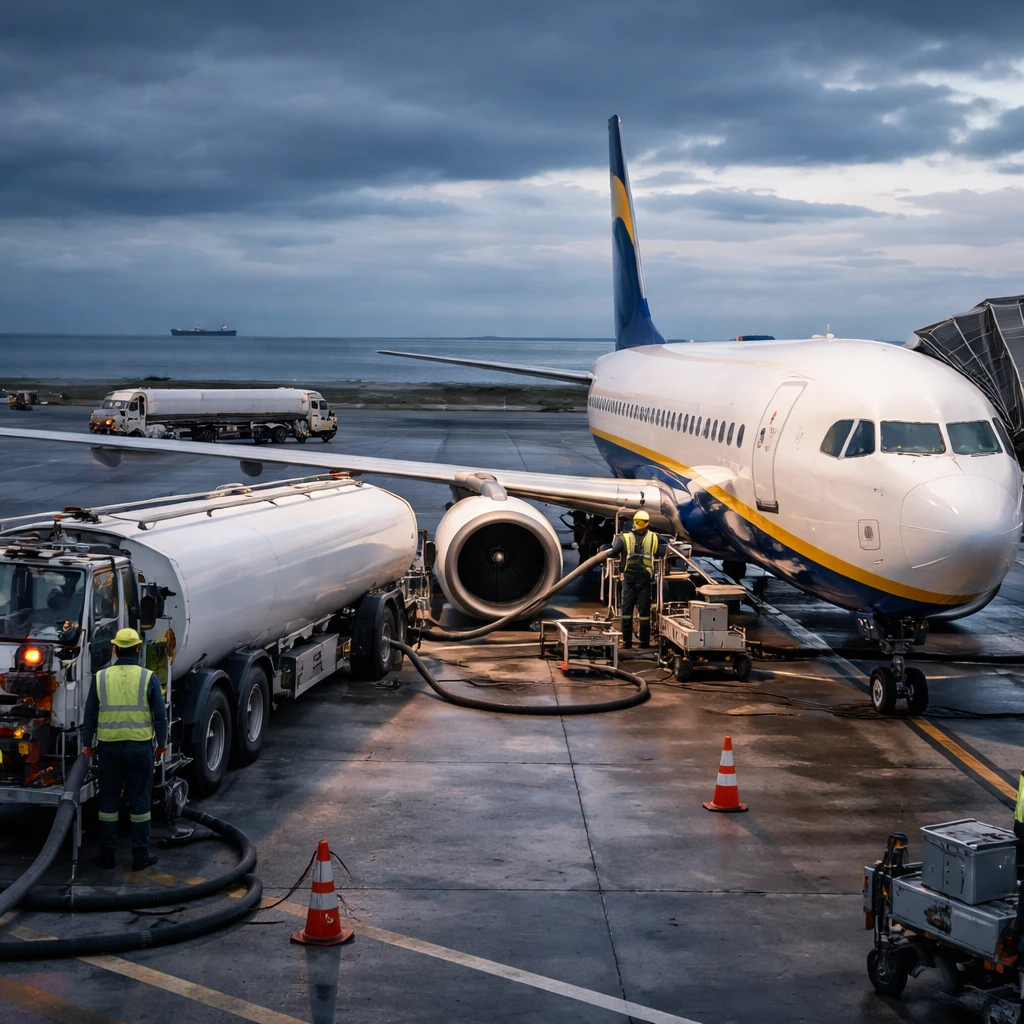
Jet fuel deliveries to Europe may be disrupted beginning in May if the conflict in the Middle East continues, potentially placing up to 25% of Ryanair's fuel supplies at risk for May and June, Chief Executive Michael O'Leary said in an interview on Sky News on Wednesday.
O'Leary framed the threat as contingent on whether shipping through the Straits of Hormuz - a crucial conduit for Persian Gulf crude - is restored. He said: "If the war finishes and the Straits of Hormuz reopens by the middle or end of April, then there’s no risk to supply. If the war continues and the disruption to supply continues, we think there’s a reasonable risk that some low level, maybe 10%, 20%, 25% of our supplies might be at risk through May and June."
The International Air Transport Association (IATA) estimates that roughly 25% to 30% of Europe’s jet fuel demand is supplied from the Persian Gulf, a share that makes the region particularly exposed to supply impacts arising from the U.S.-Israeli war, O'Leary noted.
Despite the potential vulnerability, O'Leary said Ryanair has not cancelled flights because its current fuel stocks are secure. He cautioned, however, that the risk of higher ticket prices persists for the months ahead - specifically April, May and June - if disruptions materialize or costs rise.
In separate comments to Ireland’s Business Post on Sunday, O'Leary said he anticipated summer airfares would climb by more than 3% year-on-year. He attributed this expected increase to a mix of constrained capacity and higher oil prices impacting airlines that are less well hedged.
Ryanair provided a snapshot of its fuel hedging in January, saying it had covered about 80% of its jet fuel requirements for the fiscal year ending March 2027, using a crude oil price assumption of $67 per barrel. That level of hedging reflects the carrier's attempt to limit exposure to volatile oil markets through the budgeting period.
Contextual note: The comments by Ryanair's CEO link the company's operational planning and fare expectations directly to the trajectory of the conflict and to supply flows through key maritime corridors.