
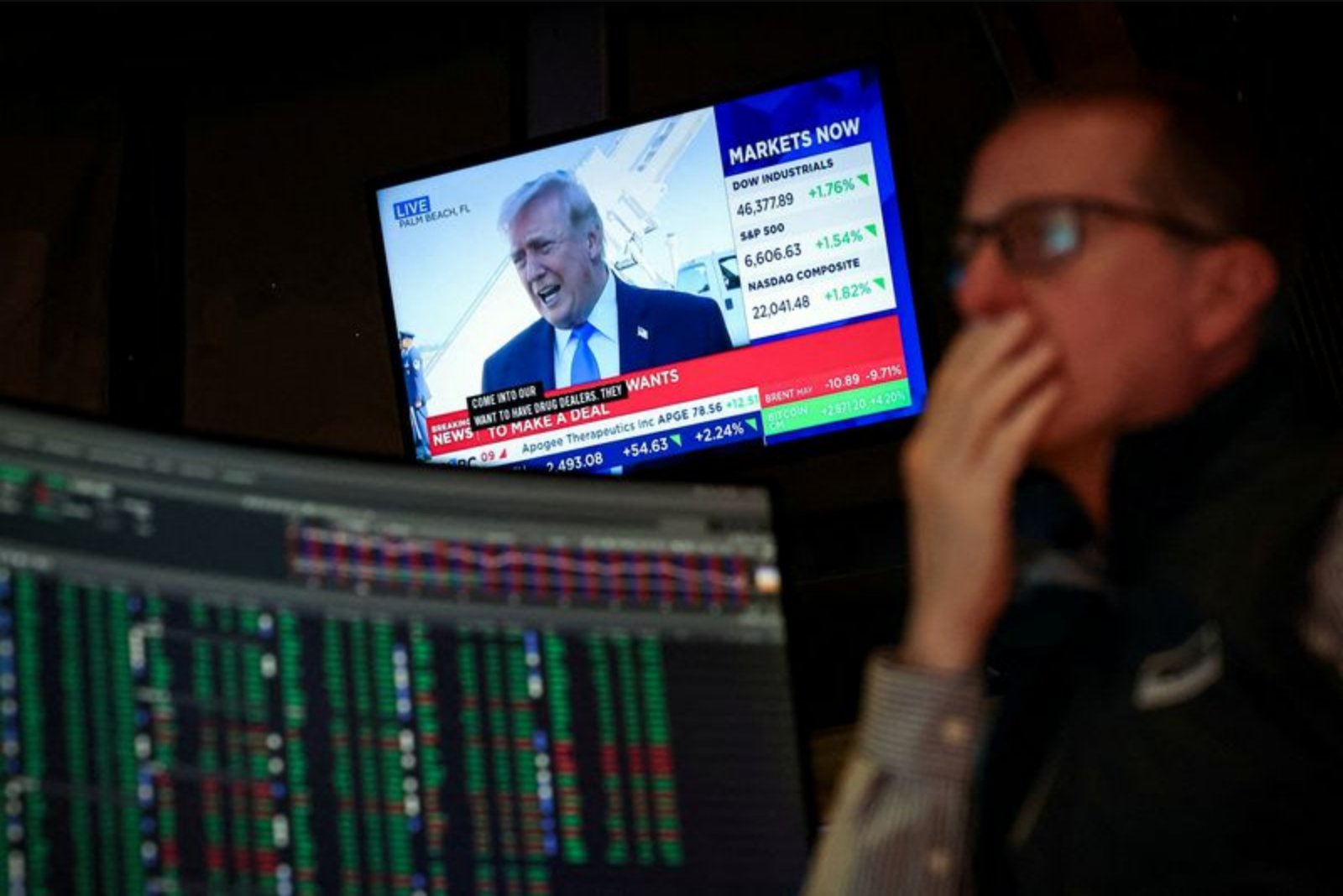
Global financial markets are ending the first quarter amid an unusually compact set of pressures that have been dominated by geopolitics and the emergence of open conflict. A U.S. demand that Tehran reopen the strategic Strait of Hormuz into April or face the destruction of its power infrastructure has added a direct and time-bound threat that investors must price alongside major macroeconomic data and the initial tranche of corporate quarterly earnings.
1 - A quarter stamped by geopolitics and market ruptures
As Q1 draws to a close, market participants have been forced to square positions after a few extraordinary months. Since the outbreak of the Iran conflict, global equities have lost roughly $7 trillion in market value. Energy markets have seen extreme moves: oil is up nearly 70% year to date and natural gas about 85% year to date. Those moves have flipped the narrative on interest rates - market pricing has shifted toward higher-for-longer outcomes rather than the declines that some had expected earlier in the year.
That shift also means the previously touted structural demand case for energy-hungry artificial intelligence hardware is under renewed scrutiny, as higher energy costs and price volatility complicate the economics for large computing estates. The turbulence did not begin with the Middle East conflict. Earlier developments across the quarter, including interventions in Venezuela and Greenland and strains appearing in segments of the private credit market, had already injected bouts of volatility into markets. A recent 16% decline in gold - which had been on a persistent upward run since the start of 2025 - further underlines that the usual safe havens have been less dependable in this environment.
Looking ahead to the second quarter, the central question for investors is whether markets will simply move on or roll over into renewed stress. With active conflicts, central banks adjusting stances and several important ballots on the political calendar, the next quarter could remain highly unsettled.
2 - Oil’s wild month and a dramatic intra-day reversal
March has been a milestone month for the oil complex. Observers count it as the largest energy shock on record, with the most intense volatility since the COVID era and, in recent days, one of the most abrupt price reversals witnessed in years. When a social media post from the U.S. president described negotiations with Tehran as "constructive" and hinted that hostilities might ease, the oil price fell about 15% within minutes.
Adding a layer of mystery to that move was a large trading position placed roughly 15 minutes before the public comment. About $500 million of orders, predominantly sell orders, were executed when oil was about 2% higher on the day and rising. It remains unclear who initiated that position or what prompted the timing. The episode highlights how quickly sentiment can swing and how much market participants now rely on near-instant information flows. Traders are likely to remain nimble and highly attentive to social media and other real-time channels as they manage risk into the coming days.
3 - Jobs data will be scrutinised for spillovers from the energy shock
One of the major macro events due this week is the U.S. employment report covering March, which will be released on April 3. A Reuters poll puts consensus expectation for payroll growth at an increase of 48,000 jobs for the month. That number will be read for signs of resilience or softening as higher energy prices filter through to consumer spending and corporate activity.
February’s report had surprised markets by showing a decline in nonfarm payrolls of 92,000 and an uptick in the unemployment rate to 4.4%. Against that backdrop, the March reading will influence expectations for the Federal Reserve’s path on interest rates. Already, Wall Street has trimmed its forecasts for U.S. rate cuts this year as the oil surge raises fresh concerns about inflationary pressure. Other U.S. releases due in the same window - including February retail sales and measures of manufacturing and services activity - will provide a fuller picture of the near-term economic trend.
4 - Korea’s trade figures and the AI supply chain lens
South Korea’s March trade data, scheduled for mid-week release, will be among the first formal indicators of global trade performance in April. As an export-oriented economy, Korea serves as an early bellwether for demand in key markets and is therefore closely watched for signs that higher energy costs and geopolitical uncertainty are denting activity.
Manufacturing data from Korea is of heightened interest this cycle for two linked reasons. First, the country’s heavy reliance on energy imports from the Middle East makes its industrial output sensitive to the recent oil and gas shock. Second, Korea produces a large share of the world’s DRAM chips - components that are central to AI computing and currently in short supply. Given the importance of these memory chips to data-centre expansion and AI deployments, any signs of strain or improved supply from Korea will be monitored by market participants focused on both hardware makers and downstream cloud and compute providers.
With volatility on the Kospi still elevated following the recent market turmoil, investors are advised to examine Korea’s data closely as an early signal of broader trade and semiconductor dynamics.
5 - A potential flashback to inflationary pressure in the euro zone
On Tuesday, a flash estimate for euro zone inflation in March will be released. After a prolonged period in which headline inflation hovered near the 2% area, expectations now point to a rise in headline inflation driven by higher energy costs - a pattern observers recall from 2022. The central question is how material and persistent any uptick will be.
Early euro zone indicators for March are not encouraging. Private sector growth slowed sharply during the month, input costs climbed to their highest reading in more than three years, and supply chains were markedly disrupted. Taken together, the data for March could increase pressure on the European Central Bank to consider a policy rate increase as soon as next month, a move that seemed unlikely before the Iran conflict but is now being priced by money markets as a realistic possibility.
Conclusion
The end of Q1 leaves investors confronting a concentrated set of risks: a geopolitically driven shock to energy markets that has erased trillions in equity value, abrupt intra-day swings driven by real-time information flows, and a macro calendar that will test labour, inflation and trade readings. How these data points resolve will help determine whether central banks pivot further into tighter policy and how quickly markets stabilise as they enter the next quarter.