
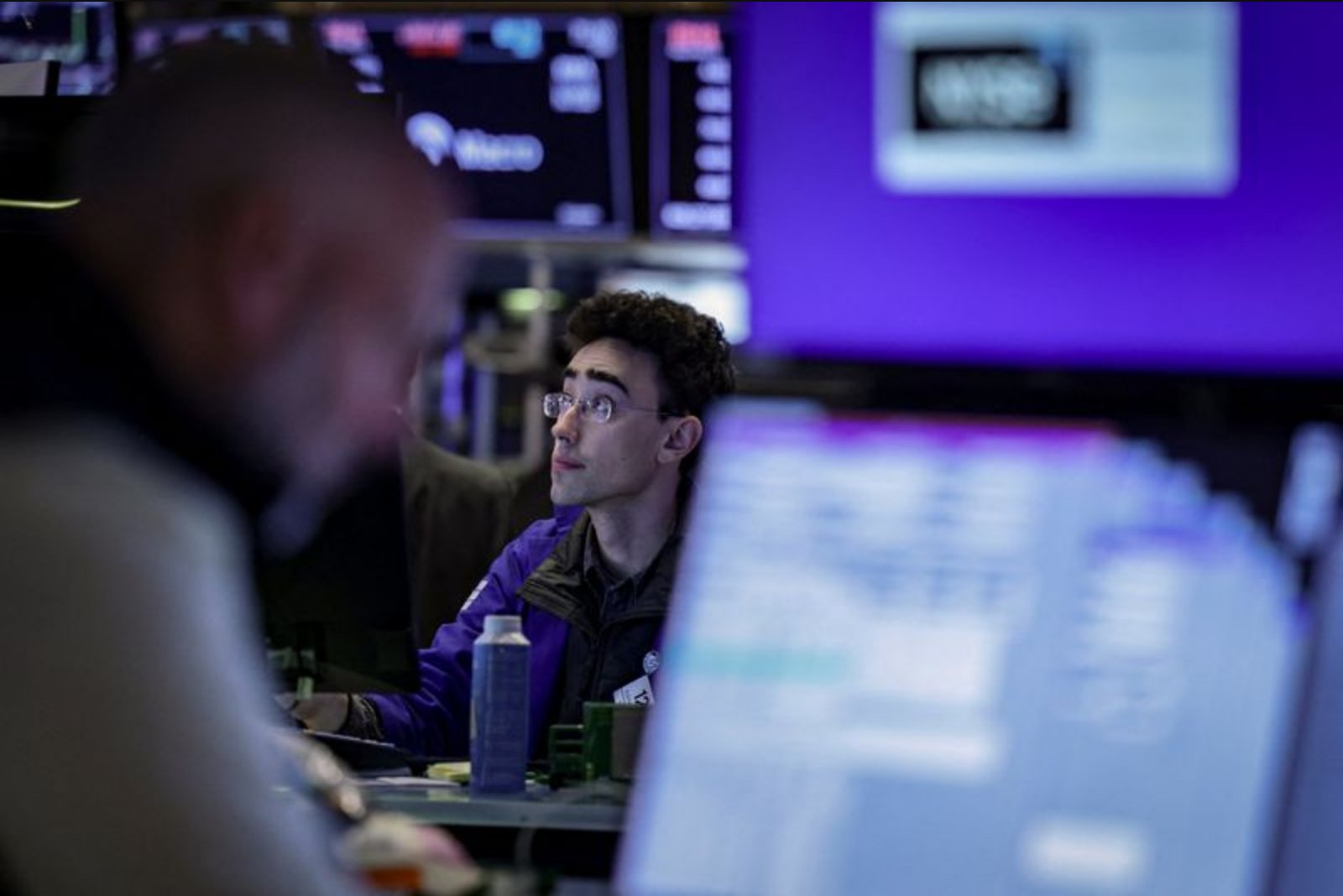
ORLANDO, Florida, March 31 - Wall Street ended a volatile first quarter with a powerful one-day advance on Tuesday as hopes for de-escalation in the Middle East prompted investors to pile back into risk assets. The surge came even as data released showed a notable decline in U.S. job openings and in hiring activity.
Market participants and strategists are drawing comparisons to 2021-2022, the last episode when central banks confronted a sharp global supply shock. Then, central banks moved in concert to tighten policy in response to inflationary pressures - albeit after a lag. Observers caution that similar unified action is less likely in the current environment.
If you have time to dig deeper, the following pieces are suggested reading for context on the forces driving markets today:
- U.S. says coming days in Iran war will be decisive, urges Tehran to make a deal
- U.S. consumer confidence rises, but job openings and hiring drop sharply
- Market tightening gives central banks time to wait and watch: Mike Dolan
- U.S. banks raising borrowing costs for private credit funds as AI fears pummel valuations, sources say
- Oil and war top financial markets worry list for an uncertain Q2
Today’s key market moves
- STOCKS: Asia mostly traded lower, with South Korea’s KOSPI down 4.5%. European bourses were largely in positive territory, while U.S. markets rallied strongly - the S&P 500 rose 3% and the Nasdaq was up 4%.
- SECTORS/SHARES: Nine of 11 S&P 500 sectors gained. Technology and communications services climbed more than 4%, industrials and consumer discretionary rose over 3%. Energy fell 1%. Notable movers included Caterpillar +6%, Nvidia +5.5%, and Boeing +5%.
- FX: The dollar snapped a five-day winning streak, weakening 0.6%. The Australian dollar and the British pound were the largest G10 gainers. Among emerging market currencies, the Hungarian forint, South African rand and Brazilian real each advanced 1.5% or more, leading the emerging FX rally.
- BONDS: U.S. Treasuries rallied, sending yields down roughly 4-6 basis points across the curve.
- COMMODITIES/METALS: June crude oil futures fell 3%, while gold rose 3% and silver jumped 7%.
Key talking points from the session
Coiled spring or dangerous complacency? The strength of Tuesday’s move on Wall Street was notable not only because the major indexes logged their best session since May of last year, but also because the S&P 500 and Dow recorded their largest single-session gains since the Iran war began. Markets saw a more than 2% gain on the backs of hopes for reduced hostilities after experiencing a 2% down day recently. This pattern can be read in several ways: as evidence that investors are eager for a conflict resolution that would clear the way for risk-taking; as a sign that market participants may be understating the extent of damage already inflicted and the residual risks even if fighting stopped quickly; or as quarter-end portfolio rebalancing and position-squaring.
A quarter of extremes The first quarter of 2026 produced a wide range of outcomes across energy, equities and regional markets. Brent crude posted its largest increase since the first Gulf War. European LNG prices jumped 80% over the quarter. The so-called "Mag 7" mega-cap stocks collectively fell about 13% during the period. March was the worst month for world equities since September 2022, with roughly $8 trillion of market value erased. The volatility in global markets is encapsulated by the performance of South Korea’s KOSPI: it finished the quarter up 20% overall but also met the technical definition of a bear market after closing Tuesday around 20% below its February 27 peak - the day before U.S. and Israeli strikes on Iran.
U.S. gasoline crosses a psychological threshold On Main Street, round-number price levels often take on outsized importance. The national average price of gasoline has moved above $4 per gallon for the first time since 2022, a rise of about 35% since the Iran conflict began. That rise in pump prices is flagged as potentially politically damaging for President Donald Trump, whose approval numbers are described as weakening in available reporting. With the U.S. political calendar running toward November, sustained high fuel costs could have electoral ramifications.
Key near-term market catalysts
- Developments in the Middle East
- Energy market movements
- Japan, euro zone, UK and U.S. manufacturing PMIs (March)
- Japan tankan survey (Q1)
- Euro zone unemployment (February)
- European Central Bank board member Piero Cipollone speaks
- Bank of Canada publishes summary of March policy meeting
- U.S. retail sales (February)
- U.S. ISM manufacturing index (March)
- U.S. ADP employment (March)
- U.S. Federal Reserve officials scheduled to speak include Governor Michael Barr and St. Louis Fed President Alberto Musalem
Additional note
Readers interested in a daily digest can sign up for the Trading Day newsletter for weekday morning delivery.
Opinions referenced in this article reflect the views of the author.