
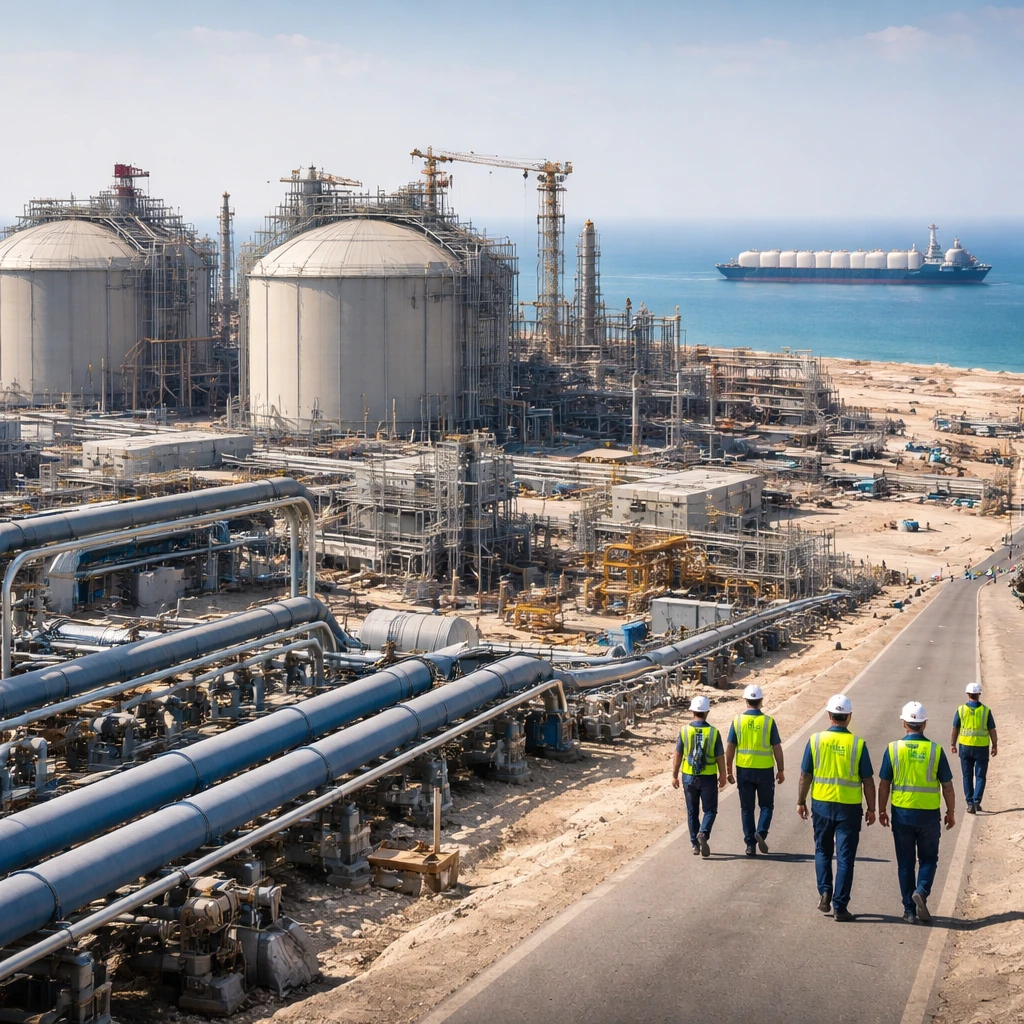
Qatar has started mobilizing engineers and other workers to return to the Ras Laffan liquefied natural gas export complex following a ceasefire in the Middle East, according to people with knowledge of the situation who asked not to be identified. The resumption of activity is described as limited and focused on maintenance required ahead of a planned restart.
Officials and sources say some production could begin to resume within days, though it is not yet clear how quickly output could be expanded. Any meaningful return to large-scale shipments will depend on maritime security and the ability of vessels to transit the Strait of Hormuz.
Ras Laffan has been out of operation since early March, creating a squeeze in global gas supply. The complex sustained damage in a missile attack last month that removed roughly 17% of Qatar's annual export capacity, with that loss expected to last for as long as five years. Returning other sections of the facility to service would be an important operational milestone.
The entire Ras Laffan site has the capacity to produce 77 million tons of LNG per year. The current activity is being carried out under improved security conditions that have permitted limited on-site work to address the maintenance tasks necessary for a phased restart.
Sources who provided the operational update declined to be named because they were not authorized to speak publicly. They characterized the work as preparatory and emphasized the uncertainty around timing; while some flows might restart in the coming days, a full ramp-up will be contingent on the ability to move ships through regional waterways without disruption.
Observers note that bringing additional trains or units back online at Ras Laffan would represent a significant step toward alleviating the supply shortfall created by the outage. Until shipping lanes are deemed secure and repairs are advanced, the scale and speed of recovery at the facility remain uncertain.
Operational snapshot
- Limited maintenance and preparatory work has begun at Ras Laffan following a ceasefire.
- Some production could restart in the coming days, but the rate of recovery is unclear.
- Significant output restoration depends on secure passage through the Strait of Hormuz.
The situation at Ras Laffan will be monitored closely by market participants, shipping operators, and energy infrastructure planners as the limited mobilization progresses and more clarity emerges about the timeline for broader production recovery.