
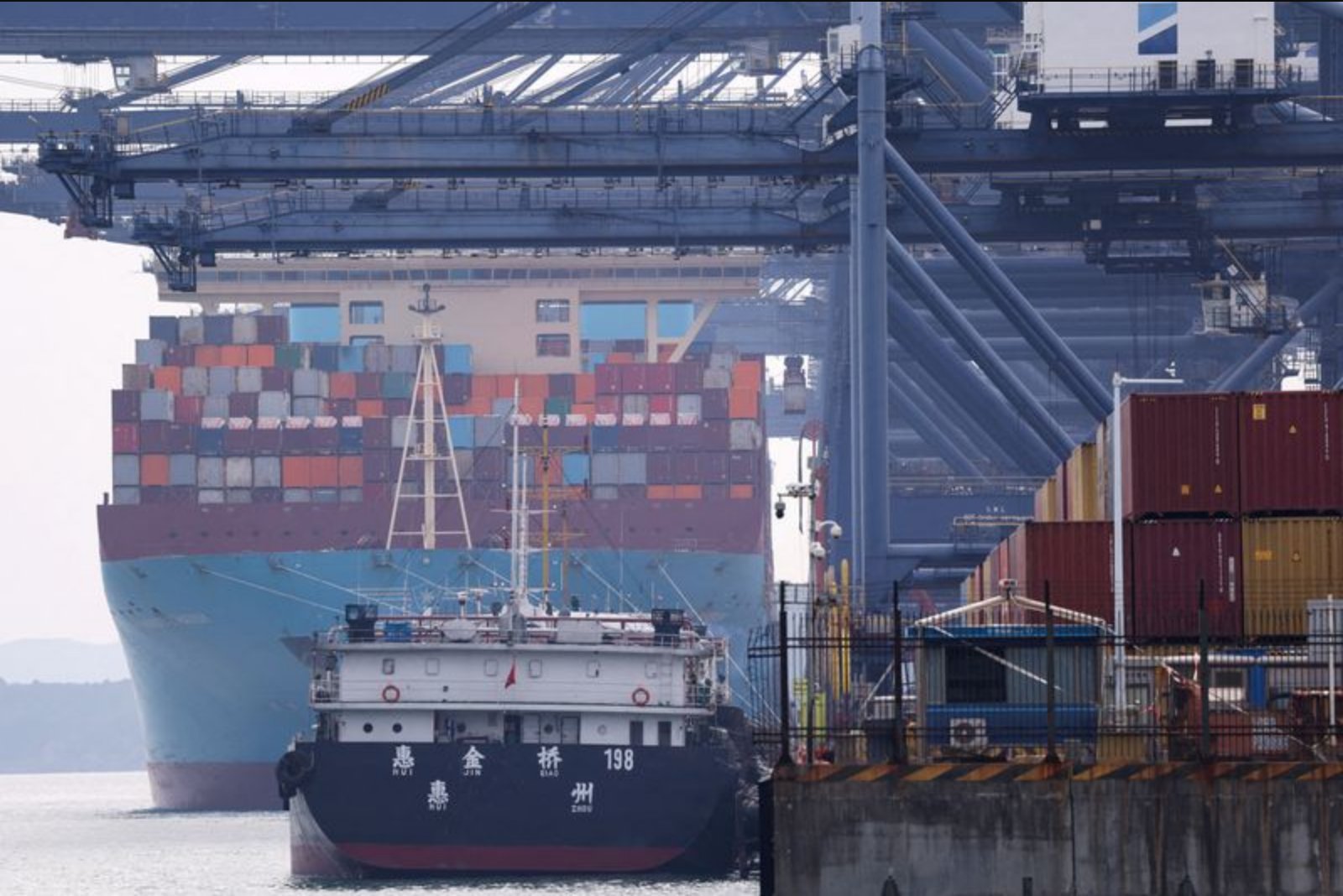
BEIJING - A Reuters poll of 23 economists points to a faster pace for China’s exports in the January-February reporting window, reinforcing expectations that the world’s second-largest economy could top its record 2025 trade surplus of $1.2 trillion during 2026.
According to the poll’s median forecast, merchandise exports from the $19 trillion economy expanded by 7.1% year-on-year in U.S. dollar terms over the first two months of the year. That represents an acceleration from the 6.6% increase recorded for December. The official trade figures covering January and February are scheduled for release on Tuesday.
The forecast for stronger outbound shipments raises the question of what, if anything, can check China’s dominance in global goods trade. Efforts by Chinese exporters to reduce dependence on the United States - by redirecting sales to Southeast Asia, Africa and Latin America - have helped cushion export performance following a renewed tariff confrontation with Washington in 2025.
Nevertheless, several governments are weighing whether to emulate U.S. trade curbs, citing concerns about the threat to their domestic manufacturing bases and the impact of Chinese firms supplying global markets with goods that domestic demand cannot absorb due to deflationary pressures and excess capacity in China.
The poll also found imports likely rose 6.3% in the combined January-February period, up from a 5.7% gain in December. Despite this pickup in purchases, the median estimate pointed to a trade surplus of $179.6 billion for the two-month stretch, above the $169.21 billion surplus recorded in the same period a year earlier.
Policy signals remain tilted toward external demand. Premier Li Qiang announced last week that China would seek an economic growth target of 4.5%-5% for 2026, down from last year’s 5% target. Officials met last year’s goal in part through a one-fifth surge in the trade surplus, underscoring how external balances helped support headline growth.
While China’s next five-year plan pledged a "notable" rise in household consumption, economists expressed skepticism that Beijing will pivot away from an export-oriented model in the near term. The strategy document offered few concrete measures to lift expectations for substantial demand-side reform, leaving exports as an attractive outlet for firms and policymakers.
Recent factory activity data for February, released last week, showed companies still struggling to generate profits in the domestic market even as export orders improved. That divergence highlights why producers and officials continue to prize international sales as they plan for 2026.
On the diplomatic front, U.S. President Donald Trump is expected to travel to Beijing later this month for a highly anticipated leaders’ summit. Observers in the poll signalled low expectations for a durable detente, noting both sides appear prepared to re-escalate trade measures if deemed necessary.
Data note: The Reuters poll aggregated median forecasts from 23 economists for January-February trade flows. The figures cited are the poll medians and past monthly data quoted in the same terms.