
Democrats in Congress took on a high-profile fight to impose new legal constraints on Immigration and Customs Enforcement agents, even as they acknowledged those changes were unlikely to win support from House Republicans. Their effort was driven as much by political messaging and electoral strategy as by the immediate prospect of changing enforcement practices.
On Friday, House Republicans rejected a Senate compromise measure that had been approved in the early hours to resolve a partial government shutdown. House GOP leaders then produced an alternative proposal that Senate Democrats said they would oppose. The standoff left the precise legislative outcome unsettled.
Throughout the dispute, Democrats emphasized stopping what they described as aggressive tactics used by ICE nationwide. Senate Democratic Leader Chuck Schumer reiterated the party position, saying on Friday that Democrats would continue to fund core homeland security functions but would not provide what he called a "blank check" to what he termed the administration's immigration enforcement forces without reforms.
The White House and congressional Republicans framed the stepped-up enforcement as implementation of the president's pledge to deport people residing in the United States unlawfully. Democrats, meanwhile, have tied the battle to broader electoral objectives, expressing confidence about prospects for winning control of the House in November and pointing to increasingly competitive races in some Republican-held Senate contests.
Democrats have cited a run of favorable outcomes in special elections and polls that, in recent weeks, have shown the president's job approval at 36% amid rising gasoline prices and the U.S.-Israeli conflict involving Iran. Those dynamics have informed Democratic calculations that highlighting ICE practices could be an effective campaign issue.
Specific reform requests
Lawmakers from the Democratic side proposed several concrete reforms they sought to attach to funding. Those measures included requirements for ICE agents to identify themselves and to stop wearing masks during operations; bans on stakeouts near churches, hospitals and schools; and a requirement to obtain judicial warrants before entering private residences.
Senate Republicans, who hold a narrow majority, rejected most of these proposals, arguing the restrictions would impede deportation efforts. Even so, Democrats view their refusal to vote to fund ICE operations as a political win and point to other recent outcomes they regard as favorable, including a reduction in ICE deployments in Minneapolis following incidents in which two U.S. citizens were killed by federal agents.
Representative Salud Carbajal of California framed withholding a funding vote as a deliberate victory, saying simply not voting to fund ICE was "absolutely" a win because Democrats had made clear they would not provide additional funds for ICE and Customs and Border Protection until the reforms they sought were adopted. The practical effect on ICE operations, however, is limited in the near term: the agency remains fully financed under the One Big Beautiful Bill Act enacted last summer.
Republican objectives and setbacks
House Republicans had pressed to attach a broad voting reform package, the SAVE America Act, to Department of Homeland Security funding. That proposal, which the president supports, would have required proof of citizenship to register to vote and, depending on its final form, could have restricted mail-in voting. House GOP leaders were unable to advance that approach through the current negotiations.
Republicans also failed to lock in full-year funding for all ICE and Customs and Border Protection operations through September, even though appropriations enacted last year leave both agencies with sufficient resources for the immediate period. House Republican Conference Chair Lisa McClain acknowledged the setback, telling Reuters, "I’ll be honest, they (Democrats) won in the Senate bill. We were surprised we got the bill that we got."
Despite those setbacks, Republicans retain an elective message to take to voters: a tough posture on immigration that was central to the recent presidential campaign and remains salient with a segment of the electorate. Representative Bob Onder of Missouri criticized Democrats for prioritizing undocumented immigrants over American citizens, reflecting the rhetorical theme Republicans intend to emphasize.
Polling compiled in a four-day Reuters/Ipsos survey completed on Monday indicated that while a plurality of Americans still view Republicans as the stronger party on immigration, many disapprove of the administration's tactics for rounding up migrants, including operations that in some instances have involved U.S. citizens.
Operational fallout at airports
The partisan impasse also intersects with operational disruptions at the nation’s airports. Nearly 500 Transportation Security Administration agents have resigned, citing inadequate pay, and both parties have at times sought to avoid full responsibility for the resulting delays. Senator John Cornyn, who is in a close primary runoff in Texas, said voters prioritize avoiding lengthy waits and missed flights and urged lawmakers to complete their work, noting the difficulty of resolving the situation.
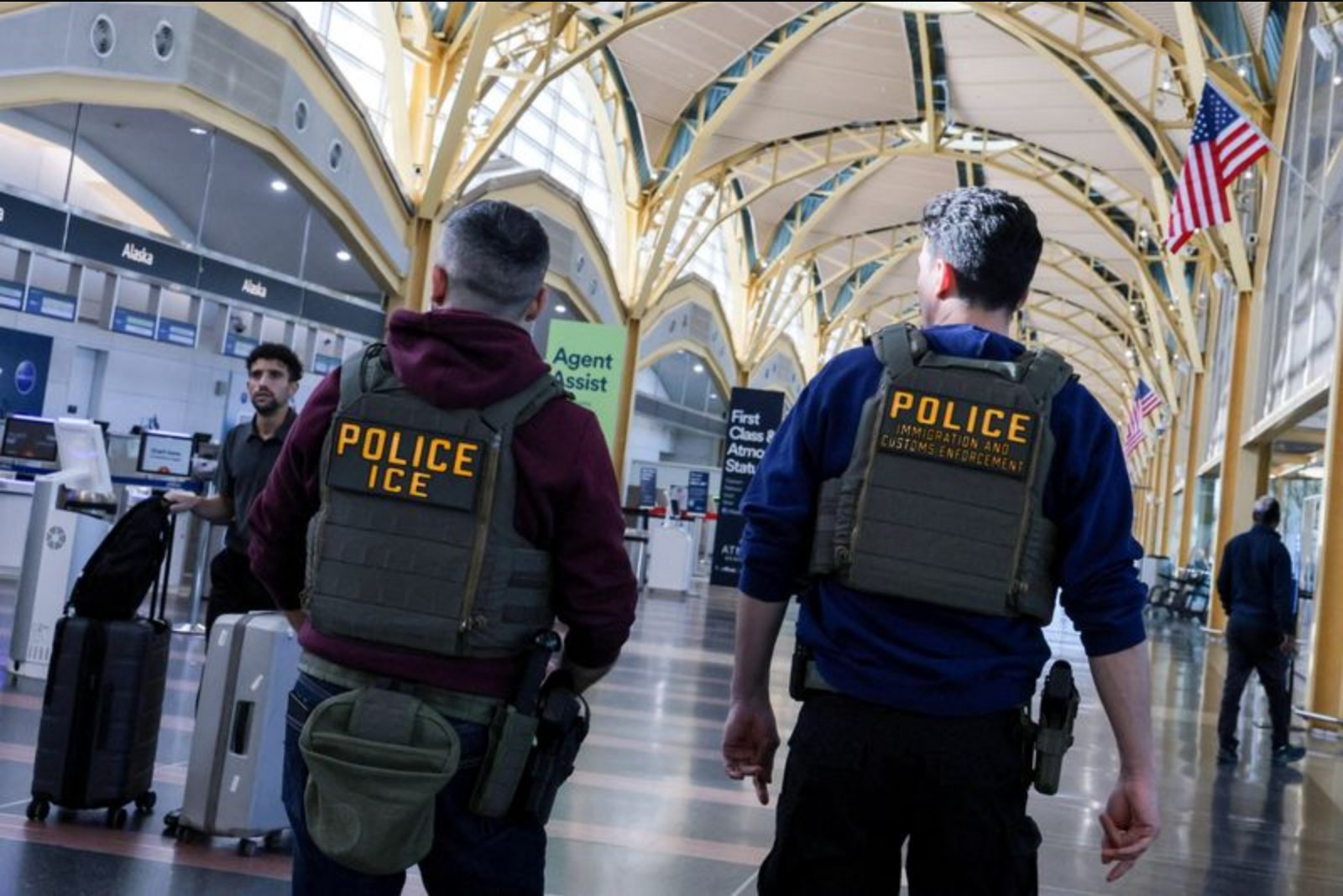
Compounding tensions at airports is a decision by the administration to deploy ICE agents to more than a dozen U.S. airports to assist TSA screening operations. Some travelers have found the ICE presence unsettling. Diane Price, who flew from Oregon to Arizona, described seeing ICE agents inside the Phoenix airport as "intimidating" and "scary," and said she and her husband were relieved that the agents were not wearing masks, as has been reported in other deployments. Price became emotional discussing the experience.
Where the parties stand
At the end of the standoff, both parties can claim partial political advantages but little durable policy change. Democrats can say they stood against funding ICE absent reforms and scored messaging points connected to broader electoral trends. Republicans, while failing to force through voting changes or full-year funding riders, retain the ability to campaign on a law-and-order approach to immigration enforcement.
The dispute leaves unresolved questions about operational continuity at airports, the practical scope of ICE activities under current funding, and the broader implications for the November elections. The precise legislative path forward will depend on further negotiations in the coming days and weeks, with each party balancing short-term operational needs against longer-term political aims.
Summary
Congressional Democrats sought legal limits on ICE operations as part of a funding fight that intersected with broader electoral strategy. Most of the specific reforms Democrats proposed were rejected by Senate Republicans, though Democrats view withholding funding votes as a political win. House Republicans failed to attach a major voting reform to homeland security funding and did not secure full-year appropriations for ICE and CBP. The dispute complicates airport staffing and operations where TSA shortages and ICE deployments have affected travelers.