
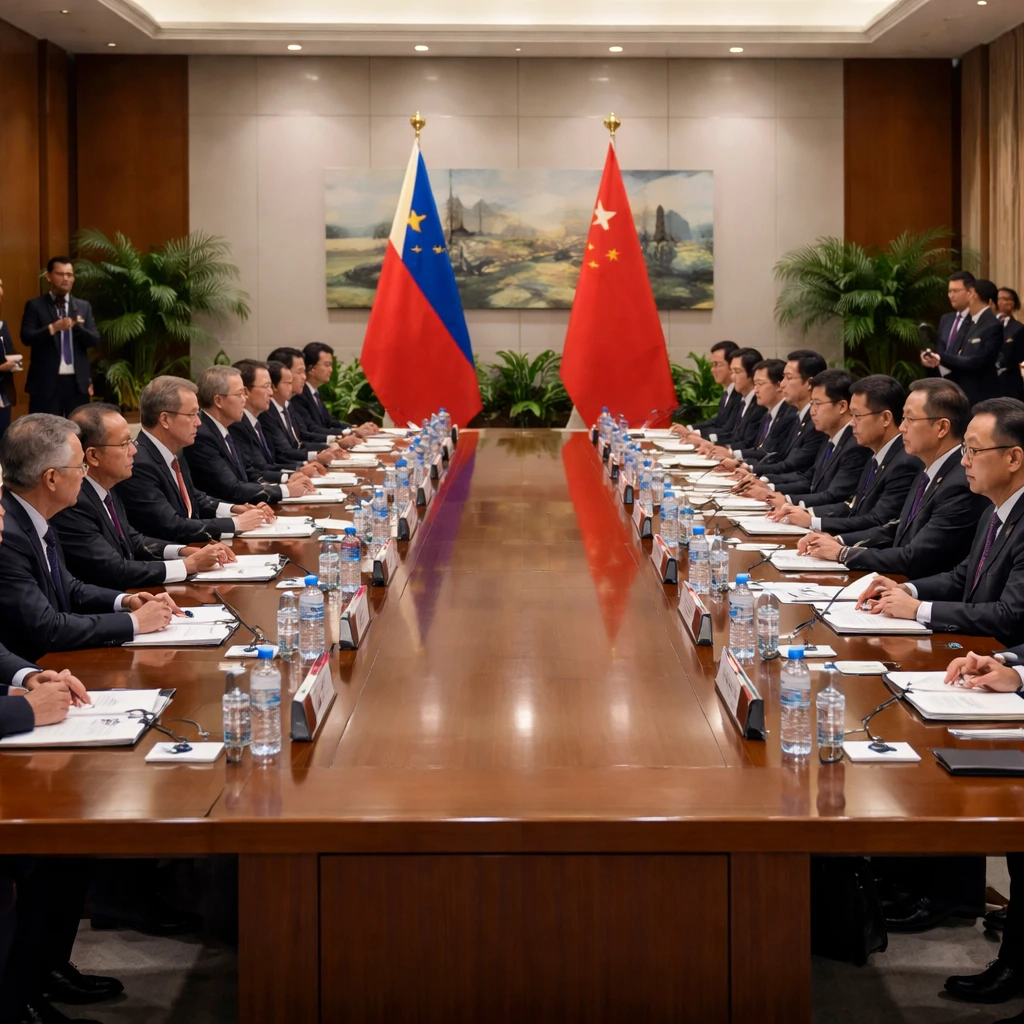
The Philippines and China resumed formal diplomatic engagement on their contested South China Sea claims with meetings held in Quanzhou, China, on Friday and Saturday. The gatherings marked the first such formal talks between the two governments in more than a year.
Manila’s foreign affairs department confirmed that the 24th Philippines-China Foreign Ministry Consultations and the 11th Meeting of the Philippines-China Bilateral Consultation Mechanism on the South China Sea took place in Quanzhou. The department characterized both mechanisms as important channels for frank and candid exchanges on bilateral issues and concerns, and for exploring possible cooperation in areas considered non-sensitive.
Officials from the two countries addressed the long-running dispute over the strategic waterway during the sessions. The two governments had last held formal talks on the matter in January 2025, and Beijing previously stated that political dialogue with Manila had resumed in January following a hiatus of more than a year amid geopolitical tensions.
The meetings occurred against a backdrop of Manila signaling an openness to revisit discussions with Beijing on a joint oil and gas project situated in a disputed section of the South China Sea. In addition, the Philippines has sought oil and fertilizer supplies from China after the Iran war disrupted its existing supply chains for those commodities.
Participants used the dialogue mechanisms to focus on possible areas of cooperation that both sides assess as non-sensitive, while also providing a forum for candid exchange on broader bilateral concerns. The renewed talks represent a return to formal, state-level engagement on the territorial dispute following the hiatus in political dialogue.
Context and immediate outcomes
While the talks themselves were positioned around cooperation in non-sensitive areas, the consultations also functioned as a platform to address ongoing differences over sovereignty claims in the South China Sea. The discussions in Quanzhou brought together officials under two established bilateral mechanisms designed for sustained diplomatic contact and problem-solving.
Details on specific agreements or joint initiatives resulting from the meetings were not provided by the foreign affairs department. The meetings' resumption follows public indications from the Philippine leadership about potential energy cooperation and requests for key commodity imports from China.