
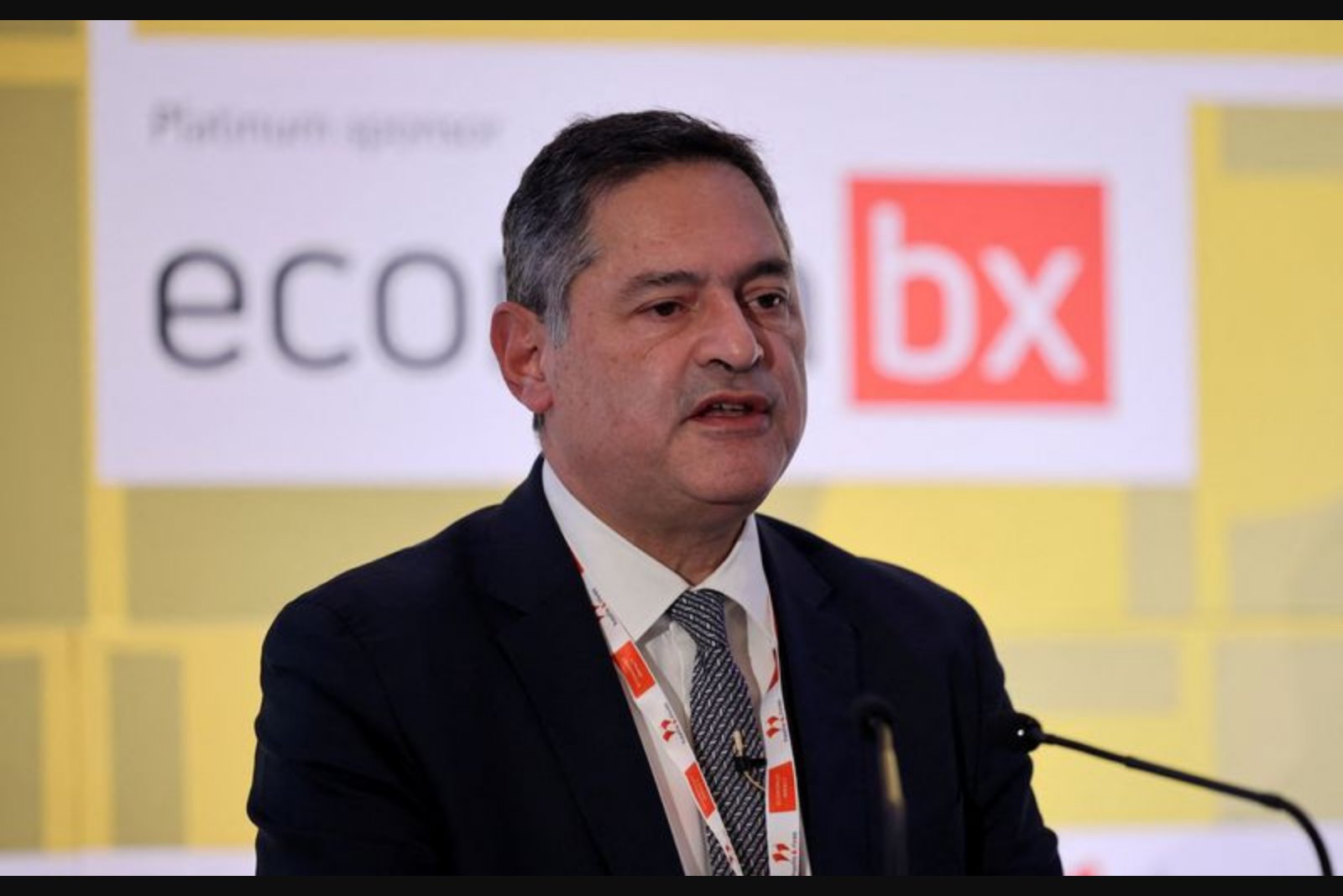
Frankfurt - Christodoulos Patsalides, governor of the Central Bank of Cyprus and a voting member of the European Central Bank's rate-setting Governing Council, cautioned against an immediate turn to tighter monetary policy as energy costs surge following the U.S.-Israeli war with Iran. While acknowledging that headline inflation in the euro area may climb above the ECB's 2% goal as soon as this month, Patsalides said the bank's baseline projections remain valid and that there is not yet proof inflation is becoming embedded in the economy.
With energy prices driving headline inflation higher, policymakers have been debating whether to act quickly to prevent second-round effects that could push wages and core prices up. Patsalides stressed that he would be prepared to raise rates if he observed clear signs of entrenched inflation in the 21-nation euro area, but underlined that those signs are not currently present.
"We do not have sufficient information to make a decision as to whether this should be looked through or whether we should be making a decision on interest rates," he said in an interview. "I would not rush into any decision."
Under the ECB's baseline scenario, inflation is expected to exceed 3% in the second quarter and then decline back toward the 2% target within a year. The bank's adverse scenarios, however, indicate the possibility of larger and more persistent overshoots. Patsalides said he believes the situation remains aligned with the baseline.
"I think we are still along the baseline," he said, noting the limited time that has passed since the cutoff date for the ECB's most recent projections. "Only two weeks have passed since the cutoff date of the projections, and we have not seen anything that points to a change in either the duration or the intensity of the war."
Market participants have pushed up expectations for ECB tightening, with traders pricing in as many as three rate increases this year and the first move potentially arriving in April or June. Patsalides did not rule out the possibility of a change at any upcoming meeting, including April, but emphasized that an early hike would require evidence that higher headline inflation was transmitting into core measures rather than representing a one-off effect.
"I prefer to be more cautious," he said. "Wisdom comes with more information. Wisdom is a function of necessary information. If you do not have the information, then what you have is gut feeling. And you should not be making decisions on the basis of gut feeling."
He added that one of the metrics the ECB watches closely - longer-term inflation expectations - remains anchored around the bank's 2% objective. At the same time, Patsalides cautioned that risks are skewed to the upside. He pointed to the lingering "memory effect" from the 2021-22 shock, which could prompt households and firms to update price and wage expectations more rapidly than before.
Still, he highlighted several factors that differentiate the present environment from earlier episodes of high inflation: interest rates are higher than before, labour markets have cooled, fiscal settings are tighter, and there is a smaller cushion of pent-up demand.
The ECB's next policy meeting is scheduled for April 30, when the bank is expected to receive updated scenario analysis on its projections. Those updated projections will be a key input into any decision about the timing and magnitude of future rate moves.
Key points
- Patsalides argues against rushing into rate hikes, citing insufficient evidence of entrenched inflation - impacts markets, banking and bond sectors.
- ECB baseline expects inflation above 3% in Q2 before returning to target within a year - relevant for fixed income, lending and corporate borrowing costs.
- Risks are skewed toward higher inflation due to potential faster expectation formation by households and firms, affecting labour market dynamics and wage setting.
Risks and uncertainties
- Escalation or persistence of the conflict could prolong energy price pressure, increasing the chance of a longer-lasting inflation overshoot - impacts energy, consumer price inflation and bond markets.
- Markets currently price multiple rate hikes this year, but expectations are volatile and may change sharply with developments in the war - affects financial markets and bank funding conditions.
- The so-called memory effect from the 2021-22 shock could prompt faster adjustments in wage and price expectations, which would raise upside inflation risk - relevant for wages, employment and corporate margins.