
The macroeconomic outlook for the Pacific region is undergoing a notable shift. Data released by the World Bank on Tuesday suggests that growth across 11 specific Pacific Island countries is set to weaken significantly by 2026. This projected slowdown arrives after a period of higher activity; while the region saw an estimated growth rate of 6.5% in 2023, that figure is expected to settle at approximately 3.2% for both 2024 and 2025. Looking further ahead, the forecast indicates a dip to 2.8% in 2026, with a minor recovery to 3.1% anticipated in 2027.
Regional Growth Dynamics and Economic Drivers
The group of countries analyzed in the report includes Fiji, Samoa, Tonga, Vanuatu, Kiribati, the Marshall Islands, Nauru, Palau, the Federated States of Micronesia, Solomon Islands, and Tuvalu. According to Ekaterine Vashakmadze, a senior country economist at the World Bank, this region is positioned as one that will be most significantly affected by current global tensions, even though the countries themselves are not direct participants in ongoing conflicts.
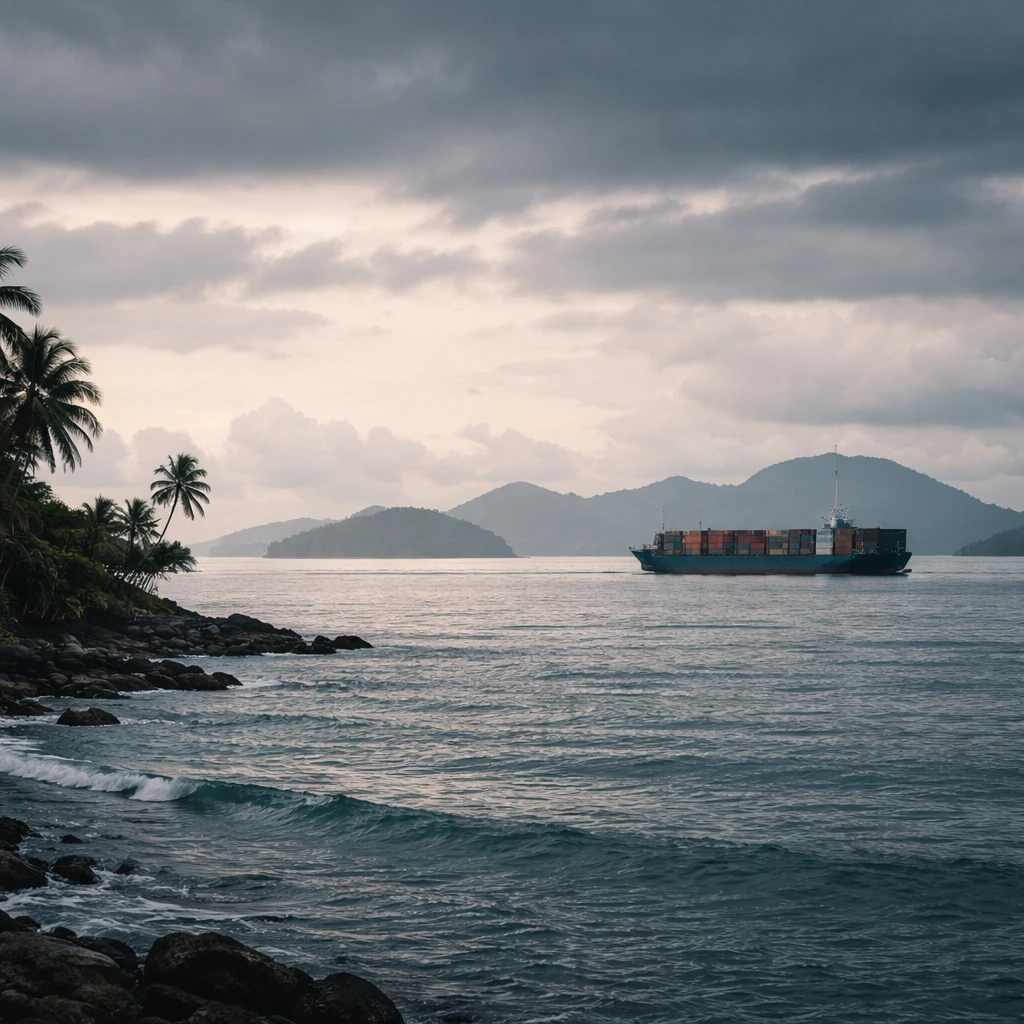
A primary driver of this cooling economy is the impact of Middle East conflict on essential supply chain costs. The instability has driven up expenses related to freight, insurance, and delivered fuel. For Pacific economies that rely heavily on imports, these rising costs place intense pressure on local fiscal stability. Previously, the World Bank had considered upward revisions for regional growth due to expected support from remittances and tourism in late 2025 and early 2026. However, current shocks are now expected to shave between 0.2 and 0.5 percentage points off the 2026 growth baseline.
Key Economic Indicators and Market Impacts
- Decelerating GDP Growth: The transition from a 6.5% growth rate in 2023 to a projected 2.8% in 2026 marks a substantial cooling of economic activity across the islands.
- Rising Inflationary Pressures: After seeing a moderation in 2025, inflation is expected to climb again. The median inflation rate across these economies is forecasted to reach 4.5% in 2026, up from 3.4% in 2025.
- Weakening Fiscal Balances: Most governments in the region saw their fiscal balances weaken during 2025. This was largely due to continued public spending aimed at supporting economic growth, which has consequently delayed the rebuilding of financial buffers following the pandemic era.
These trends impact several sectors, most notably the energy, shipping, and tourism industries, which are sensitive to cost fluctuations and changing momentum.
Risks and Structural Uncertainties
- Debt Sustainability: While public debt has seen a modest decline, several nations within the group remain at a high risk of experiencing debt distress.
- Labor Market Stagnation: A significant long-term challenge is that existing economic growth is failing to generate sufficient employment opportunities. This is particularly acute for women and young people.
- External Cost Shocks: The continued volatility in fuel, insurance, and freight costs due to external geopolitical conflicts remains a major uncertainty for import-dependent nations.
To address these issues, Vashakmadze noted that policy focus must shift toward skill upgrading and the identification of fast-growing sectors to remove barriers to growth and facilitate job creation for vulnerable demographics. The World Bank is also investigating financial support mechanisms to assist the region in navigating these crises.