
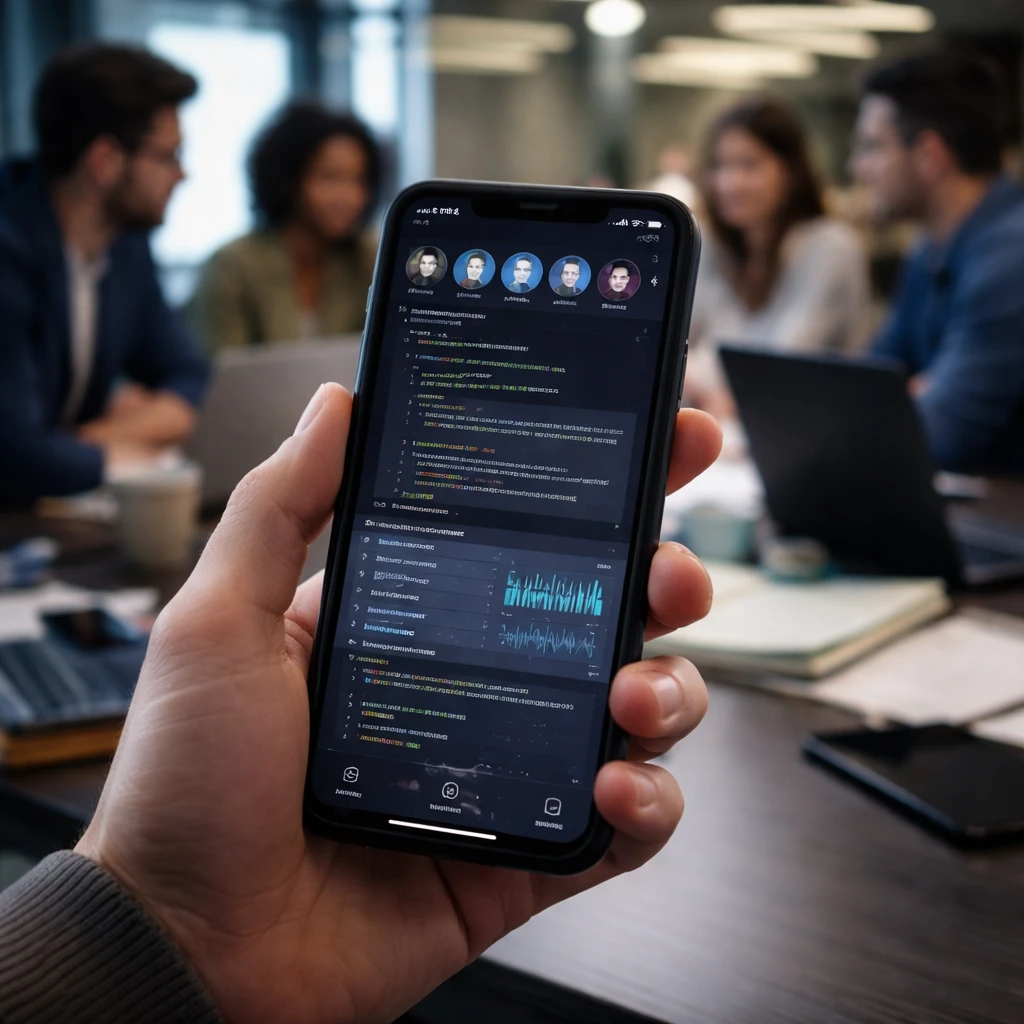
OpenAI on Monday introduced a mobile application for Codex, its tool for generating code, positioning the company to contest rivals in the growing AI code-generation market.
According to OpenAI representatives speaking at a media briefing, the Codex app is built to allow users to run and oversee multiple artificial-intelligence agents over extended periods. The company said the app supports the use of generated code for activities such as collecting and analyzing information.
The company framed the release as part of a broader push to capture a larger share of a lucrative portion of the AI market focused on coding. OpenAI said it made usability a priority in order to broaden access to advanced coding capabilities beyond specialist users and toward a wider audience.
The move comes as coding applications have become one of the most prominent and commercially successful uses of large AI models. These tools have grown important for AI startups seeking to attract business customers by delivering productivity gains to software teams and other enterprise users.
OpenAI currently lags behind some competitors in the coding segment. The company highlighted Anthropic's Claude Code as a dominant offering in the space.
Industry observers cited by the company and others note that while code-generation systems materially accelerate development workflows, they are not yet refined enough to fully supplant human developers. The tools nonetheless offer meaningful time savings and can handle routine or repetitive tasks that speed up projects.
"The models just don’t run out of dopamine," OpenAI CEO Sam Altman said, referring to a recent conversation with a colleague. "They keep trying, they don’t run out of motivation."
The Codex mobile app is presented as a tactical step in OpenAI's intensified efforts to compete for customers in the coding market. By emphasizing a user-friendly interface, the company aims to make sophisticated coding functions more approachable for general users, according to the briefing.
Summary
OpenAI released a mobile Codex app intended to manage multiple AI agents and apply code to tasks such as information gathering and analysis. The launch is part of an effort to gain ground in a market where competitors like Anthropic's Claude Code have been strong. Observers say code-generation tools accelerate developer work but do not replace human engineers.
Key points
- OpenAI launched a Codex mobile app to coordinate multiple AI agents and support code-based tasks, announced during a media briefing.
- The company is focusing on usability to broaden access to advanced coding features for general users.
- The coding segment is commercially important for AI firms; OpenAI currently trails competitors such as Anthropic's Claude Code.
Risks and uncertainties
- Competitive pressure - OpenAI faces a strong competitor in Anthropic, whose Claude Code is described as dominant in the coding market; this affects market-share prospects in the software and AI sectors.
- Technical limits - Code-generation tools are not yet capable of fully replacing human developers, limiting the extent of automation and adoption in software development workflows.
- Adoption challenges - Making advanced capabilities user-friendly is a stated goal, but uptake among broader user groups is uncertain and will influence outcomes for enterprise software and AI startups.