
The conflict in Iran has generated renewed upward pressure on inflation and introduced substantial uncertainty into projections for global growth, the Organization for Economic Co-operation and Development said in its latest Interim Economic Outlook.
According to the OECD, an energy price shock tied to the Iran war is a primary channel through which global growth may be derailed. The report notes that growth had appeared to be on a steadier path heading into 2026, supported in part by technology-related production and lower effective tariff rates on U.S. imports, but that those gains are now at risk.
Financial markets have been grappling with a stream of developments from the Middle East. Oil prices have moved back above the $100 a barrel level, after a surge earlier this month that pushed crude to nearly $120 a barrel. While prices have cooled somewhat from that peak, they remain materially higher than before the outbreak of the war in late February.
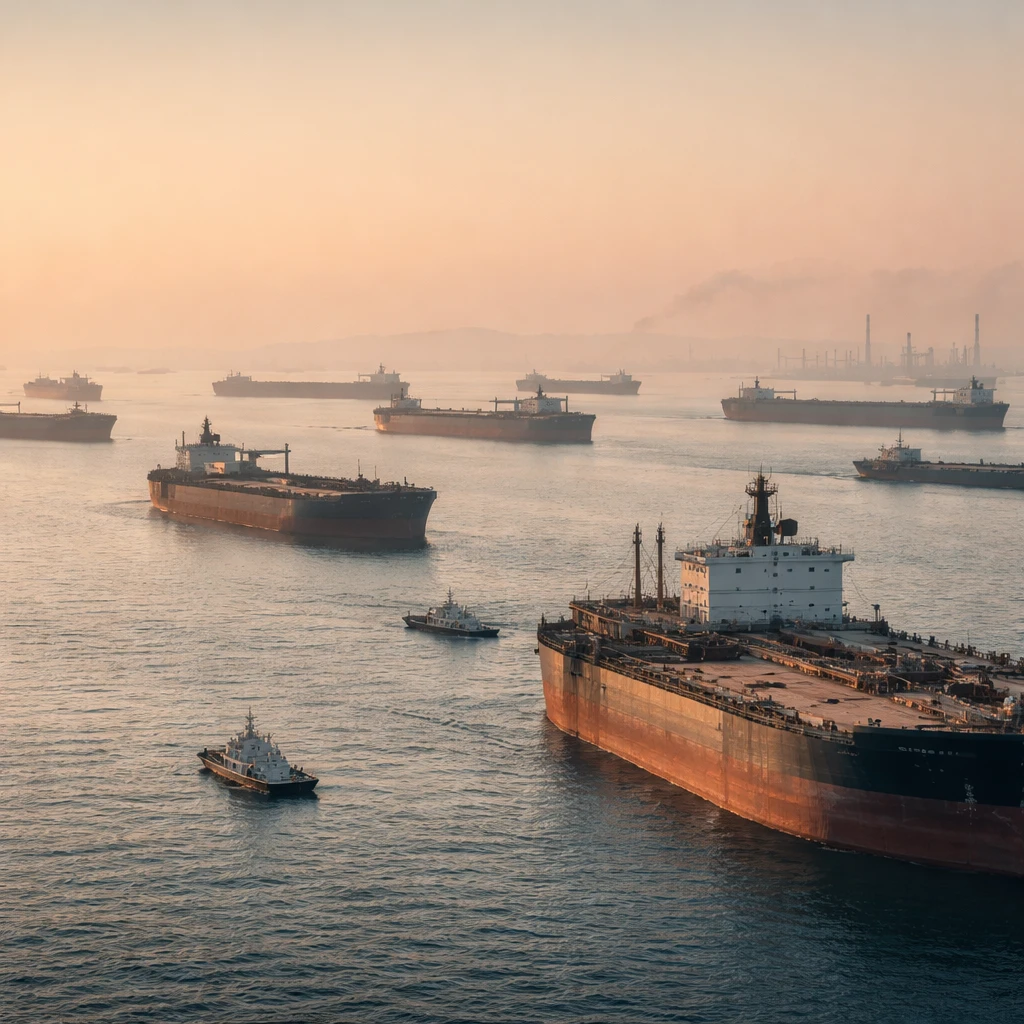
Compounding the price shock is a near shutdown of the Strait of Hormuz amid reports and rumors of imminent attacks. The OECD highlighted that the waterway - through which roughly a fifth of the world’s oil and natural gas flows - has been effectively closed by the threat of Iranian strikes for several weeks.
The report warns that the spike in oil and natural gas prices since the launch of the joint U.S.-Israeli campaign against Iran is likely to "significantly weigh on global growth while putting new upward pressure on inflation." Those forces are reflected in the OECD's updated growth projections.
On the numbers, the OECD now forecasts global expansion of 2.9% this year, down from an estimated 3.3% in 2025. The baseline scenario sees a modest rebound to 3.0% in 2027. For the G20 group of major economies, headline growth is projected at 4.0% in 2026 before easing to 2.7% in 2027.
The U.S. outlook in the OECD update shows a moderation in growth as well. Gross domestic product is projected to slow from 2.0% in 2026 to 1.7% in 2027.
Reflecting the high degree of uncertainty, the OECD cautioned that the evolution of the Middle East conflict poses considerable risks to its baseline projections. "A more long-lasting disruption, with energy prices remaining elevated beyond mid-2026, would further reduce growth prospects," the organization flagged.
Diplomatic and military developments continue to unfold. Iran is reportedly reviewing a 15-point peace proposal from the U.S. The White House has signaled the potential for additional military pressure if Iran does not reach a deal, with White House Press Secretary Karoline Leavitt saying President Trump "does not bluff and [...] is prepared to unleash hell." At the same time, reporting has indicated the president has told aides he would like to bring the war to a swift conclusion.
On social media, President Trump described Iranian negotiators as "very different and 'strange,'" and asserted that Tehran is "begging" the U.S. to make a deal to end the nearly month-old conflict. He urged Iran to pursue an accord with Washington and repeated recent White House assessments that Tehran’s military capacity has been "obliterated" by joint U.S.-Israeli strikes.
In a forceful statement, the president warned: "They better get serious soon, before it is too late, because once that happens, there is NO TURNING BACK, and it won’t be pretty!"
The OECD's interim outlook emphasizes the link between energy market disruptions and macroeconomic outcomes: higher oil and gas prices transmit directly into headline inflation and indirectly into demand, confidence, and investment decisions. For policymakers and market participants, the report underscores how geopolitical events can quickly alter the policy and growth calculus.
While the report provides an updated baseline, it also makes clear that near-term outcomes remain contingent on how the conflict develops and how long elevated energy prices persist. The OECD's warning about a sustained price shock beyond mid-2026 highlights the potential for deeper and longer-lasting effects on growth than currently embodied in the baseline forecasts.
Market watchers and economic planners will be monitoring energy flows, maritime security in key chokepoints, and diplomatic negotiations closely, given the sensitivity of inflation and growth projections to these variables.