
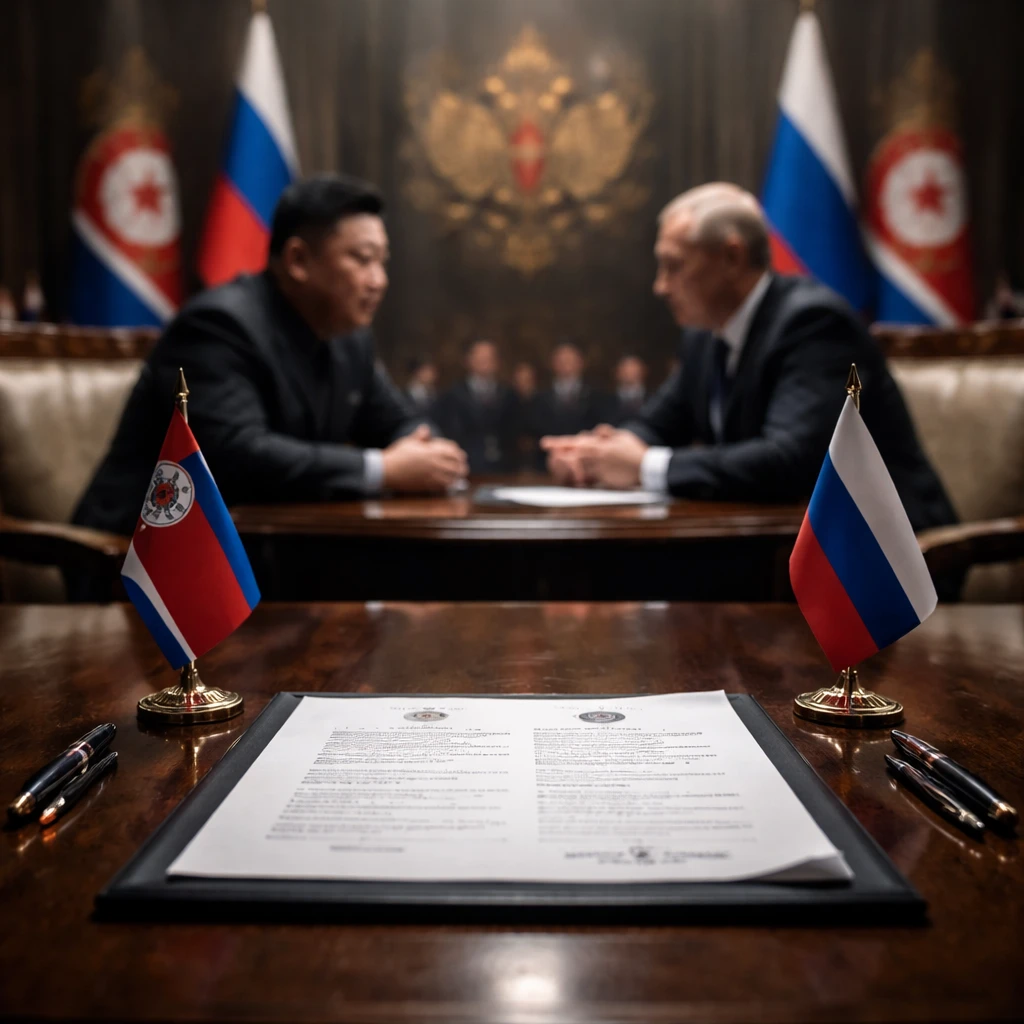
The geopolitical landscape in Eurasia has undergone a fundamental shift following the finalization of the Comprehensive Strategic Partnership Treaty between North Korea and Russia. In a recent formal message addressed to President Vladimir Putin, Kim Jong Un signaled that Pyongyang will continue to "give top priority" to its relationship with Moscow. This commitment is centered on the fulfillment of obligations defined within their inter-state treaty signed earlier this year.
Key Strategic Developments and Economic Implications
The following points summarize the current state of the North Korea-Russia military alignment:
- Formalization of Mutual Defense: The 2024 Comprehensive Strategic Partnership Treaty includes specific mutual defense provisions that have altered regional security dynamics.
- Direct Military Involvement: North Korean personnel are actively involved in the conflict in Ukraine, with estimates placing roughly 14,000 troops in the Kursk region and casualty reports indicating over 6,000 deaths among those forces.
- Shift in Diplomatic Signaling: The communication from Kim Jong Un serves as a direct reinforcement of existing treaty obligations during a period of heightened military activity.
Market Impact: These developments are influencing global projections regarding long-term defense and security spending. The deepening military axis between Moscow and Pyongyang is a primary driver for these adjusted expectations in the global security sector.
Risks and Uncertainties
The following uncertainties remain central to the current geopolitical environment:
- Operational Security and Conflict Intensity: Despite a temporary three-day ceasefire agreed upon by Russia and Ukraine from May 9 to May 11 - an initiative facilitated by U.S. President Donald Trump - the conflict remains highly volatile as it enters its fifth year.
- Escalating Military Commitments: The continuous deployment of North Korean troops into active combat zones introduces significant uncertainty regarding the scale of regional involvement and the potential for further escalation.
Market Impact: Increased military tensions and the evolving nature of international alliances create volatility in global defense markets and could impact long-term capital allocation toward security infrastructures.
The diplomatic exchange took place against a backdrop of modified commemorations in Russia, where Victory Day celebrations were notably scaled back due to persistent concerns regarding potential attacks from Ukraine. While the current ceasefire offers a brief reprieve in what is now characterized as the deadliest European conflict since World War Two, the strategic alignment between North Korea and Russia continues to present a long-term shift for global security planners.