
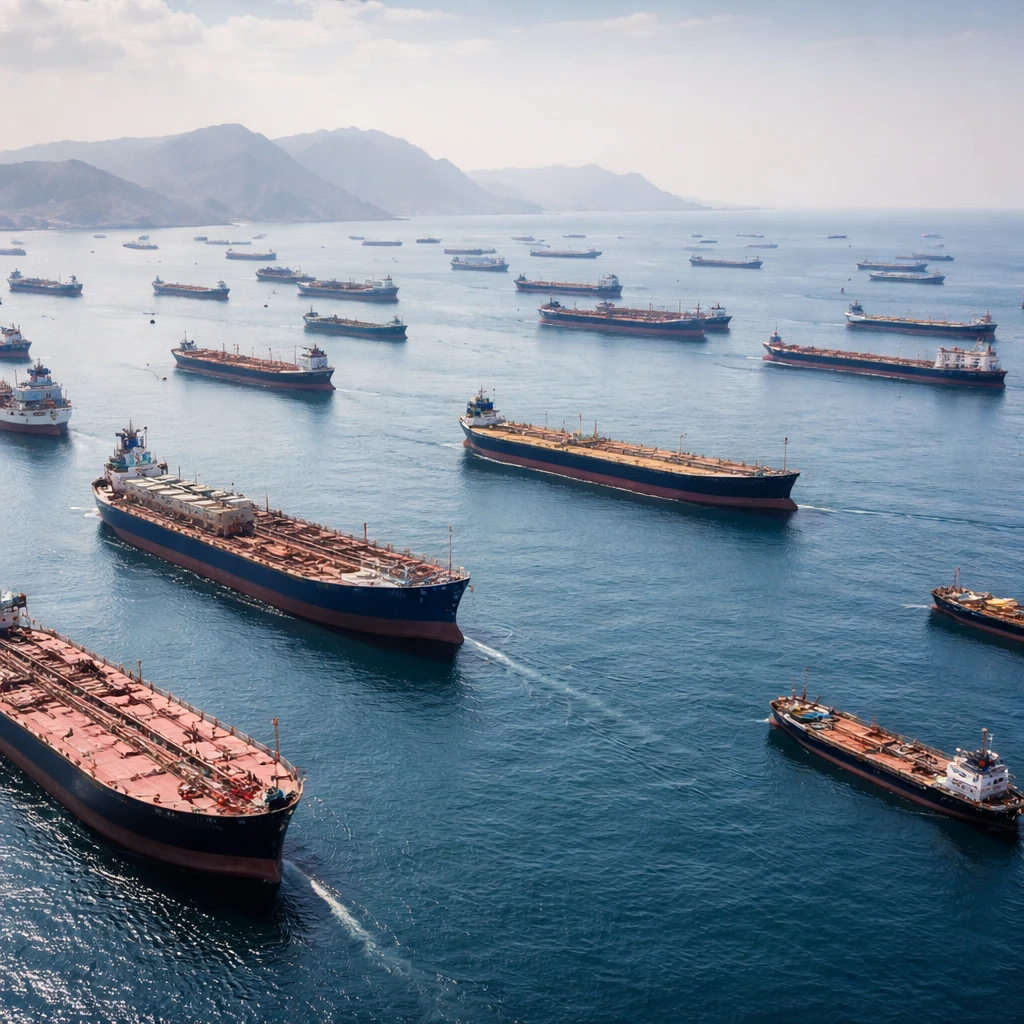
D/S Norden A/S, one of the largest global players in commodity shipping, is using a planning assumption that ships trapped in the Persian Gulf will stay there through the end of 2026 as the basis for its full-year guidance.
Jan Rindbo, the Denmark-based group's chief executive officer, said the scenario reflects the limited visibility the company faces rather than a prediction of the most probable path. He emphasized that the assumption is a planning construct to guide operational and financial expectations.
The Strait of Hormuz has been effectively closed since late February. An OECD maritime tracker released Monday reported that roughly 1,300 vessels currently engaged in trade are stuck in the Gulf.
Norden itself has seven chartered vessels stranded in the Gulf. The company raised its full-year outlook last week, citing higher tanker earnings driven by disruptions to global oil flows linked to the war in Iran.
Rindbo warned that when transit through the strait does resume, passage will probably be subject to specific conditions and that a queue of ships waiting to transit will create a backlog. He said he has worked in shipping for more than three decades and has not encountered a comparable situation in his career.
Even after the route reopens, Rindbo noted, it may take time for shipowners to regain confidence in the safety of the passage and for traffic patterns to normalize.
Responding to the uncertainty, Norden has arranged long-term contracts covering about 80% of its tanker capacity for the next three years. Rindbo contrasted that level of coverage with the company's more typical securitization of around 50% of tanker capacity.
Context and implications
The firm's planning choice highlights how acute operational disruptions can be incorporated into corporate guidance when visibility is constrained. Norden's inflated contract coverage and the raise in its outlook reflect an operational response to market dislocation while acknowledging uncertainty about timing and conditions for a return to normal transit through the Strait of Hormuz.
What remains limited in the record
The company characterizes the assumption as a planning approach; it does not present the assumption as the most likely outcome. Details on the specific contractual counterparties, the precise structure of the long-term contracts, or the timeline for the restoration of typical traffic flows were not provided.