
Summary
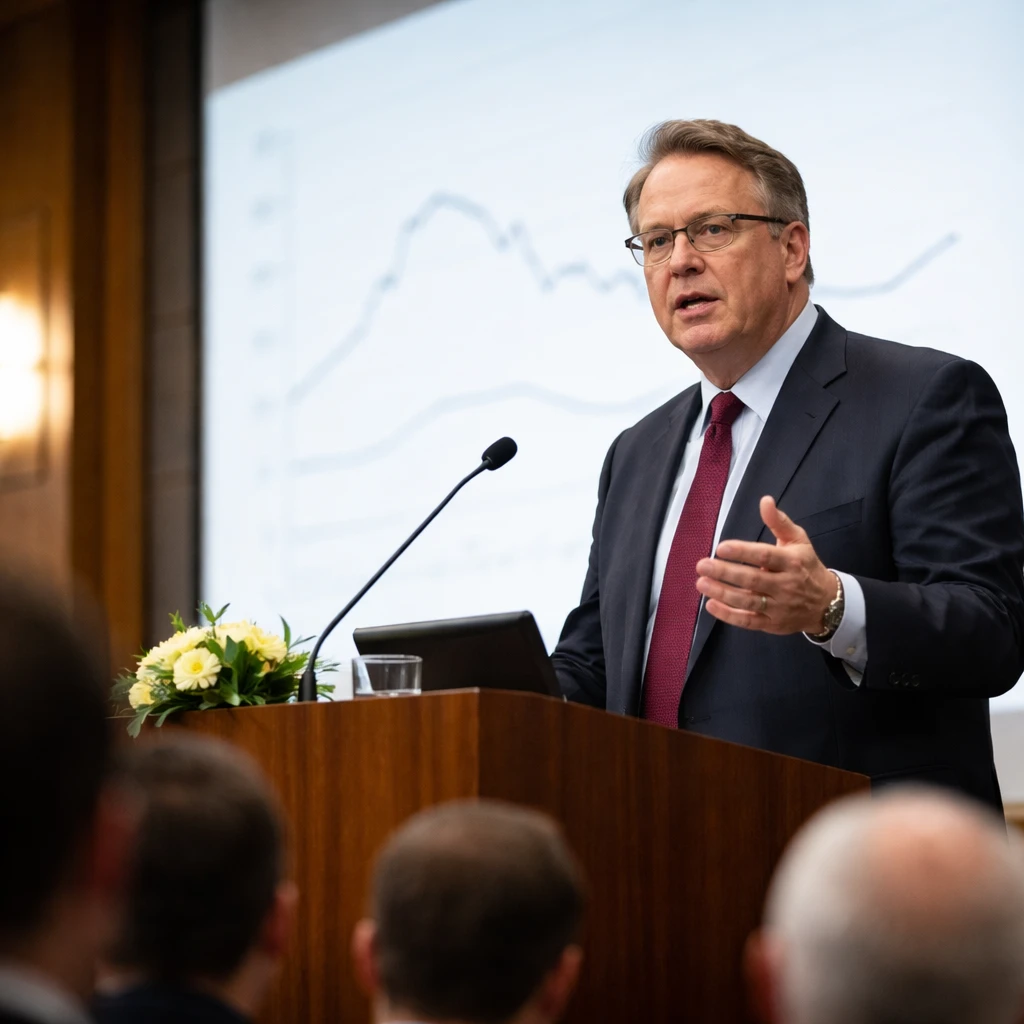
John Williams, president of the Federal Reserve Bank of New York, said on Monday he expects headline inflation to reach the central bank's 2% objective in 2027. Speaking at an event hosted by the Staten Island Economic Development Corporation, Williams characterized current price pressures as influenced by tariffs and a recent jump in energy costs tied to developments in the Middle East.
Inflation drivers and near-term outlook
Williams estimated that inflation is presently around 3%, and attributed between 0.5 and 0.75 percentage points of that reading to tariffs. He said the spike in energy prices stemming from the Middle East is likely to add to overall inflation in coming months. Those energy-related effects, he added, should partially unwind later this year if oil prices decline after hostilities cease.
Looking ahead, Williams projects overall inflation of roughly 2.75% for the current year before a return to the Fed's 2% target in 2027. He reported that there are no clear signs of substantial second-round effects from tariffs spreading across the broader economy, and he does not see the labor market contributing additional inflationary pressure at this time.
Labor market signals
The New York Fed president described the labor market as sending mixed signals. He pointed out that the unemployment rate has moved in a narrow band between 4.3% and 4.5% since last July, while unemployment insurance claims remain low. At the same time, measures of household expectations about the labor market have been weakening: perceptions of job availability published by the Conference Board and job finding expectations in the New York Fed's Survey of Consumer Expectations have both declined.
Monetary policy and growth outlook
Williams said the current monetary policy stance is well positioned to balance the Fed's objectives for maximum employment and price stability. At the Federal Open Market Committee's most recent meeting, the target range for the federal funds rate was left unchanged at 3.5% to 3.75%.
On growth, Williams expects real GDP to be close to 2.5% this year, a pace he attributes to fiscal policy support, favorable financial conditions, and investment in artificial intelligence. With growth running above potential, he anticipates the unemployment rate will edge down over this year and the next.
Context limitations
The remarks reflect Williams' outlook as presented at the event; they do not include additional projections or scenarios beyond those he articulated regarding tariffs, energy-driven price movements, and the Fed's policy stance.