
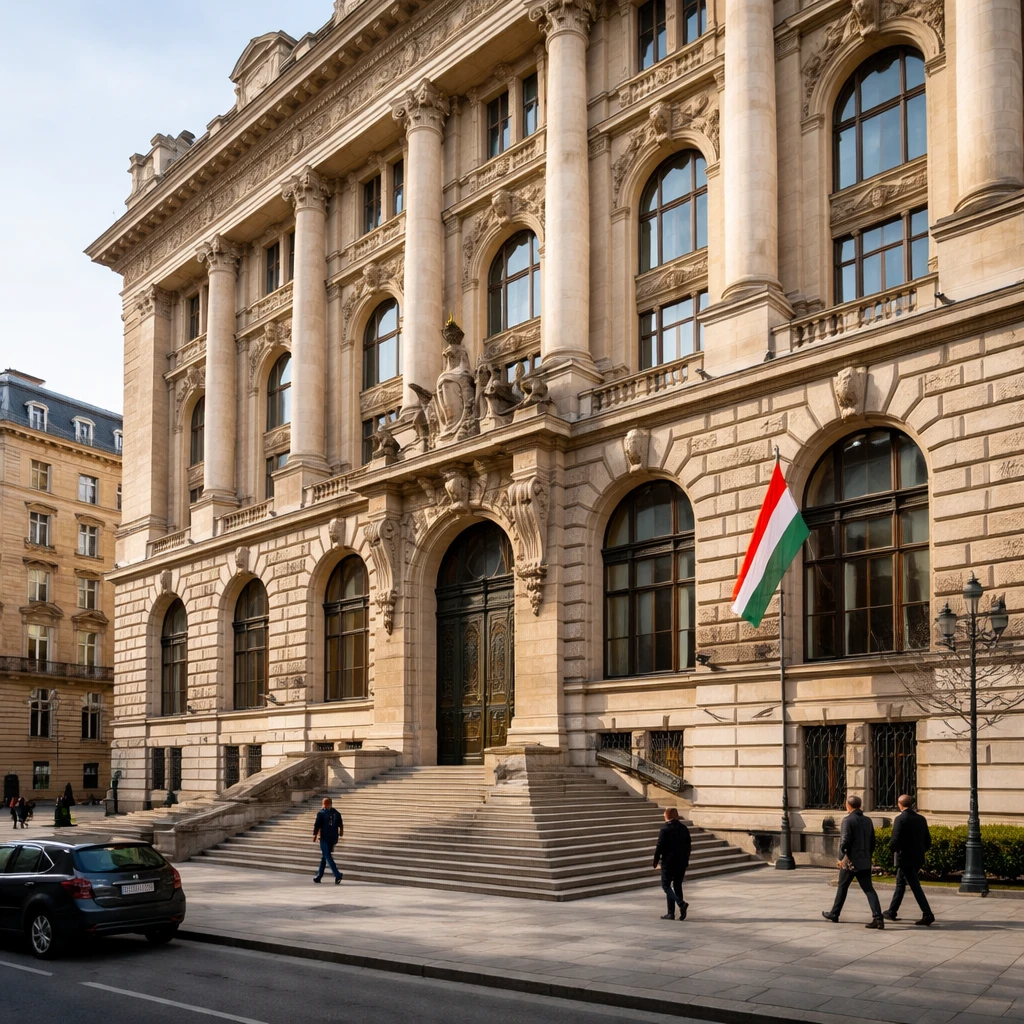
Hungary's central bank opted to keep its base interest rate at 6.25% on Tuesday, citing an inflation outlook that has become less favorable after a recent shift in global energy prices. The National Bank of Hungary had implemented a 25-basis-point reduction last month - its first cut since late 2024 - but officials decided not to follow with further easing amid renewed upside risks to inflation.
Policymakers pointed to rising inflation projections as a primary reason for maintaining the rate. Those projections have been pushed higher by climbing global energy costs, a development the bank said complicates the path toward looser monetary settings. Escalating tensions in the Middle East, which have contributed to higher energy prices, have been singled out as a factor that has removed near-term scope for additional cuts.
Expectations for another reduction this month diminished quickly as the external environment shifted. In February, analysts had anticipated the central bank would continue to lower borrowing costs following the initial easing move. That view changed sharply in recent weeks: of 14 analysts surveyed last week, 13 forecast the bank would leave rates unchanged at 6.25% on Tuesday.
The timing of the decision adds an additional layer of complexity. With Hungary's national election scheduled for April 12, the bank's choice to pause its easing cycle comes in close proximity to a major domestic political event. Policymakers acknowledged that the evolution of energy prices and the uncertain inflation outlook inform the calibration of monetary policy in the run-up to the vote.
For now, the central bank's stance reflects a cautious balance between the initial move toward lower rates and the need to guard against renewed inflationary pressure. By holding the base rate steady, officials aim to avoid preemptively loosening policy while energy-related price risks remain elevated and geopolitical tensions persist.
What this means
- The bank has paused further cuts after a 25-basis-point reduction last month.
- Rising global energy prices and Middle East tensions have raised inflation projections, prompting the hold.
- The decision comes just weeks before Hungary's April 12 national election, complicating the policy backdrop.