
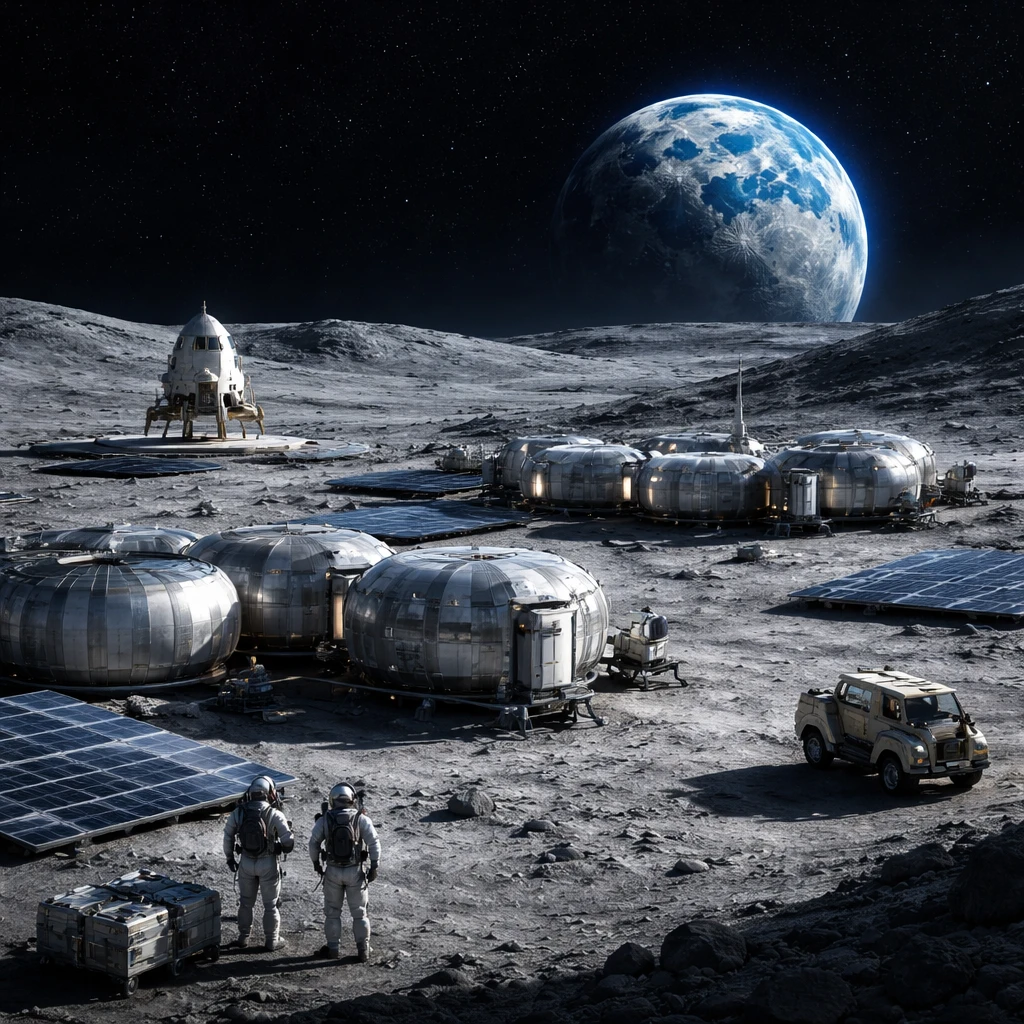
NASA intends to direct $20 billion over the coming seven years toward the construction of a moon base on the lunar surface, with the stated aim of enabling crews to return to the moon and live there. The funding commitment and broad framework were announced in Washington, DC, during a meeting convened with program partners and contractors, as well as US representatives and international government officials.
According to the presentation, the proposed effort is part of the Artemis program and is intended to fulfill goals outlined in an executive order signed by President Donald Trump in December. That order calls for US astronauts to land on the moon again by 2028 and for the construction of a permanent lunar outpost to begin by 2030.
The plan was set out by NASA administrator Jared Isaacman at the gathering in the US capital. Agency officials and invited stakeholders discussed how the seven-year, $20 billion investment would support development of surface infrastructure intended to allow humans to live on the moon.
The announcement arrived roughly a week before NASA plans to launch a crewed mission to the moon for the first time in more than half a century. That mission, named Artemis II, is scheduled to carry a four-person crew on a trajectory that will slingshot around the moon. Agency officials say Artemis II will help establish the conditions and experience needed to support a future crewed landing.
The presentation emphasized coordination among contractors, program partners and international participants in advancing the Artemis program’s objectives. Beyond the headline funding figure and timeline, officials described the initiative as a multi-party effort to transition from near-term crewed lunar flybys to sustained surface operations.
No additional budgetary details, procurement schedules or technical timelines beyond the seven-year, $20 billion figure and the executive order milestones were provided at the meeting. The outline focused on the funding level, the high-level intent to support human habitation on the lunar surface and the relationship of the plan to upcoming missions in the Artemis sequence.
Summary
NASA has announced a $20 billion investment over the next seven years to develop a moon base that would enable astronauts to return and live on the lunar surface. The plan was presented by NASA administrator Jared Isaacman in Washington, DC, to partners, contractors, US representatives and international officials as part of the Artemis program. The effort is meant to satisfy an executive order from President Donald Trump that sets a 2028 moon landing goal and a 2030 target to begin building a permanent outpost. The announcement comes about a week ahead of the Artemis II mission, which will send four crew around the moon and help prepare for a future crewed landing.