
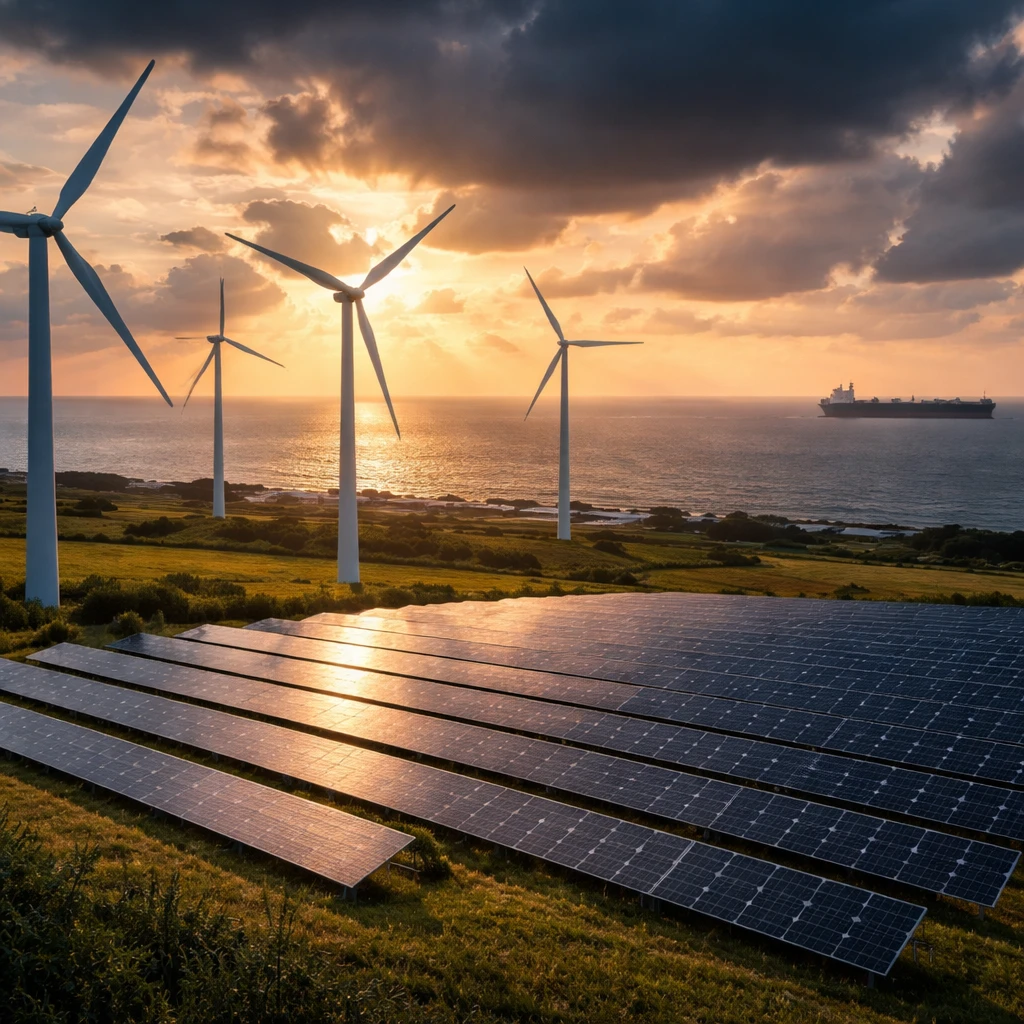
The revival of hostilities in the Middle East is acting as a renewed spur to Europe’s green-energy transition, creating pressures and incentives similar to those observed after the 2022 invasion of Ukraine. A Jefferies Financial Group analysis points to the conflict with Iran as a key factor exposing Europe’s vulnerability to swings in global fossil-fuel markets and the strategic risk tied to the Strait of Hormuz.
Benchmark energy prices have reacted. Brent crude and European gas markers have come under upward pressure, reinforcing the view among policymakers that expanding renewable capacity serves purposes beyond emissions targets. Renewables are increasingly being framed as a component of national security strategy as governments look to reduce exposure to imported hydrocarbons.
Energy security and market resilience are now central to the debate. The analysis notes that while natural gas continues to set margins in many markets, Europe’s larger fleet of wind and solar generators is providing a meaningful buffer. Unlike earlier energy shocks, the increased renewable base is helping to moderate wholesale electricity prices during peak generation periods, blunting some of the immediate price volatility.
Analysts quoted in the report argue that this security-driven investment cycle will tend to benefit established original equipment manufacturers and major utilities. As political priorities shift from an exclusive focus on carbon reduction to encompass affordability and energy independence, firms capable of delivering at scale are likely to be advantaged.
The report foresees a wave of policy activity aimed at power-market reform. To protect consumers from the risk of persistent high energy prices - described as a potential "perma-spike" - European governments are prioritizing investment in resilient grid infrastructure and storage systems. Capital allocation is expected to reorient toward companies that can deploy large-scale, decentralized power solutions as the premium on imported hydrocarbons remains elevated.
For markets and industrial policymakers, a central question is how quickly Europe can decouple its manufacturing base from the unpredictability of Middle Eastern energy supply chains. The Jefferies analysis frames a move toward a "Clean Technology" framework as a strategic necessity to defend long-term competitiveness, not merely an environmental objective.
The report also highlights limits and conditionalities. While the immediate market reaction has been dominated by defensive positioning, long-term winners are expected to be those who can capitalize on what the report terms a "step-change" in energy policy. The transition should provide a sustained tailwind for the sector through the remainder of the decade, provided that supply-chain bottlenecks in wind and solar industries are managed effectively.
As Brent volatility persists, shifting to more indigenous sources of power generation is seen as a way to reduce exposure to the just-in-time risks that currently affect global oil and LNG markets. Institutional observers have noted the increasingly apparent link between renewable deployment and broader economic stability.
Year to date, 2 out of 3 global portfolios are beating their benchmark indexes, with 88% in the green. Our flagship Tech Titans strategy doubled the S&P 500 within 18 months, including notable winners like Super Micro Computer (+185%) and AppLovin (+157%).