
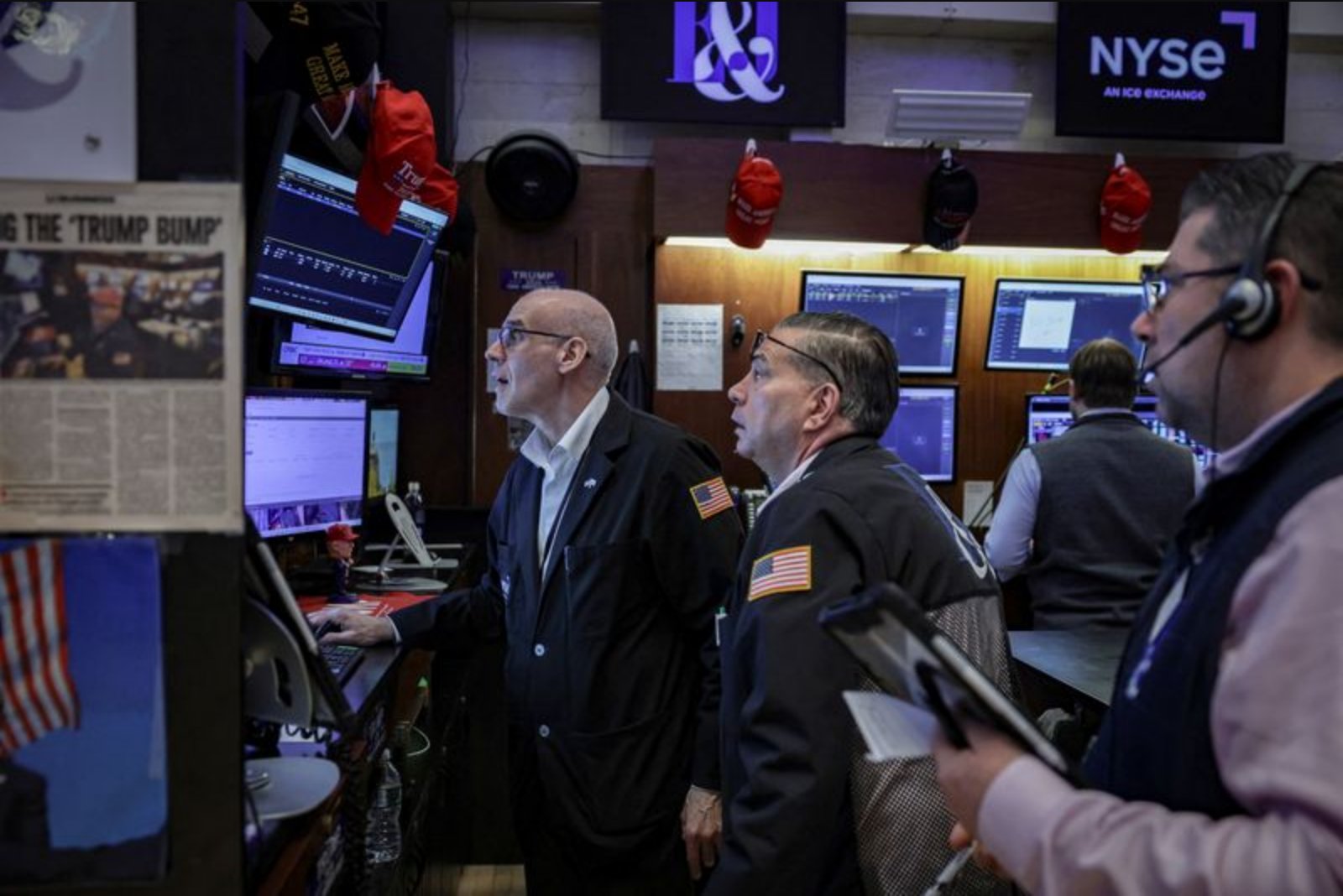
LONDON/NEW YORK/SINGAPORE, March 30 - Financial markets around the world have been roiled by the conflict in Iran, with traders, investors and dealers reporting tougher conditions for executing trades and managing positions. Those involved across asset classes say market makers are increasingly reluctant to absorb large orders, forcing market participants to split trades, wait longer for fills and accept wider pricing bands.
Market participants spanning U.S. Treasuries, European government bonds, currencies, oil and gold say the episode has pushed volatility and trading costs to levels normally associated with acute market stress. In Europe, hedge funds - now major players in bond trading - accelerated the unwinding of crowded positions this month, amplifying moves in an already unsettled market.
Trading frictions and wider spreads
Investors described intermittent difficulty obtaining reliable prices or executing trades over the past four weeks as dealers sought to avoid becoming stuck with sizeable exposures that could turn sour quickly. Rajeev De Mello, chief investment officer at GAMA Asset Management, said: "When we try to trade, it takes longer to trade. (The market makers) want us to be more patient, cut the trades into smaller sizes." He added that gaps had widened between bid and ask levels and that the cumulative effect had reduced position sizes across the board: "What that has as a consequence is that everybody’s reduced the sizes of their positions."
Measures of volatility have jumped, and cracks have appeared even in the deep, traditionally liquid government bond markets that form the backbone of global finance. Dealers appear to be charging higher premiums for taking on market risk. According to Morgan Stanley, the difference between bid and ask prices on newly issued two-year U.S. Treasuries - a commonly used gauge of market depth and transaction cost for the most traded securities - widened roughly 27% in March versus February.
Futures market distress and comparisons to prior crises
These symptoms are not unprecedented; previous episodes of market stress, such as tariff-driven dislocations last April and the 2020 COVID shock, produced similar strains. Yet the current volatility arrives after a broad rally across asset classes, raising the potential for a deeper correction if geopolitical tensions persist and liquidity thins further.
In Europe, the most acute pressure has been visible in short-term interest rate futures, where traders rapidly re-priced the path for central bank tightening. Morgan Stanley’s co-head of EMEA rates Daniel Aksan said liquidity at one point became "severely diminished," operating at about 10% of normal levels. "The (illiquidity, price moves) reminded me of the COVID days," he added.
Three European financial regulators on Friday warned that the ongoing geopolitical tensions, specifically the conflict in the Middle East, pose material risks to the global financial system by way of higher energy costs, possible inflationary effects and weaker economic growth. They reiterated concerns that heightened volatility could impair liquidity and increase the likelihood of abrupt price swings.
De-risking behavior and dealers under pressure
While market operations have largely remained orderly, buyers are progressively scarce as investors rush to reduce risk and increase cash holdings. The retreat has left dealers wary of stepping in as counterparties. Tom di Galoma, managing director of global rates trading at broker-dealer Mischler Financial, pointed to cumulative losses across both sell-side and buy-side participants: "Firms have lost so much money - whether it’s sell-side or buy-side - that liquidity is suffering because you don’t have the players," he said, referencing strains in the U.S. Treasury market.
Trading volumes in Treasuries have climbed, but analysts note a meaningful share of that activity likely reflects forced trades rather than discretionary positioning. Morgan Stanley U.S. rates strategist Eli Carter observed that wider bid-ask spreads raise the cost of initiating positions and deter new activity, yet elevated volumes indicate many trades were "unwinds, or stop-outs."
Hedge funds and concentrated exposures
The selloff in European bonds has highlighted the influence of hedge funds, whose market footprint in recent years has grown substantially. According to Tradeweb data from 2025, hedge funds now account for over 50% of trading volumes in Britain’s and the euro zone’s government bond markets. While hedge funds can be liquidity providers in benign conditions, their rapid and simultaneous exits from similar positions can exacerbate market moves during stress.
Sources and market participants described how many funds had accumulated similar trades that became loss-making when market dynamics shifted. Credit Agricole’s head of European government bond trading, Bruno Benchimol, noted hedge funds took steep losses on bets that the Bank of England would cut rates, on trades that anticipated steeper European yield curves, and on positions that assumed the spread between Italian and German bond yields would remain tight. As multiple funds unwound comparable positions at once, dealers widened bid-ask spreads in response, Benchimol said.
Morgan Stanley’s Aksan commented that simultaneous de-risking by hedge funds "exacerbates volatility," while acknowledging that at times hedge funds do take positions that help dampen market swings.
Market-making strategies and ticket-size dynamics
Despite the pullback in client flows, market makers continue to compete for business, often adjusting pricing by trade size. Sagar Sambrani, a senior FX options trader at Nomura, said market makers have widened pricing on larger orders to reflect increased market risk, but interestingly have been more competitive on smaller ticket sizes to capture reduced client activity: "Counter-intuitively, the pricing on smaller tickets is tighter than in regular conditions as market makers strive harder to capture the reducing client flows," he said.
Nevertheless, in some markets liquidity providers have been entirely absent on certain days. In the gold market, highly sensitive to shifts in interest rate expectations, Mukesh Dave, chief investment officer at Aravali Asset Management, reported instances when market makers were not present at all, signaling a reluctance to transact. He said there were days when participants simply opted out: "They don’t want to make money at the moment, they don’t want to lose money by being in the market. If given a choice, they don’t want to be in the market."
That dynamic contributed to a sharp correction in gold prices this month following a record rally in 2025 as participants reassessed positions amid heightened uncertainty.
Implications for market structure and the path ahead
Market participants and regulators alike are watching the situation closely. The convergence of elevated volatility, concentrated exposures among hedge funds, and constrained market-making capacity has increased the risk that a prolonged geopolitical conflict could lead to further liquidity evaporation and larger price dislocations. For now, trading has continued to function, but participants are adapting by trimming trade sizes, extending execution times and demanding higher compensation for risk.
How these dynamics evolve will depend on whether the conflict stabilizes or escalates, and on how participants rebalance portfolios in response to potential shifts in inflation and growth expectations. Market structure - including the composition of liquidity providers and the resilience of futures and government bond markets - will be a key consideration for dealers and regulators as they assess vulnerabilities under these stressed conditions.