
Economy May 9, 2026 09:43 AM

Merz Affirms European Commitment to NATO, Echoes U.S. Aim to End Iran Conflict

German chancellor stresses unity of purpose, calls for continued U.S. military support amid tensions over troop movements

By Derek Hwang

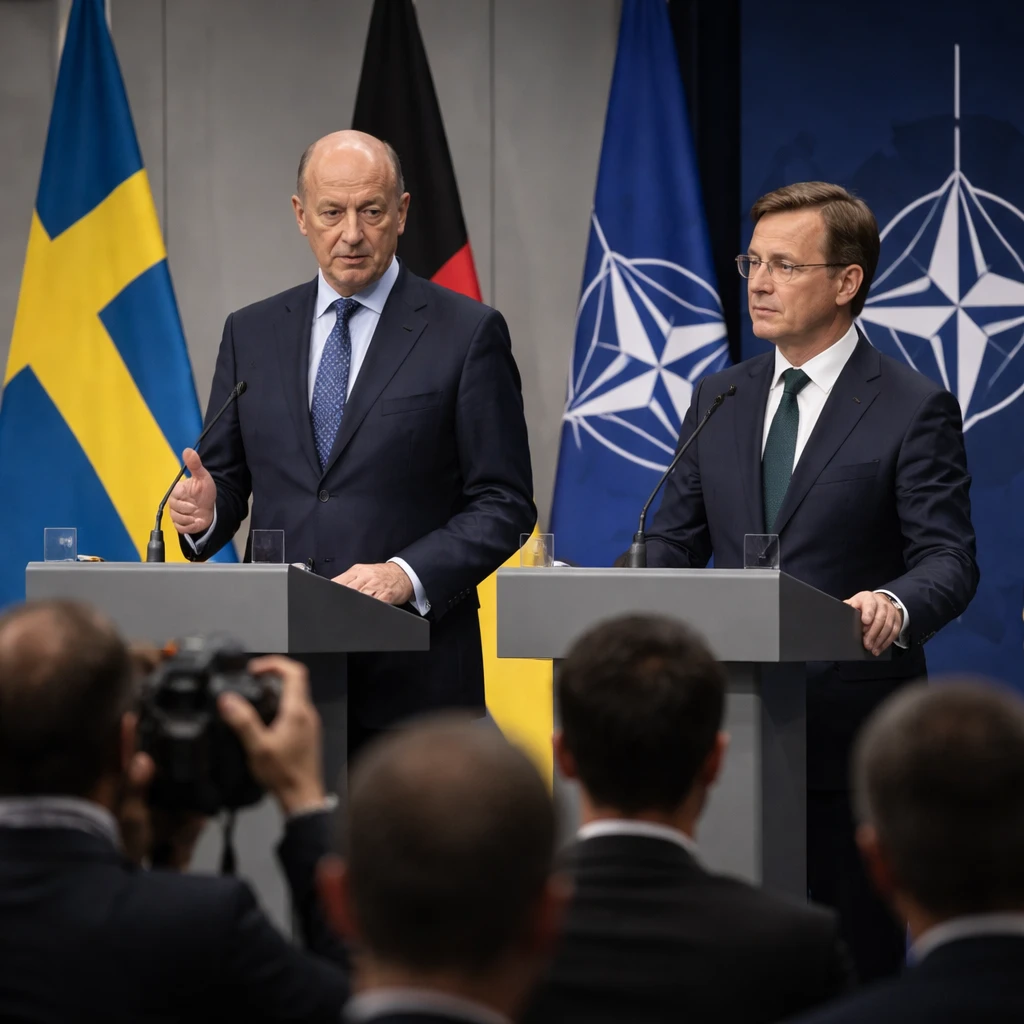
German Chancellor Friedrich Merz said Europe remains committed to a robust NATO and shares the United States' objective of ending the war with Iran and preventing Tehran from acquiring nuclear weapons. Speaking in Stockholm with Swedish Prime Minister Ulf Kristersson, Merz called for preserving the transatlantic alliance despite recent strains between European capitals and the U.S., and emphasised the importance of continued American military support as European governments boost defence spending.

Merz Affirms European Commitment to NATO, Echoes U.S. Aim to End Iran Conflict

Key Points

  • Merz said Europe remains committed to a strong NATO and shares the U.S. goal of ending the war with Iran and preventing Tehran from obtaining nuclear weapons - impacts defence and security sectors.
  • He spoke alongside Swedish Prime Minister Ulf Kristersson in Stockholm and urged keeping the transatlantic alliance "alive for the future" despite growing tensions with U.S. President Donald Trump - relevant to diplomatic relations and defence procurement.
  • Merz called for maintaining "unity of purpose" within NATO and signalled Europe’s continued interest in U.S. military support as European governments increase defence spending - relevant for defence contractors, government budgets, and regional markets.

German Chancellor Friedrich Merz said on Saturday that Europe remains committed to a strong NATO alliance and aligns with Washington in seeking an end to the war with Iran and preventing Tehran from developing nuclear weapons.

Speaking alongside Swedish Prime Minister Ulf Kristersson in Stockholm, Merz framed the transatlantic relationship as vital for the future. He said Europe wanted to "keep this alliance alive for the future," acknowledging that relations with U.S. President Donald Trump have become more strained amid the conflict.

Merz acknowledged differences between allies while underlining a shared end goal. "We know that there are some differences. We know that we are seeing challenges, all of us, but our final goal is to bring this conflict to an end and to guarantee that Iran is not able to produce nuclear weapons," he said.

The chancellor's remarks follow reports that President Trump ordered the withdrawal of 5,000 U.S. troops stationed in Germany and cancelled planned missile deployments after criticism from Berlin over the U.S.-Israeli campaign against Iran. European allies are reportedly expecting further U.S. troop withdrawals from Europe.

On NATO's role, Merz said the alliance's chief concern is preserving a "unity of purpose" among member states. He stressed that Europe remains highly interested in continued U.S. military support as governments across the continent accelerate defence spending.

Merz also pointed to Sweden and Finland as contributors to strengthening NATO's European pillar. He said their membership had bolstered Europe’s collective defence posture at a time when, in his words, European governments are responding to what he described as a growing threat from Russia.


Contextual note: The statements were delivered publicly in Stockholm while Merz stood with Sweden's prime minister. The chancellor addressed both the immediate diplomatic frictions with the United States and longer-term defence priorities within Europe.

Implications for markets and sectors: Merz’s comments highlight continued political attention on defence spending and transatlantic security ties, factors that can influence defence contractors, government bond markets in Europe, and regional geopolitical risk premia.

Risks

  • Further U.S. troop withdrawals from Europe could alter force posture and transatlantic military planning - risk to defence readiness and to sectors supplying military equipment.
  • Heightened tensions between European governments and the U.S. leadership may complicate coordinated responses to the Iran conflict - risk to diplomatic cohesion and investor perceptions of geopolitical stability.
  • An accelerating defence spending cycle in response to perceived threats could affect fiscal positions of European governments and influence sovereign borrowing costs - risk to public finances and regional bond markets.

More from Economy

USDA Bans Ten Lenders from Rural Development Program Over Compliance Issues May 12, 2026 Consumer Financial Protection Bureau Prepares to Recall Staff Following Headquarters Closure May 12, 2026 Trump Says He Will Discuss Iran with Xi in China Visit, But Says He Doesn’t Need Beijing’s Help May 12, 2026 U.S. Posts Reduced $215 Billion April Surplus as Refunds and Outlays Rise May 12, 2026 Bundesbank's Nagel Says Iran Conflict Could Force ECB to Raise Rates May 12, 2026