
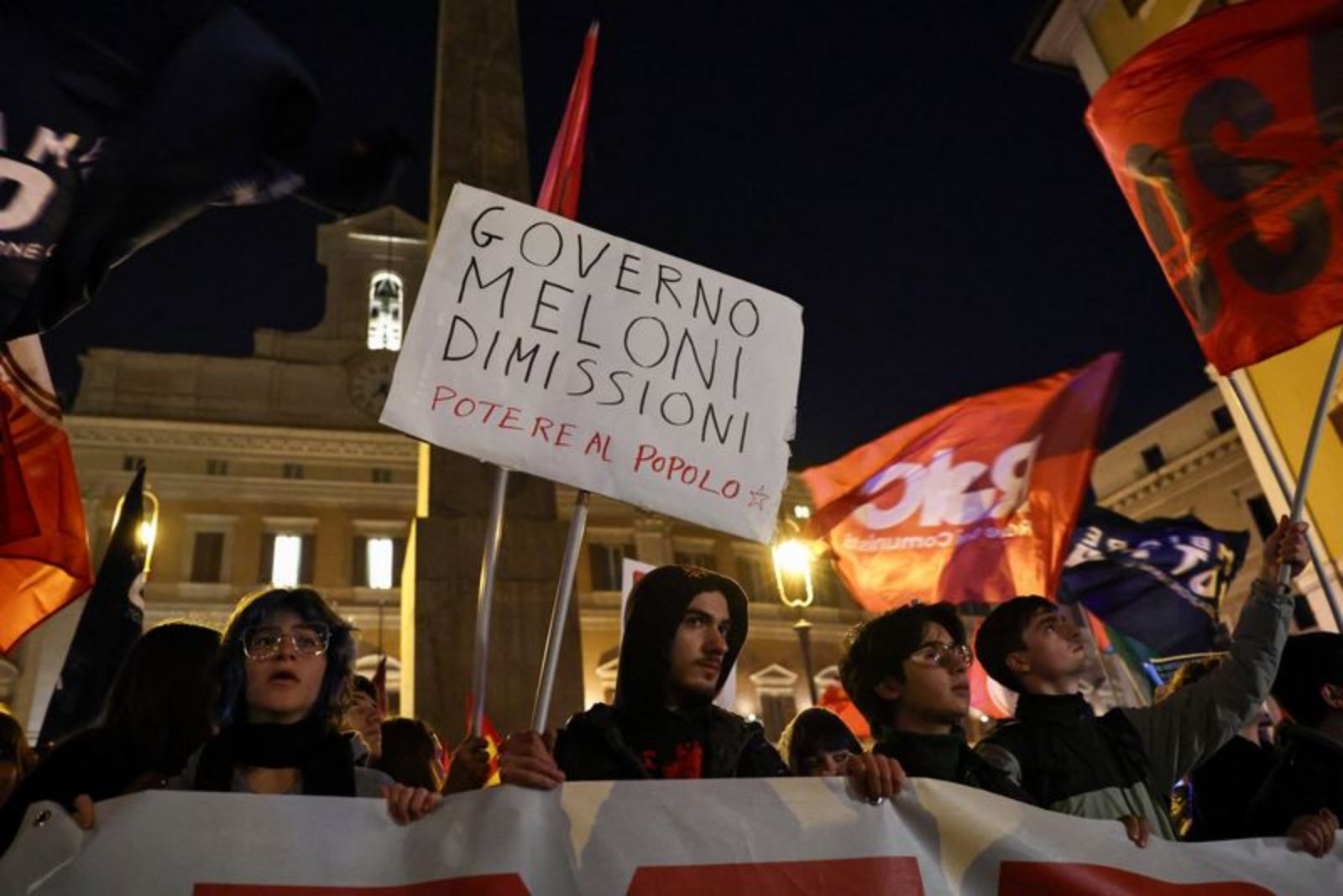
Giorgia Meloni’s defeat in the March 22-23 justice reform referendum has pushed the Italian prime minister into what many analysts describe as the most precarious phase of her time in office. Since assuming power in 2022, Meloni cultivated an image of political strength, but the decisive loss in the vote has undercut that aura and left her governing programme severely weakened.
As returns showed the result against the government’s position, Meloni indicated she had no intention of stepping down. Even so, political observers say she now faces unappealing alternatives, each laden with risks for both political stability and economic management.
One path would be to continue governing as before - effectively attempting business as usual despite the referendum setback. Analysts warn that this route risks rendering Meloni a lame-duck leader, stripped of leverage at a time when Italy’s economy is already described as anaemic and facing mounting pressures. Pollsters also note that Meloni’s public association with U.S. President Donald Trump has become an increasing political liability.
A second option under discussion would be to revise the electoral system, moving toward a pure proportional representation model. Proponents within the governing coalition argue such a change could improve the bloc’s prospects at the next general election, currently scheduled for 2027, because under a pure PR system studies have suggested the ruling coalition could secure a comfortable majority. But that route risks accusations that the government is altering the rules to fit its own partisan advantage.
The third course would be to push for an early election this spring, aiming to force a ballot before the full economic effects of the war in Iran are felt in Italy. Supporters of this scenario argue it could catch a fragmented centre-left opposition unready to unite and campaign effectively.
Nicola Lupo, director of the Centre for Parliamentary Studies at Rome’s Luiss University, framed the situation starkly: the referendum outcome has placed the legislature’s future squarely on the table, and even the timing of the next national vote is now uncertain. Lupo noted that the government had sought to schedule the referendum in March partly to preserve the option of holding an early pre-summer election.
Despite the scale of the referendum defeat, the result did not amount to a total rejection of Meloni personally. Polling company YouTrend found that 37% of those who voted "No" also said she should remain in office. Political analyst Massimiliano Panarari of the University of Modena and Reggio Emilia characterized the outcome as less a triumph for the political opposition than a win for the judiciary.
The centre-left hailed the referendum as a political turning point, but that camp remains internally divided. Its two principal components - the Democratic Party and the 5-Star Movement - are split on several key issues, including foreign policy. Those divisions could, paradoxically, tempt Meloni to seek a snap election rather than wait for 2027, according to Lupo.
Within Meloni’s coalition, there is not a single, unified view on how to proceed. Some partners, including Maurizio Lupi of the small "Us Moderates" party, have openly advocated for a shift to a proportional-only electoral system. Polls taken since the referendum still show the conservative bloc - composed of Meloni’s Brothers of Italy, the League and Forza Italia - leading the field, but analysts caution the current seat allocation rules leave the coalition vulnerable under a future vote.
Government parties last month presented a draft bill to reform the electoral system, but the referendum outcome has prompted some allies to advise restraint, contending that voters may not endorse further major institutional changes so soon after the referendum. Stefano Candiani, a League deputy in the lower chamber, expressed that view bluntly: "It would be stupid," he told Reuters, arguing that pressing an electoral law overhaul amid pressing domestic issues would be ill-advised. He cited immediate challenges such as the Iran war and high living costs as reasons not to tie up parliament with debates over the electoral system.
Pollsters said unusually strong turnout helped drive the referendum outcome, with many voters motivated more by broader political and economic considerations than by the technicalities of the judicial reforms on the ballot. Antonio Noto, a pollster, said that in the 10 days leading up to the vote the number of people indicating they would participate rose by 10 percentage points, an increase he characterized as unprecedented.
Timing compounded Meloni’s difficulties. Analysts point to the U.S.-Israeli war on Iran as creating a political environment that highlighted her past closeness to Donald Trump and appears to have cost her votes. Although Meloni sought in the days around the referendum to distance herself somewhat from the U.S. president, commentators judged the adjustment modest and not sufficient to blunt its electoral impact.
The referendum defeat also sharpened criticism from political rivals exploring new lines of attack. Centrist leader Matteo Renzi - who himself resigned as prime minister in 2016 after losing a separate constitutional referendum - declared that Meloni had been reduced to a lame-duck and predicted opposition parties would draw strength from the result. He argued that issues such as inflation, fuel taxes, the cost of living and public safety would be fertile ground for the opposition to challenge the government.
Beyond the immediate political consequences, the referendum raises questions about the government’s capacity to advance its reform agenda and to manage fiscal choices ahead of the next budget. Analysts note Meloni's awareness that the forthcoming budget will constrain room for generous spending, which could factor into any decision about calling early elections.
As the government weighs these options, uncertainty remains high. Any decision - whether to remain in office and attempt to govern through weakened legitimacy, to pursue electoral law changes, or to call a snap vote - carries political and economic consequences that market participants and policymakers will monitor closely.
Key points
- Meloni’s coalition suffered a clear defeat in the March 22-23 justice reform referendum, undermining her political authority and leaving her reform programme in disarray.
- Options facing the prime minister include governing on despite weakened legitimacy, changing the electoral law to a pure proportional representation system, or seeking an early election before potential economic fallout from the Iran war deepens.
- Immediate economic and market-relevant pressures include an anaemic economy, constrained budget prospects for the next fiscal plan, and voter concern over inflation, fuel costs and the cost of living.
Risks and uncertainties
- Political risk of a lame-duck government that could impede legislative action and reform delivery - impacting public finance and sectors dependent on government policy clarity.
- Possible electoral-law changes could provoke political backlash and uncertainty, with implications for investor confidence and the political calculus ahead of the next general election.
- External shocks tied to the Iran war could exacerbate Italy’s fragile economic condition, pressuring energy and consumer-sensitive sectors and complicating fiscal planning.