
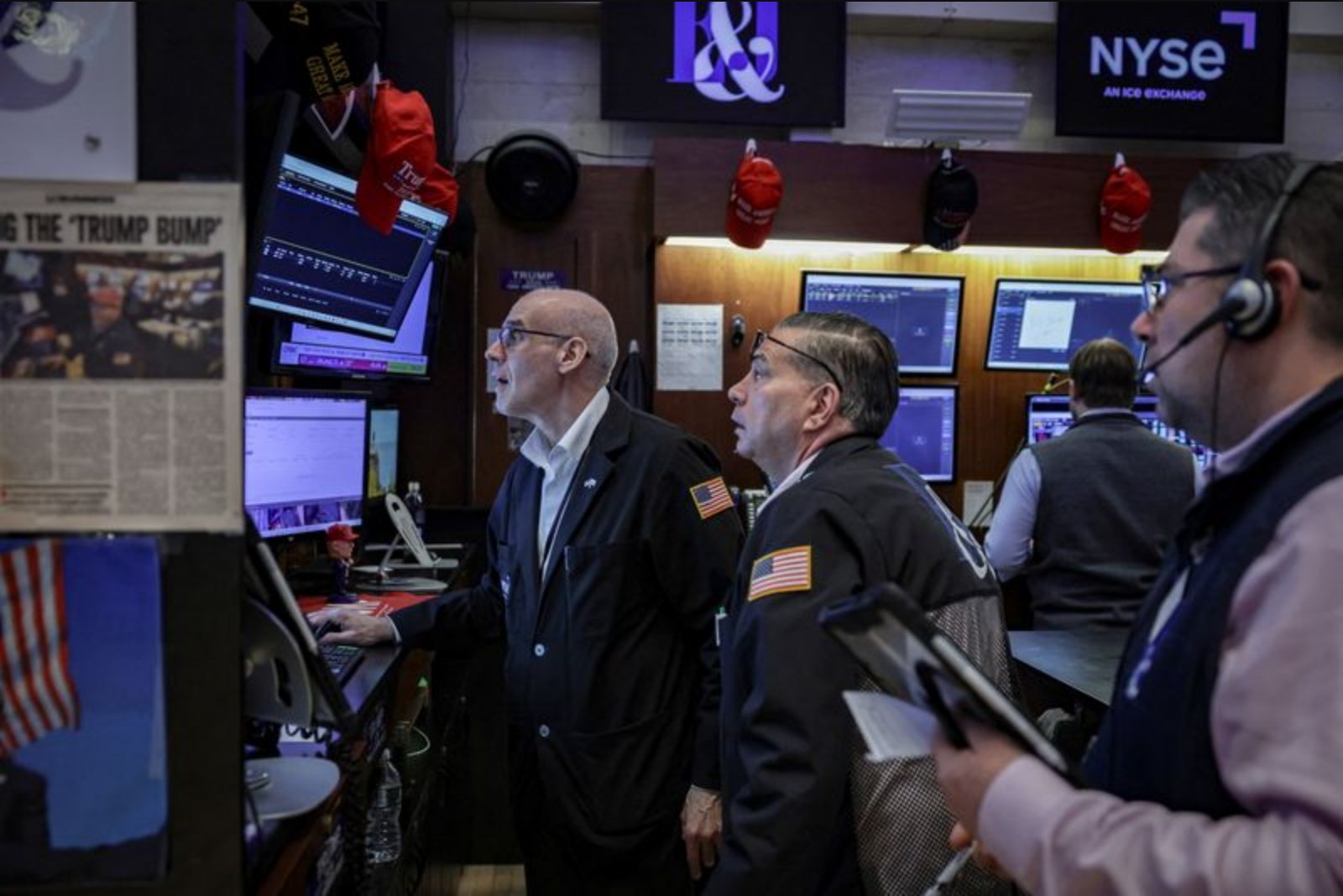
Stocks advanced across Asia, Europe and the Americas on Wednesday as market participants reacted to reports that the United States and Iran may be moving toward a peace deal. The optimism was broad-based: the MSCI All Country equity index posted its biggest one-day rise in six weeks.
Risk appetite lifted equities and pushed down energy prices and government bond yields. Investors also continued to reprice interest-rate expectations amid concerns about the size of the market's previous reaction to the Middle East energy shock - a move described by some market watchers as logical in direction but perhaps excessive in scale.
Recommended background reads (for readers who want additional context):
- Iran still reviewing U.S. proposal despite negative initial response, senior Iranian official says
- Western powers were unable to secure shipping in the Red Sea. Hormuz will be harder
- U.S. import prices post largest gain in nearly four years in February
- Iran war rattles Gulf petrodollar foundations: Mike Dolan
- How private credit can survive its stress test
Today’s market moves
- Stocks: Equities were higher across regions. Japan led gains with a 3% rise. Euro Stoxx and the FTSE 100 each climbed about 1.4%. Mexico's benchmark rose roughly 3.6%. In the United States, the three major indices were up between 0.5% and 0.8%. The MSCI World index gained around 1%, marking its best session since February 9.
- Sectors and shares: Nine of the 11 S&P 500 sectors advanced. Materials led with a roughly 2% increase, while consumer discretionary and healthcare were up about 1% each. Energy lagged, down about 0.5%. Large-cap names such as Amazon and Nvidia rose roughly 2%, and several technology hardware firms - Intel, AMD, Super Micro Computers and Hewlett Packard - climbed in the 7-8% range.
- FX: The U.S. dollar strengthened broadly. USD/JPY returned to near the 160.00 level. The Australian dollar was the weakest of the G10 currencies.
- Bonds: U.S. Treasuries rallied and the curve experienced a bull flattening. The 2s/10s spread finished below 44 basis points, its lowest close since August. Separate from the rally, the 5-year Treasury auction was described as very weak, echoing yesterday's selling in the 2-year sector.
- Commodities and metals: Oil prices fell about 2% while gold rose around 2%. Comex copper advanced about 1.5%.
Key talking points
Import prices spike: Figures released Wednesday showed U.S. import prices rose 1.3% in February, the fastest monthly increase in nearly four years, following an upward revision to January's 0.6% gain. The price of imported capital goods posted its largest increase since 1988. Analysts attributed some of the strength to energy costs rising in anticipation of conflict in the Middle East. The data note that oil rose roughly 15% across January and February and is up about 35% so far this month, suggesting consumers and businesses may face stronger price pressures in the months ahead.
Tech premium compresses: The valuation gap that U.S. technology names have historically enjoyed relative to the broader market has narrowed substantially. On a comparable forward 12-month price/earnings basis, that premium is at its smallest in seven years. The Roundhill "Mag 7" ETF has declined about 10% year-to-date, roughly three times the drawdown of the S&P 500. Market participants are divided: some firms, including JPMorgan, see the AI narrative losing momentum, while others such as Barclays suggest growth in the tech sector continues to show resilience. Investors face a choice between views when assessing risk and potential reward in the sector.
Official flows into U.S. Treasuries easing: Central bank holdings of U.S. Treasuries held in custody at the New York Federal Reserve are at their lowest level since 2012 and are set to fall below $3 trillion for the first time since 2010. The reported value of these holdings has declined by about $75 billion over the past four weeks. Deutsche Bank estimates that outright selling by official institutions accounts for roughly $60 billion of that reduction - the largest such amount since 2020. While foreign official selling was modest last year, it was offset by $440 billion in private sector buying. Market participants are watching whether private-sector demand will continue to absorb any acceleration in official sales.
What could move markets next
- Further developments in the Middle East
- Movements in energy markets
- Japan services producer prices (February)
- Germany GfK consumer sentiment (April)
- Speeches by European Central Bank officials Luis de Guindos, Pedro Machado and Patrick Montagner
- Speeches by Bank of England officials Alan Taylor and Megan Greene
- Norway interest rate decision
- South Africa interest rate decision
- Mexico interest rate decision
- Speech by Bank of Canada Senior Deputy Governor Carolyn Rogers
- U.S. weekly jobless claims
- U.S. Treasury auction of $44 billion of 7-year notes
- Speeches by U.S. Federal Reserve officials including Governors Lisa Cook, Stephen Miran, Philip Jefferson and Michael Barr, and Dallas Fed President Lorie Logan
To receive Trading Day in your inbox each weekday morning, sign up for the newsletter here.
Disclosure: Opinions expressed are those of the author.