
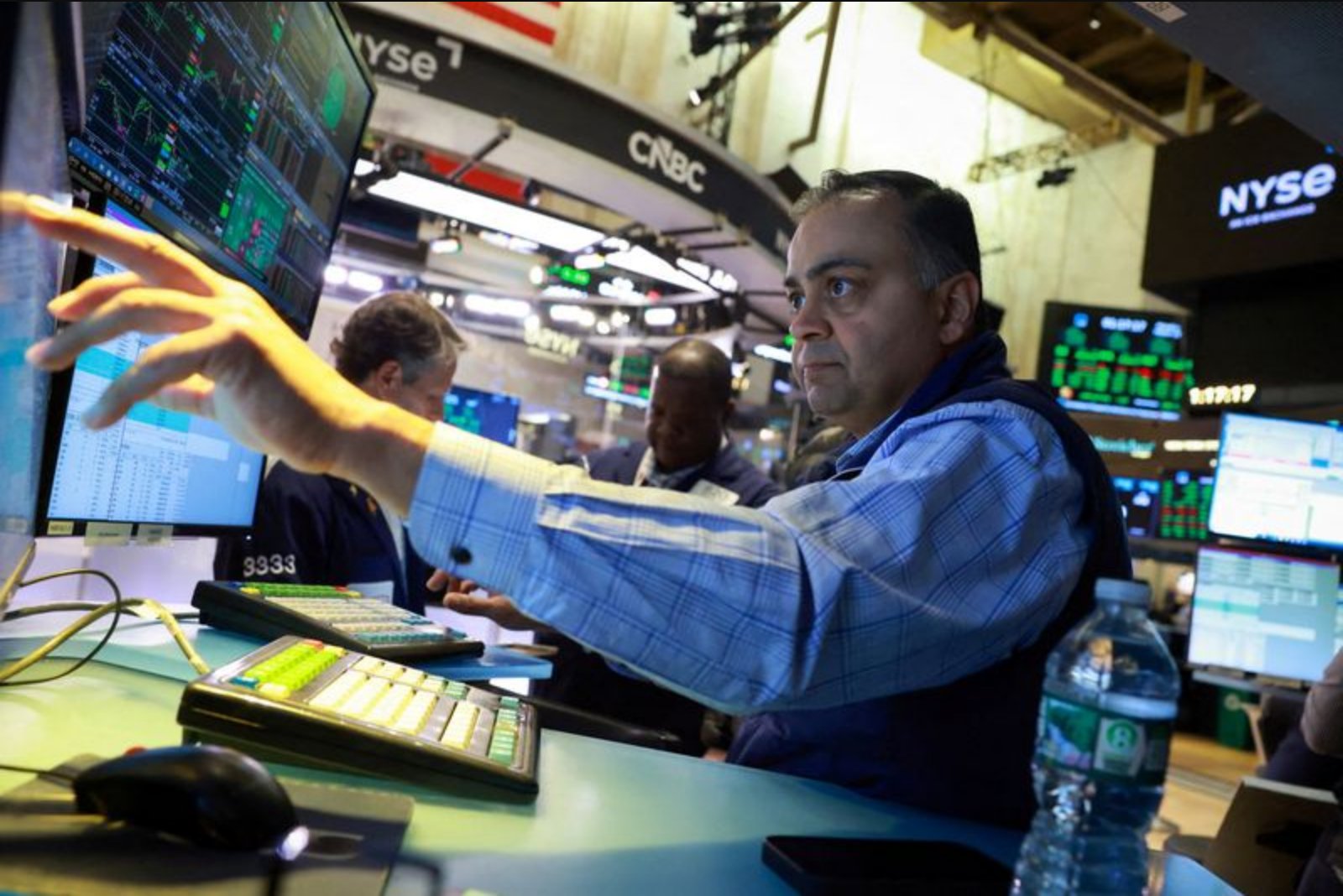
ORLANDO, Florida, April 1 - Global equities moved higher on Wednesday as signs of easing geopolitical tensions lifted sentiment, sending oil and the dollar lower.
Investors seized on remarks from the U.S. president that the U.S. would leave Iran "pretty quickly," and focused on a prime-time televised address scheduled for later in the day, expected to offer an "important update" on Iran. Market participants view the speech as potentially market-moving, though the direction of any reaction remains uncertain given inconsistent public statements in recent days.
Context and central bank question
One recurrent market debate addressed in commentary today concerns whether central banks are selling Treasuries. With custody holdings at the Federal Reserve having declined to a 16-year low, the question has returned to the forefront. The analysis points to a qualified conclusion: central banks likely are reducing holdings, but not as rapidly as some might assume.
For readers who want deeper context on the day’s moves, a short reading list was recommended, including pieces on the evolving Iran situation, the broader implications for the Gulf region and supply chains, shifts in factory input costs, the arrival of major initial public offerings into a volatile market, and commentary on private credit scrutiny in the U.K.
- Trump says U.S. may exit Iran war soon and threatens to quit NATO
- A war meant to break Iran could leave Tehran stronger, and Gulf exposed
- Factory input costs soar worldwide as Iran war snarls up supply chains
- Mega IPOs set to test U.S. market depth despite volatility
- EXCLUSIVE - BoE’s Bailey invokes 2008 lessons amid private credit scrutiny
Key market moves
Equity indices advanced across regions. In Asia, South Korea climbed 9% and Japan rose 5%. European bourses also gained, with the STOXX 600 up 2.5% and the FTSE 100 higher by 1.8%. On Wall Street, the S&P 500 increased 0.7% while the Nasdaq rose 1.2%. The MSCI World index recorded its largest two-day gain since last April.
Sectors showed broad participation: eight S&P 500 sectors advanced, with industrials, materials, technology and communications services each gaining 1% or more. Energy was the clear laggard, down 4% - its largest single-day drop in a year. Individual movers included a 15% decline for Nike and a 5% slide for Chevron, while Intel jumped 8% and Eli Lilly rose 5%.
In foreign exchange markets, the U.S. dollar fell 0.4%, marking its biggest two-day decline since early February. Among major currencies the British pound was the top G10 gainer, while the Chilean peso (CLP) led emerging market gains.
U.S. Treasuries were relatively subdued, with yields edging up 1-2 basis points across the curve. Futures markets trended back toward pricing in a Fed cut later this year rather than an interest rate increase.
Commodities moved noticeably: Brent crude fell 3% and West Texas Intermediate was down 2%. Gold climbed 2%. U.S. natural gas hit its lowest closing level in six months, pressured by strong storage levels and mild weather; the front-month contract closed at $2.819 per million British thermal units (mBtu), a 20% decline from the post-February 27 peak of $3.494 on March 9.
Talking points for traders and strategists
The president's prime-time address will be watched closely for any clarification on U.S. policy toward Iran. Recent public comments have been inconsistent: at times suggesting the war is over and at others indicating continued military action; at times suggesting reopening the Strait of Hormuz is central to any deal and at others implying it is not; and offering mixed signals on the potential for ground troops and the proximity of any agreement. Markets hope the televised remarks will reduce that uncertainty, but whether they will is unclear.
Despite a turbulent March - featuring war, $100 oil and significant supply disruptions - sentiment among consumers, firms and investors appears resilient. Surveys and purchasing managers' indices show a prevailing optimism that any economic fallout will be short-lived, and investors have demonstrated a willingness to buy market dips. Whether that optimism carries through into tangible activity measures remains a central question, as it is hard to conceive of no impact on production, trade, spending or capital expenditure, even though past surprises have occurred.
Another notable development is the weakness in U.S. natural gas prices. Even as global energy markets remain volatile and prices elevated in parts of Asia and Europe, U.S. gas has been weighed down by high inventories and mild weather, producing the six-month closing low noted above.
Events that could move markets next
- Further developments in the Middle East
- Energy market price moves
- Australia trade data for February
- South Korea inflation figures for March
- Canada trade data for February
- U.S. Challenger layoffs for March
- U.S. weekly jobless claims
- U.S. trade data for February
- Remarks by U.S. Dallas Fed President Lorie Logan
Want to receive this morning market briefing in your inbox every weekday? Sign up for the newsletter here.