
U.S. stock futures were largely unmoved early Friday following President Donald Trump’s announcement that the United States would extend a deadline for air strikes on Iranian power facilities to April 6. At 04:23 ET (08:23 GMT) futures tied to the major U.S. averages were only slightly positive: the Dow futures contract had climbed 27 points, or roughly 0.1%, S&P 500 futures were up 8 points, or 0.1%, and Nasdaq 100 futures had gained 16 points, or 0.1%.
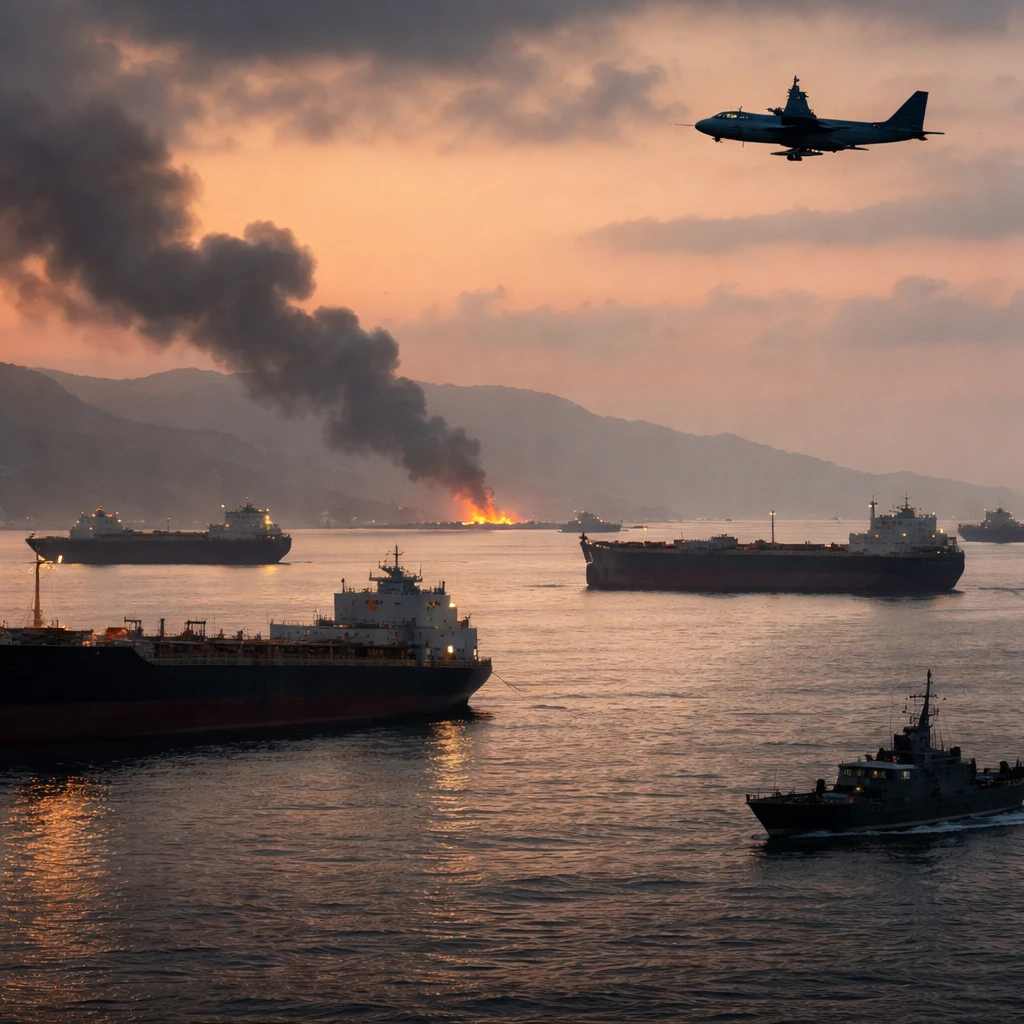
The muted reaction came after a difficult session on Wall Street the previous day, when the main indexes registered one of their worst showings so far this year amid scant signs that the near-month-long U.S.-Israeli campaign against Iran had produced a cessation in hostilities. Instead, fighting has continued across the region, and the situation has left the Strait of Hormuz effectively closed to tanker traffic.
In a post on his social media platform late Thursday, the president said the extension of the deadline was granted at Iran’s request and that Tehran was engaged in "ongoing" discussions with the United States that were "going very well." He characterized media accounts that differed from that description as "erroneous." Trump had initially issued an ultimatum last weekend asserting he would order attacks on Iranian power plants unless Iran reopened the Strait of Hormuz - a maritime chokepoint that channels roughly one-fifth of global oil shipments - and later said he would hold off until Friday after what he described as "very strong" discussions with Iranian officials.
Tehran has publicly denied that negotiations with Washington are taking place. Observers, however, have highlighted that neither side may be a fully reliable narrator of events, and that the result is persistent uncertainty for investors trying to assess the path of the conflict.
The situation on the ground has shown little sign of abating. Israel and Iran exchanged strikes on Friday, and the Pentagon has been moving additional resources into the Middle East. Some participants in markets have suggested those deployments could precede a U.S. ground operation in Iran, a development that would carry broad implications for oil markets and global growth, though such an outcome is one of multiple possible scenarios market participants are weighing.
An OECD report published on Thursday warned that the war is darkening the global economic outlook, pointing to the risk of an energy price shock that could rekindle inflation and weigh on growth. The continued closure of the Strait of Hormuz and the threat of attacks on energy infrastructure across the Persian Gulf have intensified concerns that oil supplies could be disrupted from a major producing region.
Crude benchmarks have reflected that risk. Much attention has been on Brent crude, the global reference, which has climbed well above pre-conflict levels and ticked higher on Friday as traders reassess supply risks. The price appreciation in Brent has reinforced worries that a sustained rise in energy costs could pressure central banks to revisit monetary settings even as economic momentum softens.
Precious metals showed a mixed picture. Spot gold was trading higher on Friday, with a report noting it was last up 1.2% at $4,427.31 per ounce by 05:03 ET, while U.S. gold futures had risen 1.1% to $4,456.01 per ounce. Despite that intraday uptick, bullion had fallen in the previous session and was on track to record a 1.4% decline over the prior week. Elevated energy prices can sustain inflationary pressures and, in turn, bolster expectations that central banks will keep interest rates higher for longer - a dynamic that tends to weigh on gold's performance.
Market attention is not confined to geopolitics and commodities. Analysts at Vital Knowledge called attention to shifts inside the artificial intelligence sector, noting OpenAI’s moves to step back from some consumer-facing offerings. Those analysts argued that the retreat could indicate a broader reorientation among AI-focused companies toward measures like earnings and cash flow rather than pure growth in users or recurring revenue. "[T]his could cause the tsunami of AI infrastructure spending to slow at the margin," they wrote, flagging a potential moderating influence on one driver of corporate capital expenditures.
Corporate earnings this week may offer further clues about the economic fallout from the conflict. Carnival Corp., the cruise operator, is scheduled to report results on Friday and could provide insight into how sharply higher fuel costs are affecting travel firms. Analysts have cautioned that the recent spike in oil prices will likely raise fuel bills for companies in the cruise industry, which rely heavily on heavy fuel oil and marine gas oil. Many cruise operators use hedging contracts to stabilize fuel costs, but analysts have pointed out that Carnival stands out as the only major U.S. cruise line that has not done so, potentially leaving its profits more exposed to sudden swings in energy prices.
Investors have already penalized the company: Carnival shares have fallen more than 18% so far this year. The upcoming earnings release could therefore be watched for signs of how unhedged exposure to fuel might translate into operating or margin pressures for the operator.
Across markets, the combination of continued fighting, the effective closure of a key maritime route, and the possibility of further strikes on critical energy infrastructure has introduced a persistent layer of uncertainty. That uncertainty is evident in risk-sensitive assets such as equities, in the movement of commodity prices, and in investor attention to the potential policy responses of central banks should energy-driven inflation intensify.
Bottom line - President Trump extended a deadline for strikes on Iranian power plants to April 6, saying Iran requested the extension and that talks were ongoing. Fighting across the region persisted, the Strait of Hormuz remained effectively closed, Brent crude moved higher, spot gold traded up intraday but was set for a weekly decline, and Carnival's earnings could illustrate immediate corporate exposure to rising fuel costs.