
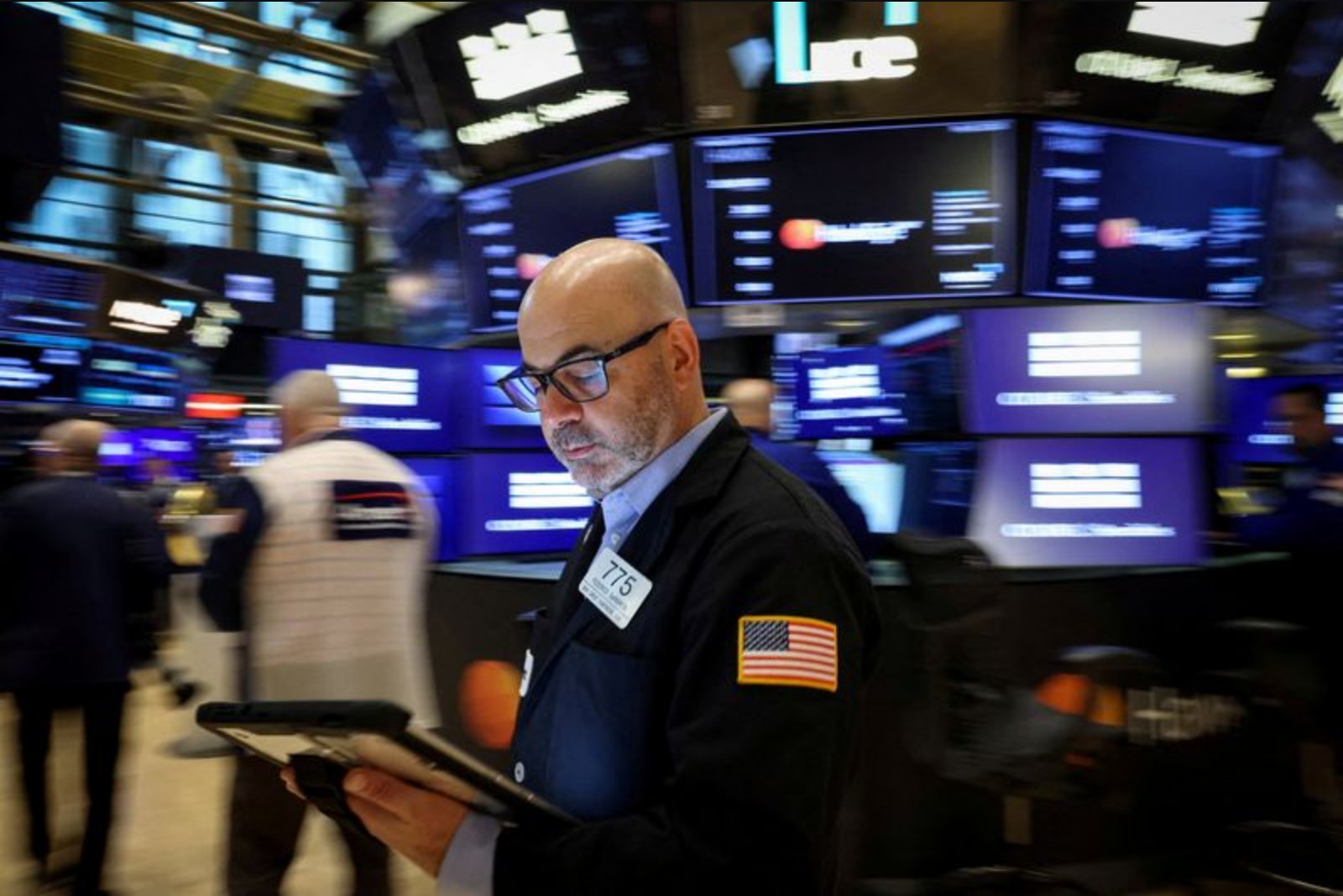
Global equity markets demonstrated unexpected strength on Wednesday, with major U.S. indices pushing into new territory even as economic data signaled rising inflationary pressures. The S&P 500 and Nasdaq both reached fresh highs, effectively overlooking a sharp increase in U.S. producer inflation and a spike in bond yields. This market sentiment appears to be driven by anticipation of the high-stakes summit in Beijing between U.S. President Donald Trump and Chinese President Xi Jinping.
Inflationary Signals and Central Bank Transition
The economic data released on Wednesday presented a challenging picture for inflation hawks. U.S. producer price inflation (PPI) experienced a significant surge in April, marking the largest monthly and annual increases observed since 2022. This rise exceeded the expectations of market analysts. The scale of this increase is particularly notable when viewed as a potential precursor to consumer inflation; if PPI trends continue this trajectory, consumer inflation could potentially surpass the 4% threshold.
Detailed metrics reveal a widening gap between different inflation measures:
- The difference between the annual PPI and CPI inflation rates in April expanded to 2.2 percentage points, representing the widest disparity since 2022.
- The gap between monthly measures reached 0.8 percentage points, matching the highest level seen since 2010.
Simultaneously, a major leadership change is underway at the Federal Reserve. Kevin Warsh has secured Senate approval to become the next chair of the Federal Reserve, succeeding Jerome Powell, whose term concludes this Friday. While Powell will remain on the board as a governor, Warsh will take over the leadership role. To facilitate this transition, Fed Governor Stephen Miran, who has been a prominent advocate for interest rate cuts, will vacate his position on the board to accommodate Warsh's appointment.
Warsh enters this role facing immediate pressure regarding interest rate policy. With headline consumer and producer inflation at multi-year highs and rising, and several 'trimmed mean' measures—which are preferred by Warsh—also trending upward, the new chair faces the task of persuading colleagues toward potential rate cuts.
Geopolitical Outlook: The Beijing Summit
The financial markets are currently focused on the approaching summit in Beijing. Presidents Trump and Xi are expected to engage in discussions covering a wide array of critical issues, including trade, energy, technology security, Taiwan, and Iran. However, market participants maintain low expectations for significant breakthroughs during these negotiations. The geopolitical landscape is complicated by the Iran war and the resulting inflationary waves, which may impact the leverage held by the U.S. administration compared to previous meetings in October.
The U.S. delegation for this summit is notable for its heavy representation of corporate leadership. The entourage includes more than a dozen business figures, such as Apple CEO Tim Cook and Elon Musk. Notably, Nvidia CEO Jensen Huang was added to the group at the last minute, leading to speculation regarding whether discussions might involve agreements on the sale of Nvidia's H200 AI chips to Chinese customers.
Market Performance Breakdown
Equity and Sector Movements:
While U.S. indices hit highs, global markets showed varied performance. In Asia, the KOSPI rose by 3% and Japan gained 1%. European markets saw a 1% increase, while the UK rose by 0.5%. Specifically in the U.S., the Nasdaq climbed 1.2% and the S&P 500 rose 0.6%. Within the S&P 500, sector performance was split: six sectors saw gains while five declined. The technology sector rose 1%, communication services increased by 2.7%, while energy fell by 0.9%. Individual stock movers included Ford, which jumped 13%, and Micron Technology, which gained 5%.
Currency and Commodities:
The U.S. dollar saw further gains. In contrast, the Brazilian real fell by 2%, marking its largest decline this year, a move attributed to government fuel subsidies. In the commodities space, Brent crude oil declined by 1.7%, while gold saw a decrease of 0.5%.
Fixed Income:
U.S. bond yields remained relatively stable at the close of the day, though a 30-year U.S. auction was characterized as weak, featuring a high yield payment and a very low bid-to-cover ratio.
Key Market Drivers and Risk Assessment
Key Economic Points:
- Inflationary Momentum: The surge in PPI suggests that inflationary pressures are intensifying across the producer level, impacting the broader economic landscape.
- Monetary Policy Transition: The transition to Kevin Warsh as Fed Chair introduces uncertainty regarding how the central bank will balance rising inflation against the potential for interest rate cuts.
- Technological Trade Dynamics: The inclusion of high-level tech executives in diplomatic talks suggests that semiconductor and AI trade policies are a major focus for global markets.
Risks and Uncertainties:
- Geopolitical Instability: Developments in the Middle East and the outcome of the U.S.-China summit present significant risks to energy markets and trade stability.
- Inflationary Persistence: If PPI continues to drive CPI higher, it could force a harder stance from the Federal Reserve, impacting all equity sectors.
- Bond Market Volatility: Weakness in long-bond auctions and rising yields present risks for capital allocation and interest-rate-sensitive sectors.